


Un tourism trip to the island of Gran Canaria offers many more attractions than just enjoying its beaches, such as those of Maspalomas, or the cultural life of the city of Las Palmas de Gran Canaria.
As happens in other islands of the canary archipelago, we must always reserve the time necessary to make a car excursion through its interior.
In the case of Gran Canaria You will find corners that will truly surprise you, as happened to us during our recent trip to said island.
DON'T FORGET YOUR TRAVEL INSURANCE
Are you planning your trip or getaway? Don't leave without take out your travel insurance before, and here we explain whyIf you contract it with us, you have a 10% discount with the code GUIASVIAJAR10.
One of the corners that should become an essential stage is the town of Artenera, which combines being the municipality located at the highest altitude (1.270 meters) on the island and being the least populated, with just over 1.000 inhabitants.
What will lead you to visit Artenara is to see the spectacular mountain scenery of the Tejeda Caldera and learn about the tradition that is preserved from the cave houses.
All the information in detail
Curiosities of the history of Artenara
The historical origins of Artenara They date back to the time of the aboriginal population, the one that inhabited the island before the Castilian and Portuguese conquerors arrived, and that historians say were deported by the Romans.
Originally BerberThese populations were dedicated to shepherding and cereal cultivation.
Already after the conquest by the Castilians, at the beginning of the 17th century, the first one was built hermitage of San Matías, a building that was replaced in the 19th century by the current church.
Over the last two centuries, the Artenara area has suffered a population exodus due to the agrarian crisis and also due to the economic boom brought about by the arrival of tourism to the island's coastal areas since the 60s.
Today, Artenara is having a new boom thanks to its landscape attractions and to the development of the activity of the Hiking.
What to see on a visit to Artenara
To reach Artenara, if you do the excursion from Las Palmas de Gran Canaria you must pass through the geographical point of the Cross of Tejeda, which gives way to the aforementioned Tejeda Caldera.
Panoramic views of the Tejeda Caldera
this gigantic volcanic caldera It is the result of the collapse produced millions of years ago by an eruption.
You will see that Artenara Currently it is a very small urban center that is located on the slope of one of the rugged mountains in this area with vestiges of volcanic activity on the island.

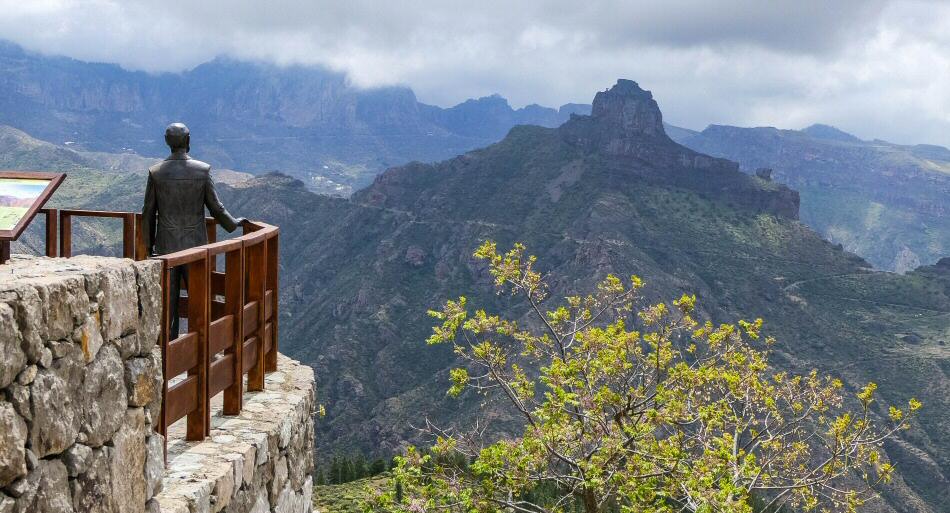
Unamuno Viewpoint, panoramic views of Barranco Grande
Once you park the car, you will take a short walk along the main street of Artenara to get to Unamuno viewpoint.
It will be easy for you to distinguish it by the metal sculpture dedicated to Miguel de Unamuno, who in his Artenara visit was impressed by the imposing spectacle of the black walls of the great caldera.
For you Holiday trip to Gran Canaria Island, I'm sure you're interested in knowing what the best tours and excursions which you can sign up for
From there you will have spectacular Panoramic views of the place known as Big Ravine.
If you look to the left you can see the famous promontory of the The Roque Nublo, One icon images of Gran Canaria, and at its feet, the beautiful town of Tejeda.
In front of you you will have the Roque Bentayga, another of the emblematic points of the interior of the island.
St. Matthias Church in Neo-Mudejar style
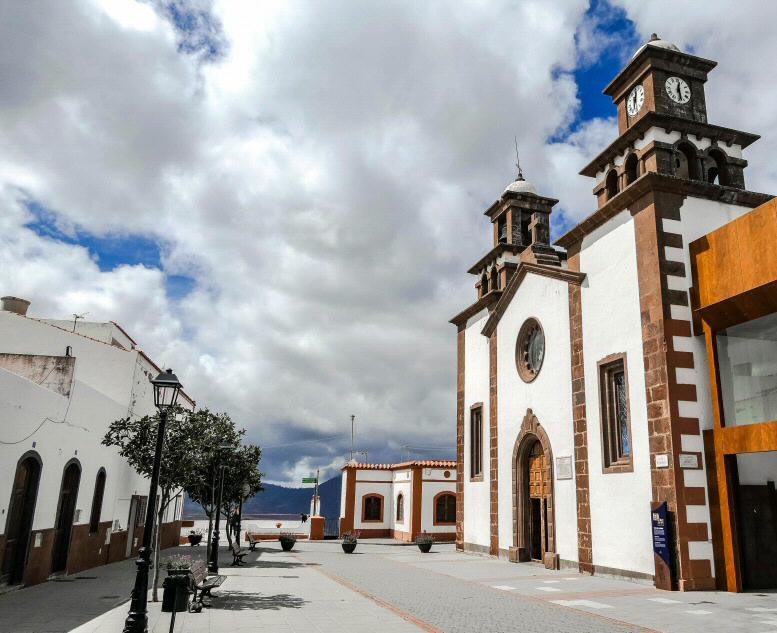
As I have mentioned, although the original church of San Matías It dates back to the 17th century, the current building is from the 19th century, although the towers and interior decoration are from the mid-20th century.
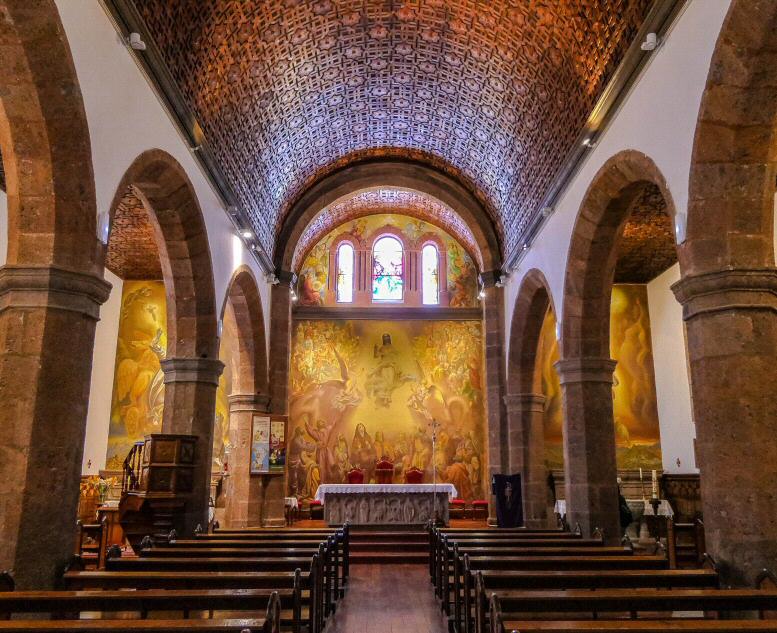
It is worth accessing its interior where you will find a floor plan with three naves separated by large arches.
ORGANIZE your TRIP
- Don't forget your TRAVEL INSURANCE with a 10% discount
- Book the HOTEL for your trip
- eSIM card to have INTERNET at a discount
- The best TOURS and EXCURSIONS in Spanish
- TOURS and ACTIVITIES in English and other languages
- NO-LINE TICKETS for museums and monuments
- RENT a CAR for your trip
- Has your flight been cancelled? How to claim compensation
- Book your TRANSFER from the airport
You will surely be attracted by the decoration of the ceiling with a coffered ceiling in style neomudejar and, above all, paintings covering the walls of the presbytery.
You can visit the church every day of the year, Monday to Sunday from 9 a.m. to 15 p.m.
Tradition of cave houses in Artenara
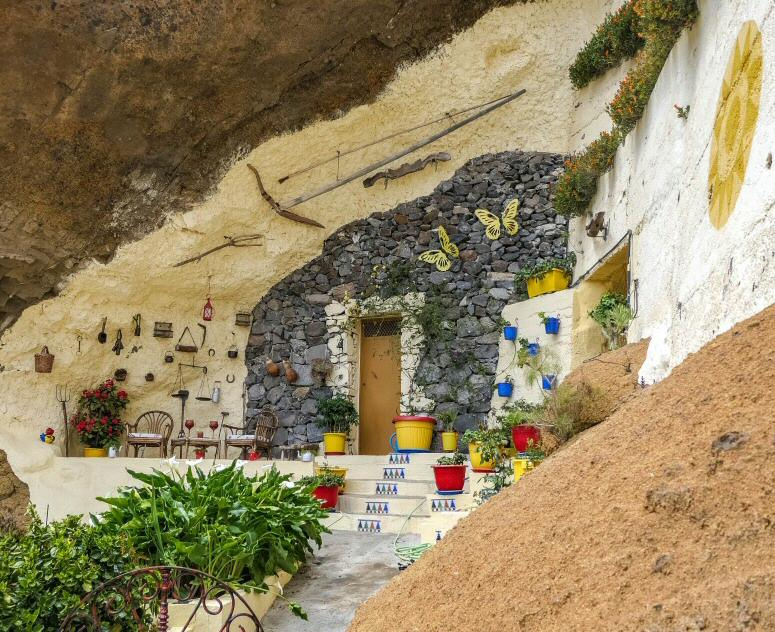
But main tourist attraction of ArtenaraIn addition to the landscapes, it is found in its cave house tradition.
In fact, if you come from Tejeda Along the road you will be able to see numerous cave houses on the rocky slope of the mountain where Artenara extends.
Artenara Cave Houses Ethnographic Museum
The best way to learn about this tradition is by visiting the very interesting Artenara Ethnographic Museum, a small corner whose use as a cave house dates back to the time of the aborigines, and was common until the middle of the last century.
In 1962 the three old homes that currently make up the museum were rehabilitated by their new owner, and finally in 1993 they were acquired by the city council in order to create the museum.
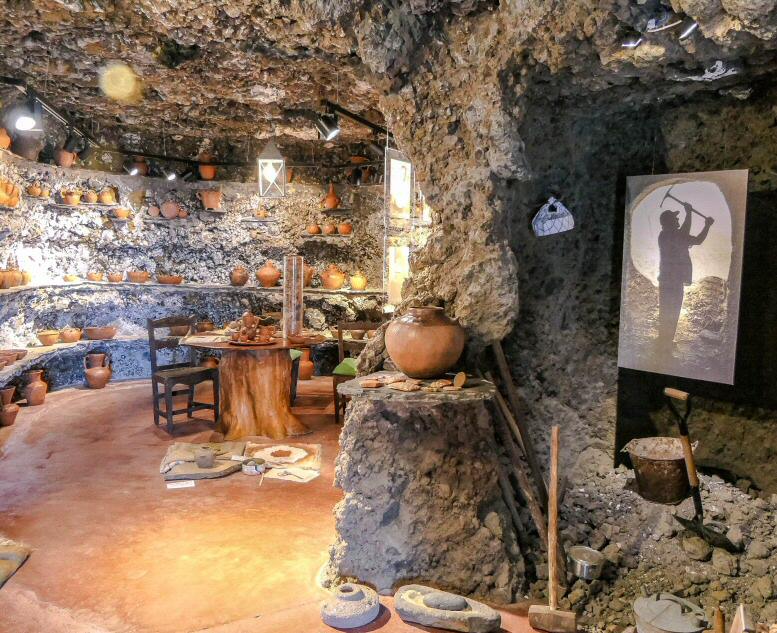
Currently you are going to visit a corner with great charm that is decorated with a variety of furniture used at the beginning of the last century, as well as objects that represent the most significant traditional crafts in Artenara.

In this small but charming ethnographic museum You will see the living room, kitchen or bedrooms of the traditional cave house, with the objects and instruments of the time.
If you establish conversation with Caesar, the very knowledgeable guide who will welcome you at the museum, you will receive extensive information about the history and tradition of cave houses in Artenara, as well as interesting topics surrounding this area of the island, where the rocky promontories known as roques stand out.
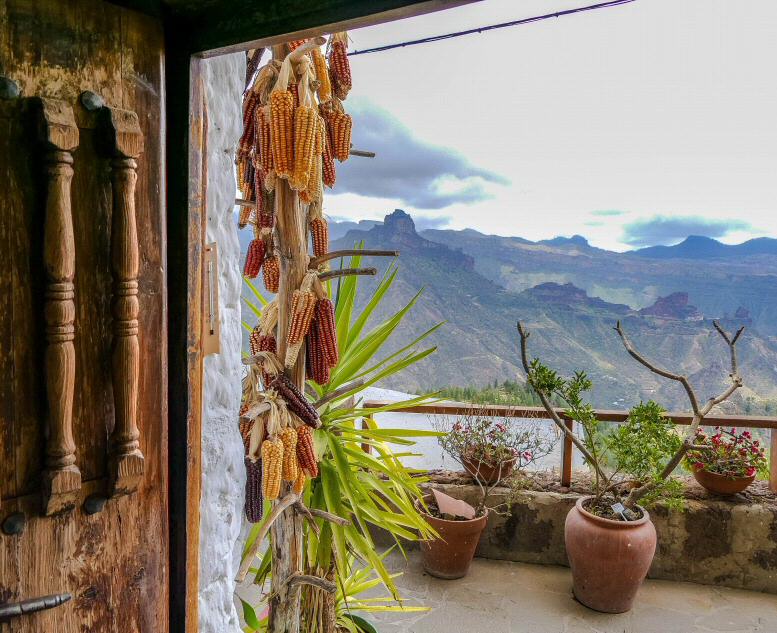
You will be able to see these with the panoramic views of the landscapes of the Barranco Grande that open before these ancient cave houses.
The visit to the Ethnographic Museum is free, although you can leave a deposit.
Cuevita Chapel in Artenara
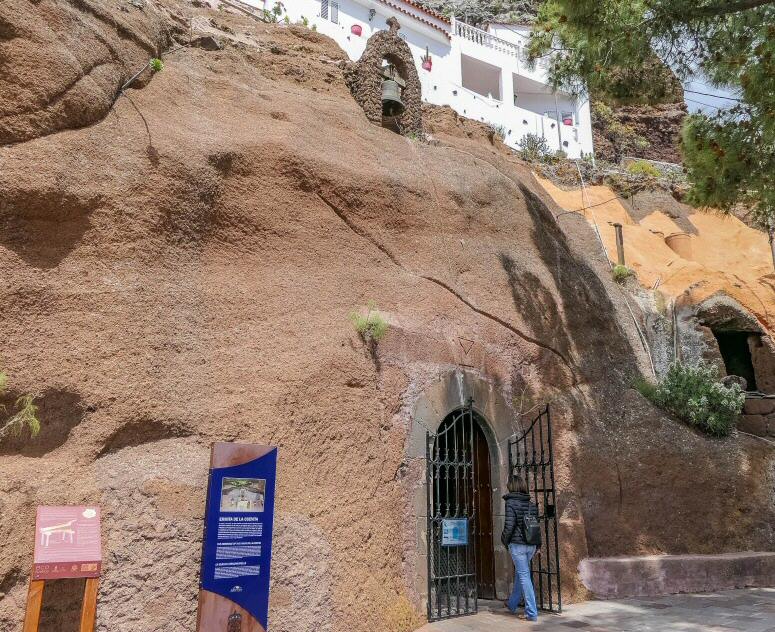
This tradition of cave houses also has its religious representation in a small chapel located inside a cave.

This is the Chapel of the Virgin of La Cuevita, Cave Chapel, which you can also visit in your walk through Artenara.
Its origin dates back to the end of the 18th century, although at the end of the 19th century the cave that houses the image of the Virgin of the Cave, a polychrome sculpture 80 centimeters high.
In the excavation carried out in the rock, the altar, the choir, the pulpit and the confessional were also sculpted.
Here you can consult the Visiting schedule, which are open all year round from Monday to Sunday, from 9 a.m. to 19 p.m.
Where and what to eat in Artenara, our experience
En Artenara There are some restaurants where you can eat, and in this regard I recommend you Art-Gaia, a small family establishment where we ate on our first trip to this town, and where they will offer you various preparations of the island's local cuisine.
The specific objectives of the canary stew, the chickpea, wild rabbit made in Saharan style, or the goat; and of course, you will have a variety of cured cheeses and you can drink craft beer from Gran Canaria.
Likewise, it is also advisable The Majada, a restaurant where we ate on our last visit, and where you can taste, among other specialties, the Crumbled potatoes with mojo, fried cheese, fried pig, and for dessert, the delicious Uruguayan powder.
Map: where is Artenara and how to get there
Artenara It is located an hour's drive into the interior of the island. from Las Palmas de Gran Canaria, to the Cross of Tejeda, already an hour and a half from the Maspalomas area.
Book your hotel, 15% discount, free cancellation
When planning your trip, we advise you to, well in advance, Book your hotel now on booking.com where you can find discounts from 15% and you will have a possible cancellation for free
Photos of Artenara
Here are more photos of Artenara and the cave houses of its Ethnological Museum.








Comment