

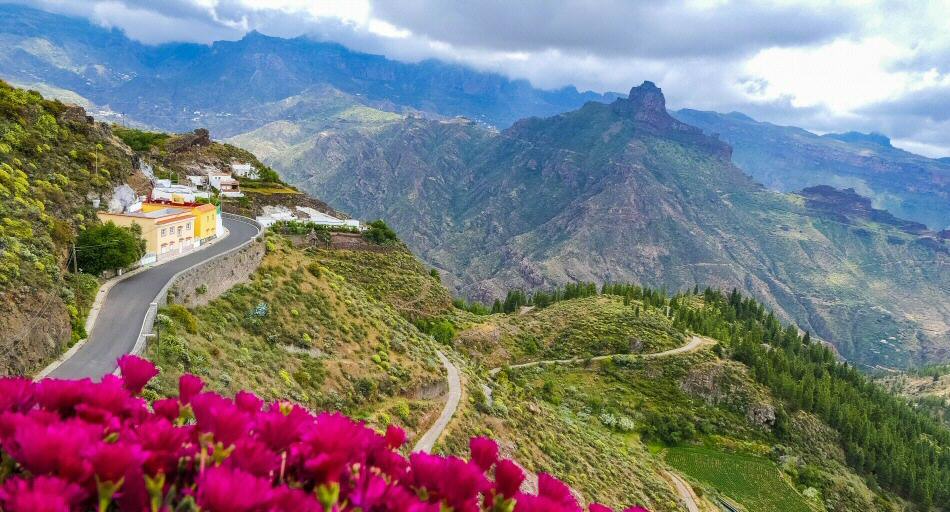

While the island of Tenerife I have known her well for many years, I admit that Gran Canaria, the other large island of Canary Islands, it has been in recent times when I have gotten to know her more thoroughly.
A getaway to the city of Las Palmas de Gran Canaria and a more recent visit to this island has allowed me to finish discovering the main tourist attractions of the island.
As background you should know that the island of Gran Canaria Already in the 60s of the last century it became one of the main destinations for international tourism that reaches Spain.
DON'T FORGET YOUR TRAVEL INSURANCE
Are you planning your trip or getaway? Don't leave without take out your travel insurance before, and here we explain whyIf you contract it with us, you have a 10% discount with the code GUIASVIAJAR10.
Specifically, tourists who come to this Canary Island consider it one of the best sun and beach destinations in Spain, which promotes a weather so benign and spring-like which even in winter allows you to wear short sleeves.
All the information in detail
- 1 Gran Canaria, between beaches with dunes and volcanic landscapes
- 2 Best places to see and visit in Gran Canaria (our experience)
- 2.1 Las Palmas de Gran Canaria – City Life, History & Island Vibes
- 2.2 San Juan Winery, artisanal wine in Santa Brígida
- 2.3 Arucas and its neo-Gothic cathedral
- 2.4 Signs, fountains and ceramic decoration
- 2.5 Cruz de Tejeda viewpoint and the volcanic caldera
- 2.6 Artenara, tradition of cave houses
- 2.7 Ethnographic Museum of Artenara
- 2.8 Tejeda, a picturesque town at the foot of Roque Nublo
- 2.9 Mill Viewpoint at the Parralillo Dam
- 2.10 Puerto de las Nieves in Agaete
- 2.11 Agaete Valley, vineyards and coffee in Gran Canaria
- 2.12 Fataga, a village with rural Canarian architecture
- 2.13 Arteara Oasis in the Valley of a Thousand Palm Trees
- 2.14 Aboriginal necropolis of Arteara
- 2.15 Viewpoint of the Mares in Barranco de Fataga
- 2.16 Maspalomas dunes in Gran Canaria
- 2.17 La Gloria Cheese Factory in San Agustín
- 2.18 Puerto de Mogán in Gran Canaria
Gran Canaria, between beaches with dunes and volcanic landscapes
Therefore, the main attraction for those We travel for tourism to Gran Canaria is to enjoy your beaches and nautical activities on its coasts.
I can also give you a preview by Our experience traveling to Gran Canaria, that this island has other great attractions, such as the nature tourism with Outdoor Activities, or the wellness and health tourism.
But also the capital of the island is a real cultural destination with places like its historic Vegueta neighborhood, also with a great cosmopolitan atmosphere and numerous recreational activities throughout the year.
And in one car route through the interior of the island of Gran Canaria you can meet pretty towns and see spectacular scenery, in addition to enjoying your gastronomy or buy Typical products.
Best places to see and visit in Gran Canaria (our experience)
Below we are going to propose the best places to see in Gran Canaria, as well as visits that delve into traditions, like the cave houses, and in the gastronomy, such as the production of cheese or wine.
For this we suggest a route by car towards the mountainous interior of the island that begins in Las Palmas de Gran Canaria – City Life, History & Island Vibes, and then go down northwest towards the coast.
We also make a variant of the route that from the interior heads south to reach Maspalomas and to the most touristic enclaves of the island.
Or conversely, it is the way to make a excursion to the interior of the island of Gran Canaria from your vacation stay in one of its most popular beach locations, such as the aforementioned Maspalomas.
Las Palmas de Gran Canaria – City Life, History & Island Vibes
If you are on vacation in the area southern beaches of Gran Canaria, you must reserve at least one day to make a excursion to the capital of the island and see its main attractions, especially cultural.
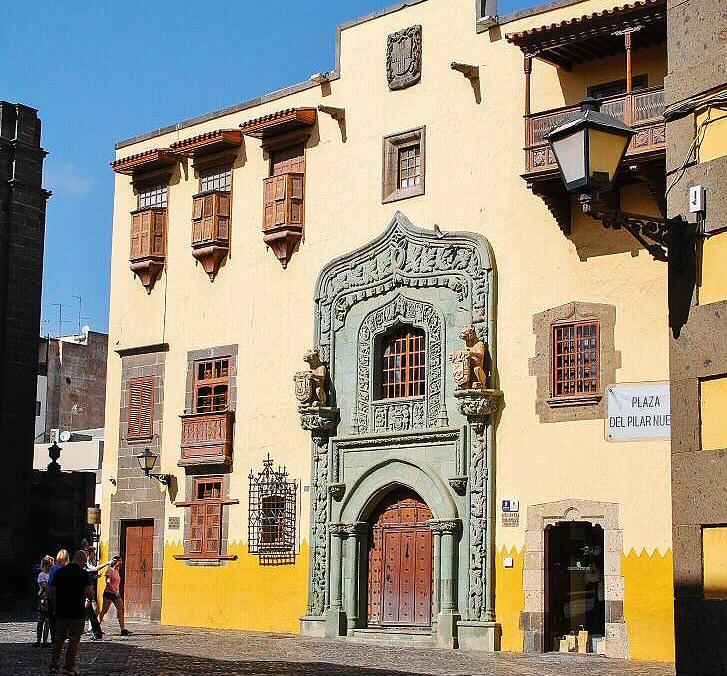
In this regard, the most outstanding places in Las Palmas de Gran Canaria They focus on the historical Vegueta neighborhood, where, among other places, you can visit the House of Columbus and cathedral.
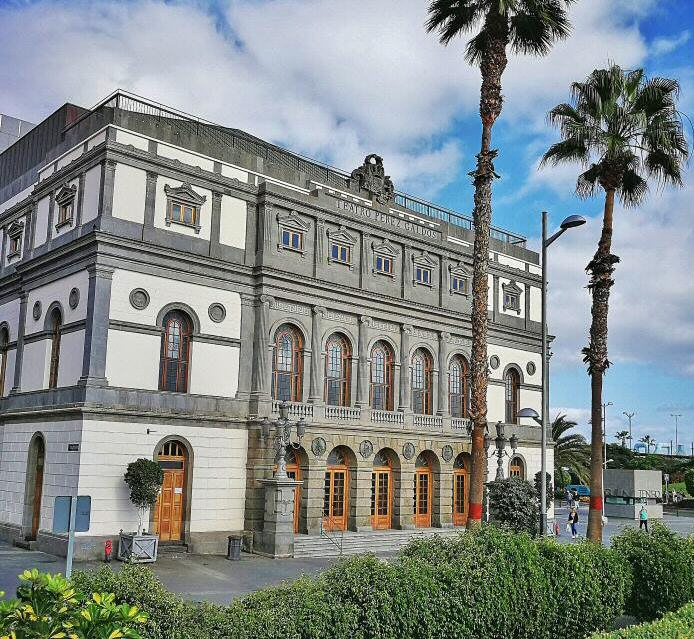
But you should also walk around the next Neighborhood of Triana to see your modernist buildings and other emblematic ones such as Gabinete literario or Pérez Galdós Theater.
For you Holiday trip to Gran Canaria Island, I'm sure you're interested in knowing what the best tours and excursions which you can sign up for
It is also worth visiting the residential area of Ciudad Jardín, with samples of rationalist architecture, or enjoy the outdoor concerts that are celebrated in the Doramas Park.
Or also visit the historical enclave of castle of light, which dates back to the time of the founding of the city, and which currently houses the museum dedicated to the Canarian sculptor Martin Chirino.
Already the outskirts of Las Palmas de Gran Canaria, on the route inland and heading south, it is worth going up to the Bandama boiler, from where you will have spectacular panoramic views of said city and its surroundings.
- Do not miss this video of Las Palmas de Gran Canaria
It is an old volcano on the top of which a viewpoint has been located, and a place where you can hiking, as in the Isleta and Confital.
ORGANIZE your TRIP
- Don't forget your TRAVEL INSURANCE with a 10% discount
- Book the HOTEL for your trip
- eSIM card to have INTERNET at a discount
- The best TOURS and EXCURSIONS in Spanish
- TOURS and ACTIVITIES in English and other languages
- NO-LINE TICKETS for museums and monuments
- RENT a CAR for your trip
- Has your flight been cancelled? How to claim compensation
- Book your TRANSFER from the airport
San Juan Winery, artisanal wine in Santa Brígida
Going down from the caldera you have the opportunity to visit a winery in the El Mocanal Estate, where you can meet how wines are made in Gran Canaria.
This is the San Juan Winery, which is managed by the fifth generation of the family, carrying out a artisanal wine making process.
It was producing wines in the most traditional way until 2006, and has recently resumed the activity with the production of ecological wine under the brand Mocanal, with a very limited and exclusive production for now.
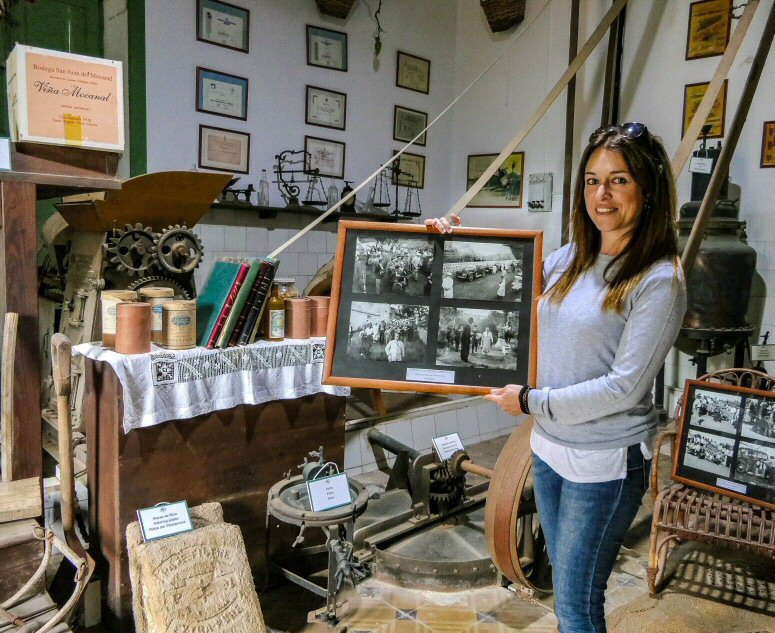
The estate occupies 25 hectares, although for now the vineyards in production only occupy 2,5 hectares.
With trellis vines that are 30 years old, these vineyards offer all the native varieties of Canary grapes, the black ribbon, negramoll, malmsey y muscatel.
In the guided tours which take place from Monday to Friday, at 10,30:12,30 and XNUMX:XNUMX, you will walk through the vineyards and see the traditional winepresses that have been used until very recently, the winery and a small museum with traditional machinery and tools.
Arucas and its neo-Gothic cathedral
Also in the interior, but just 17 kilometers west of the island capital, you find Arucas, a town that will surprise you with its large neo-Gothic church, which they call Cathedral, but it is not a cathedral but a parish church.
Built from 1909, when you see the church of San Juan Bautista you will understand why they call it Cathedral.
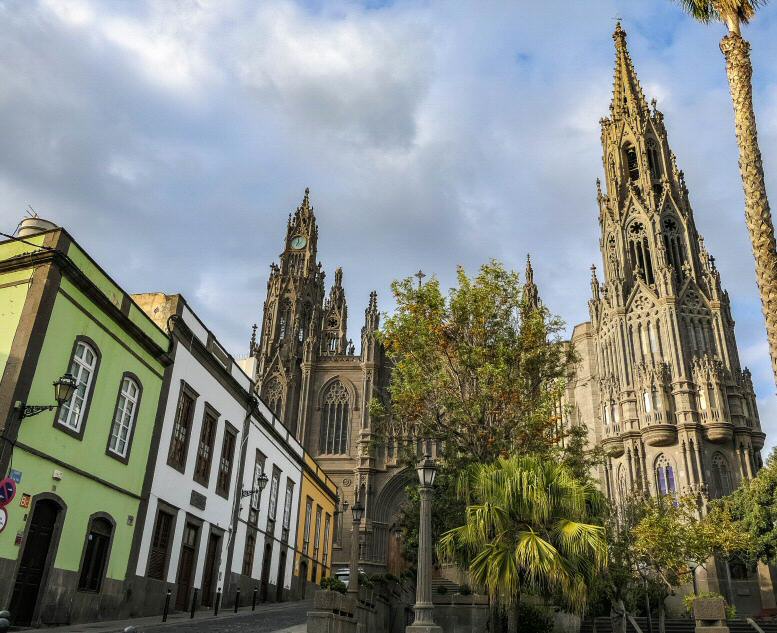
En Arucas You will also be able to see some streets with colorful and striking facades, and notable buildings such as the Town Hall and the Inheritance of Aguas de Arucas and Firgas.
And be sure to stroll through its municipal park to see its large dragon trees.
Signs, fountains and ceramic decoration
20 minutes from Arucas You find Firgas, and these are the reasons that will lead you to visit this town in the interior of Gran Canaria.
A few years ago, with the aim of capturing the interest of tourists visiting the island, the mayor took the initiative to convert the town's main street into a pedestrian street and install a decoration inspired by the Plaza de España in Seville.
This decoration is completed with seven ceramic sets dedicated to each of the Canary Islands.
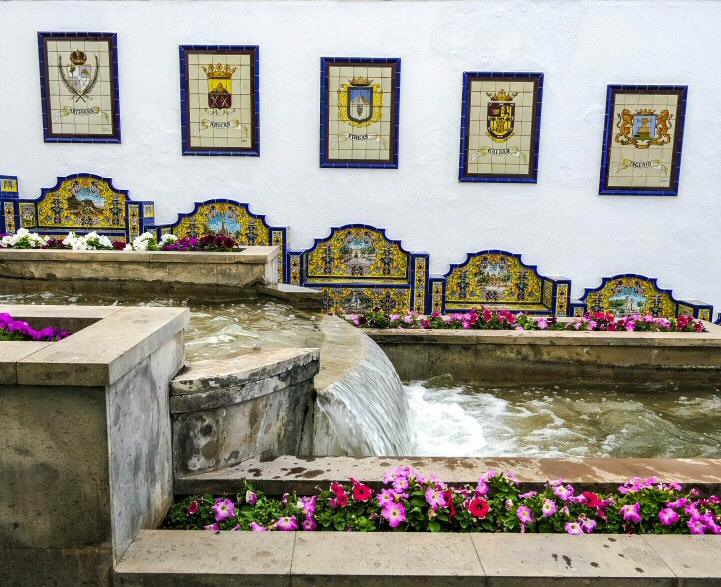
And, on the other hand, in Firgas you find a gazebo from which you have spectacular panoramic views of the capital and the northern part of the island.
Cruz de Tejeda viewpoint and the volcanic caldera
But if it is a viewpoint, in your route through the interior of Gran Canaria you must reach Cruz de Tejeda Viewpoint, located in a strategic point in the center of the island.
From this viewpoint you have spectacular panoramic views of the mountainous area known as the Tejeda Caldera, the result of a volcanic collapse that occurred millions of years ago.
In this geographical point there is also the Parador Nacional de la Cruz de Tejeda, and it is a very touristy place where a market is established every day where local artisans offer their products.
Artenara, tradition of cave houses
Already going down towards the northwest, we find one of the most outstanding corners of this area of the Tejeda Caldera, the town of Artenara.
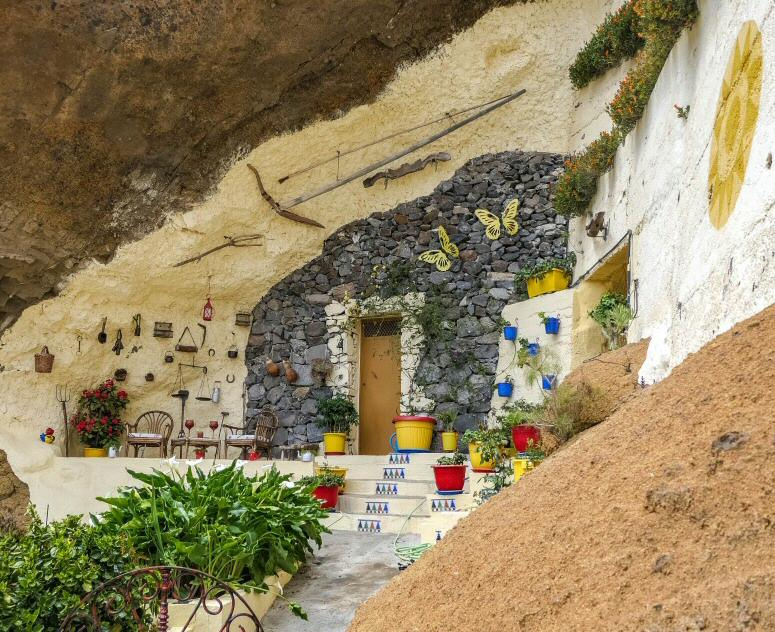
Located on the side of a rocky mountain, Artenara still shows us the traditional cave houses.
It is the town of Gran Canaria located at the highest altitude, and from its Unamuno viewpoint you can see panoramic views of the Barranco Grande, and spot the Roques Nublo and Bentayga, geological icons of the island.
Book your hotel, 15% discount, free cancellation
When planning your trip, we advise you to, well in advance, Book your hotel now on booking.com where you can find discounts from 15% and you will have a possible cancellation for free
En Artenara you can also see the church of San Matías, whose origins date back to the 17th century, although the current building is much more recent, as its towers and interior decoration were completed during the 20th century.
And it is also worth noting the Cave Chapel, a place of prayer in a typical cave where the image of a Virgin.
Ethnographic Museum of Artenara
A place that we want to highlight in Artenara is the Ethnographic museum, curious and small corner where you can deepen your knowledge of the traditional lifestyle in the cave houses.
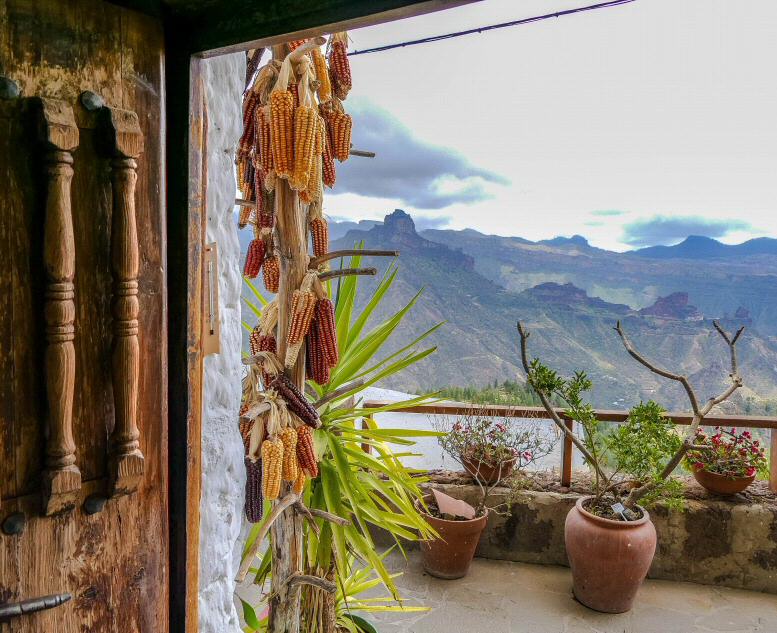
These date back to the time of the aboriginal population that occupied the island before the arrival of the Castilian conquerors, and have been inhabited until the middle of the last century.
This museum is located in three cave houses, and there you can see furniture from the early 20th century, as well as numerous craft objects and instruments from that era.
From the museum terrace you have spectacular views of the aforementioned Roque Bentayga.
Tejeda, a picturesque town at the foot of Roque Nublo
In this area of the Tejeda Caldera, although taking into account the Cross of Tejeda the road that takes you south, you can visit the picturesque town of Tejeda, which is located at the foot of the The Roque Nublo and also in front of Roque Bentayga.
En Tejeda you will see some nice corner of canarian rural architectas well as his Socorro church.
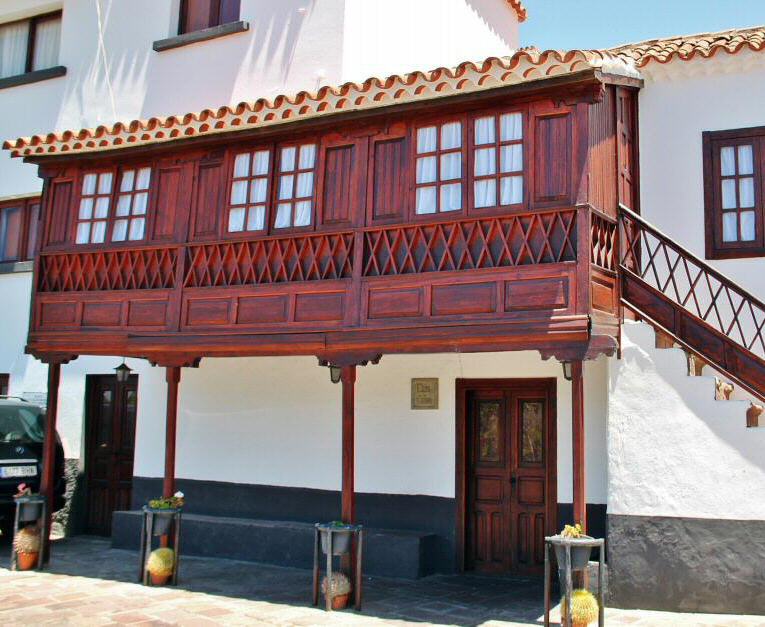
Furthermore, it is an ideal place for hiking, with routes that can take you to the aforementioned Nublo and Bentayga rocks.
Mill Viewpoint at the Parralillo Dam
Already going down towards the west coast along the very sinuous Dams Highway that leads you between deep ravines to the Village of San Nicolás, it is worth stopping at Mill Viewpoint, which rises above the Parralillo Dam.
Reserve your RENTAL CAR now for your trip
Looking ahead to your trip, book your rental car now on this website that offers you the best price guaranteed and allows you a possible free cancellation in most cases. Here you have more information with tips for renting a car
At this viewpoint there is what looks like an old mill, and if you look up the ravine, you can once again see the Roque Bentayga.
Puerto de las Nieves in Agaete
After taking a tour that takes us through the rugged cliffs of the coast, through the Tamadaba natural park, you will arrive at Agaete.
Here you must go to visit the Port of the Snows, a place that maintains a certain charm and whose docks leave boats that connect Gran Canaria with the island of Tenerife every day.
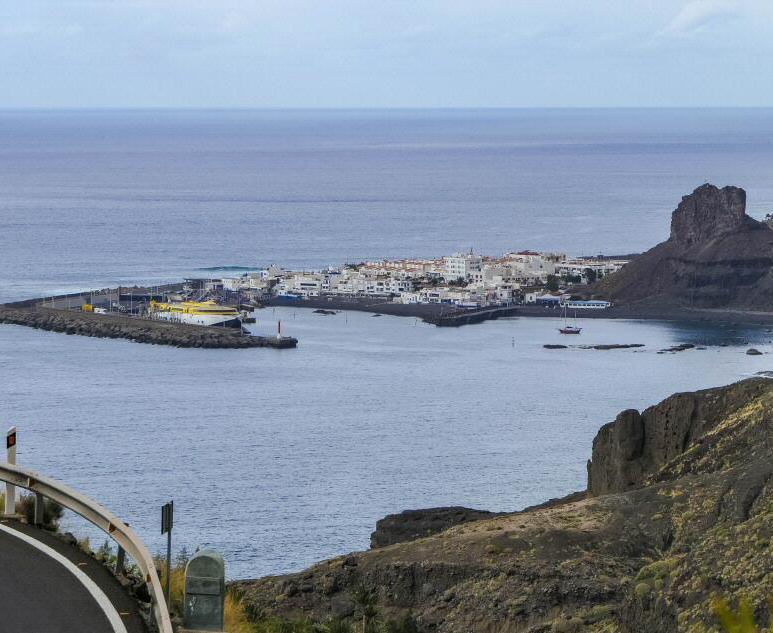
The greatest charm is found in the old pier, from where you can see the imposing cliffs of the aforementioned natural park falling into the sea.
At that point was the one known as Finger of God, a rock that was fractured in 2005 by a storm.
Agaete Valley, vineyards and coffee in Gran Canaria
At this point it is worth entering into the Agaete Valley, the only area in Europe where coffee is produced.
Its plantations share the valley with vineyards and a wide variety of tropical fruits, such as bananas, avocados, mangoes and papayas.
If you are curious, to know how coffee is produced in the Agaete Valley you have to visit the Los Berrazales Winery.
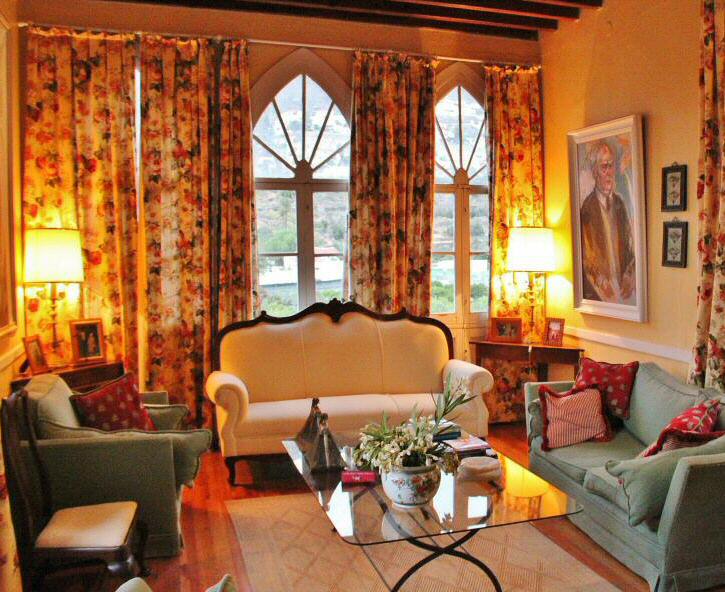
Also in this valley we want to highlight a charming rural hotel where we have had the opportunity to stay on one of our trips to Gran Canaria.
This is the rural hotel Finca Las Longueras, which will be easy for you to recognize as it is a colonial mansion with a striking red façade, which was built in 1895 where there had been a rural house since the XNUMXth century.
Inside it offers you a cozy decoration with English-style furniture from the 19th century; here you can book your stay in Las Longeras.
Fataga, a village with rural Canarian architecture
Fataga It is a picturesque village where it is worth stopping to see some corners of traditional canarian architecture.
It belongs to the municipality of San Bartolomé, and is located in a palm valley at the foot of one of the characteristic ravines of the interior of Gran Canaria.
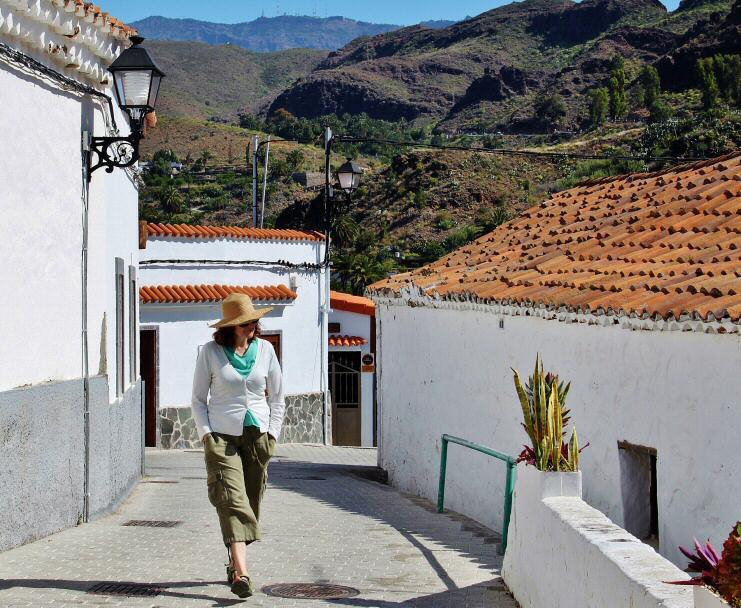
Regarding your route around the island, I can tell you that Fataga It will be a short stage, as a walk through the narrow, steep streets of the village will be enough.
You will discover corners where the Canarian rural architecture, with houses with bright white facades, which contrast with the colors of the flowers and the green of the tropical vegetation that surrounds them.
It will be a quiet walk through a village that dates back to the 16th century, where you will rarely find tourists, or even barely any residents.
small church of San José, from 1880, appears as the only monument of Fataga.
Arteara Oasis in the Valley of a Thousand Palm Trees
The interior landscape of the island of Gran Canaria It is a succession of mountains, mostly dry, between which deep ravines open.
But did you know that in those ravines there are more than 200 palm tree oasis?
The specific objectives of the Barranco de Fataga, located not far from the famous maspalomas beach, in the south of the island, in the aforementioned municipality of San Bartolomé de Tirajana, is known as the Valley of a Thousand Palms.
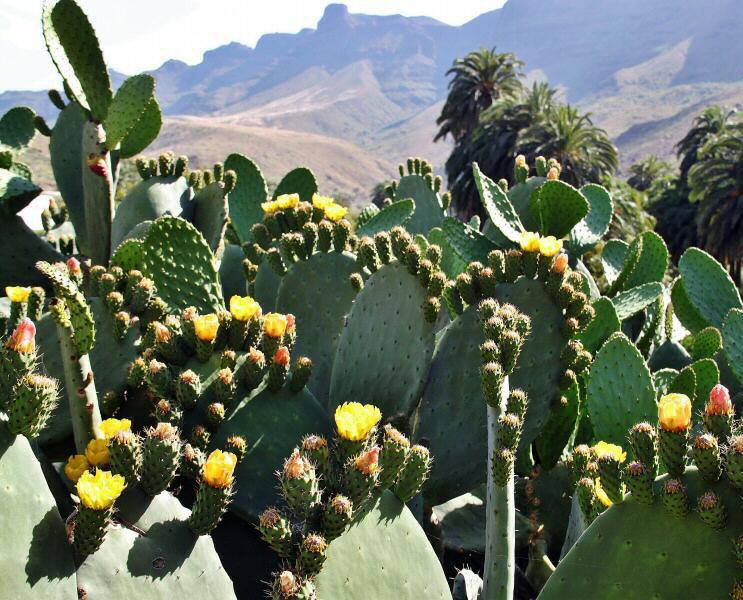
One of those palm groves is Arteara Oasis, where the little one is located Arteara village, where in addition to palm trees, other tropical plants such as prickly pears.
If you arrive from Maspalomas, you will find a first perspective of this oasis in the Mirador de las Yeguas., from where you have panoramic views of an environment that to some extent may remind you of Grand Canyon of the Colorado.
At least the Canaries consider it to be their own Grand Canyon.

In the oasis there are Canary Island palm trees, which are actually a special one similar to the one you can see in the Elche palm grove, in Alicante, and among them are shrubs, fruit trees and other crops.
These palm trees bear fruit like Tamara, which is not widely used for human consumption and is mainly used to feed animals.
The dried leaves are used for firewood and are also used to make handicrafts, such as hats.
For their part, the trunks of the palm grove of Arteara They were also used to make beehives.
Arteara It is a very small village, with a few houses scattered among the palm grove, where potatoes, sweet potatoes and pumpkins are also grown, although you will mainly see fruit trees.
In particular, you will be struck by the prickly pears, especially if there are thriving flowers.
Aboriginal necropolis of Arteara
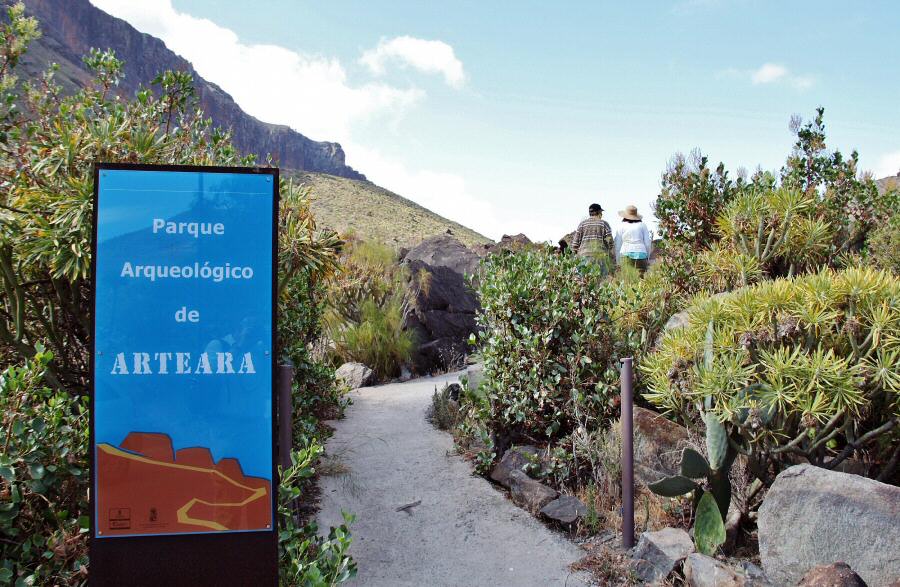
However Arteara What it is really known for is its necropolis, a burial site of the ancient aboriginal inhabitants of the island, known as canary.
In Necropolis of Arteara It is estimated that there are about 800 burials, which date back to the XNUMXth century BC.
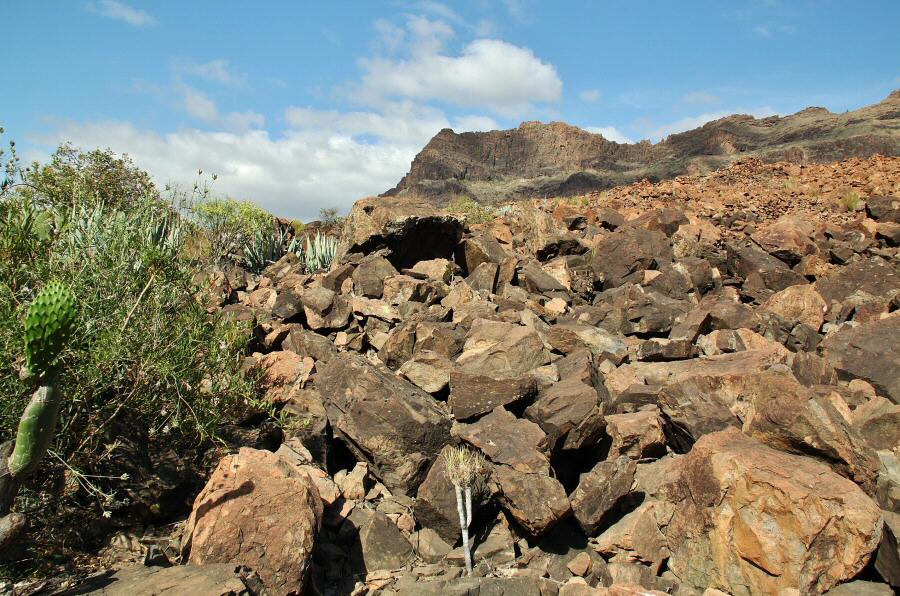
When you get to this archaeological site, you will see a place where volcanic stones are spread in an anarchic way, which are the ones used to make the burials.
Although it has been looted in the past, you can still see some elliptical and round mounds, which is one of the ways the bodies were buried by the aborigines.
For you visit of the oasis and the Necropolis of Arteara, keep in mind that if you go in the summer you will encounter very high temperatures, given its location at the bottom of the ravine.
If winds from Africa also blow, temperatures can reach 50 degrees. Keep this in mind.
Viewpoint of the Mares in Barranco de Fataga
Following the route to Maspalomas, you will go up to a point where the Mirador de las Yeguas.
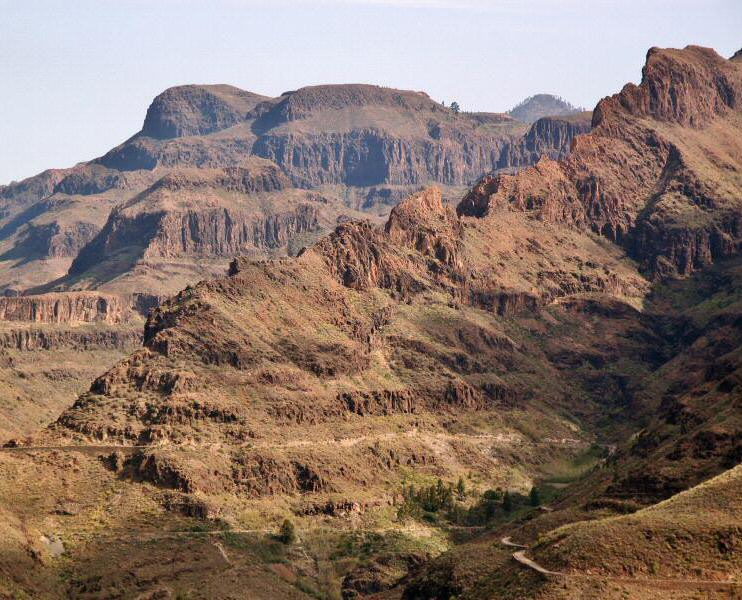
If you do the route going up from Maspalomas towards the interior of the island, when you arrive at this viewpoint you will find yourself facing the panoramic view that is known as the Grand Canyon of Gran Canaria.
And if you look, the Barranco de Fataga that you will see from the viewpoint justifies this name that tries to compare it with the spectacular landscapes of the west coast of the United States.
From the Mirador de las Yeguas you will have the first panoramic views of the Maspalomas dunes.
Maspalomas dunes in Gran Canaria
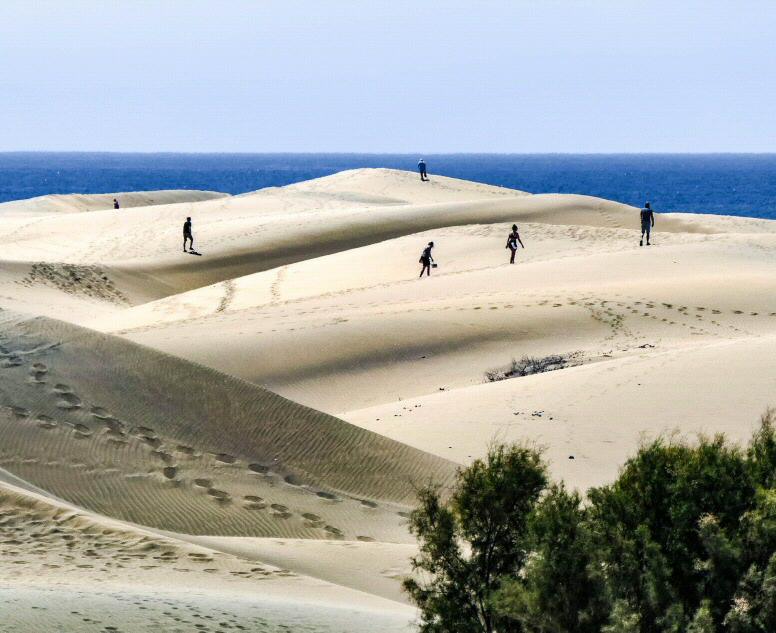
One of the great attractions of Gran Canaria, and an essential place that you must visit on your trip to this island, are the Maspalomas Dunes.
Beyond being the main tourist enclave of beaches on the island, with large hotels like resort and apartments, it is really worth seeing the impressive dunes formed in this area in the south of the island.
It is a nature reserve, the only one in the Canary Islands of these characteristics, with protected flora and a bird reserve.
If you are not going to go to the beach, but want to have a perspective of the dunes, the best point from which you can see them is from the path that leads you to the beach through the facilities of the hotel Riu.
La Gloria Cheese Factory in San Agustín
In this area of Maspalomas you have the opportunity to delve deeper into the tradition of cheese production on the island of Gran Canaria making a curious and interesting visit.
Specifically the La Gloria Cheese Factory, whose farm you reach by a dirt path that starts inland from the parking lot of the hotel Gloria Playa San Agustín, in the tourist town of San Agustín.
Francisca y Pepe They continue the family tradition in the third generation of the artisanal goat cheese production.
When you arrive at the farm you may find them at work producing cheese, while the employees are milking some of the more than 2.100 goats that are milked every day on this farm.
Its native goats of the Canary Islands that you will see grazing in the field that surrounds the cheese factory, from whose milk they produce fresh semi-cured cheese every day, with varieties of paprika, smoked, gofio and creamy.
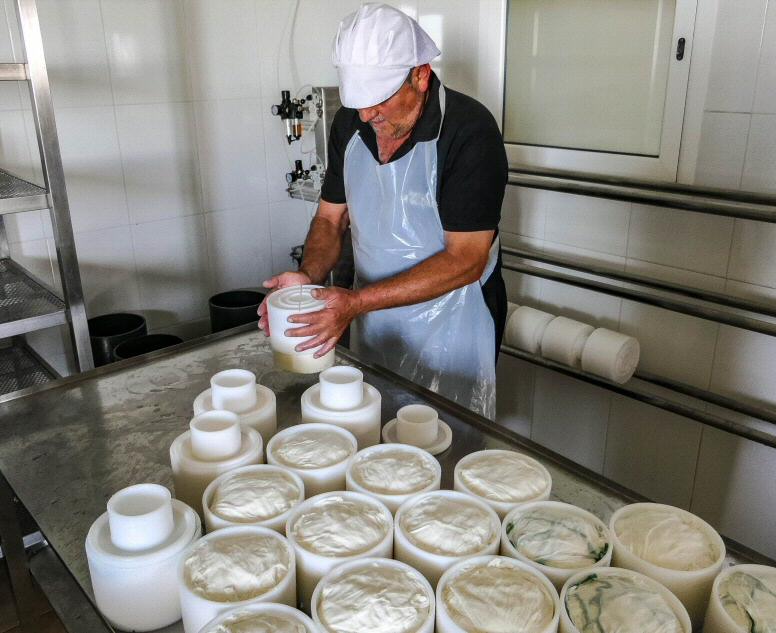
During the interesting visits you will learn that traditionally in Gran Canaria Almost every family produced its own cheese, and that almost all of the production of the Gran Canaria cheese It is consumed on the island itself.
In short, a very curious visit, where you can see how the goats that enter the milking room in a row position themselves to facilitate the placement of the milk extraction tubes.
Don't miss the video where we show it to you!!
Puerto de Mogán in Gran Canaria
We finish this route with the most interesting places that you should visit in your trip to Gran Canaria with one of the most popular tourist enclaves in the south of the island.
This is the Puerto de Mogán, an leisure boat port located at the exit to the sea of a steep valley where the town of Mogan.
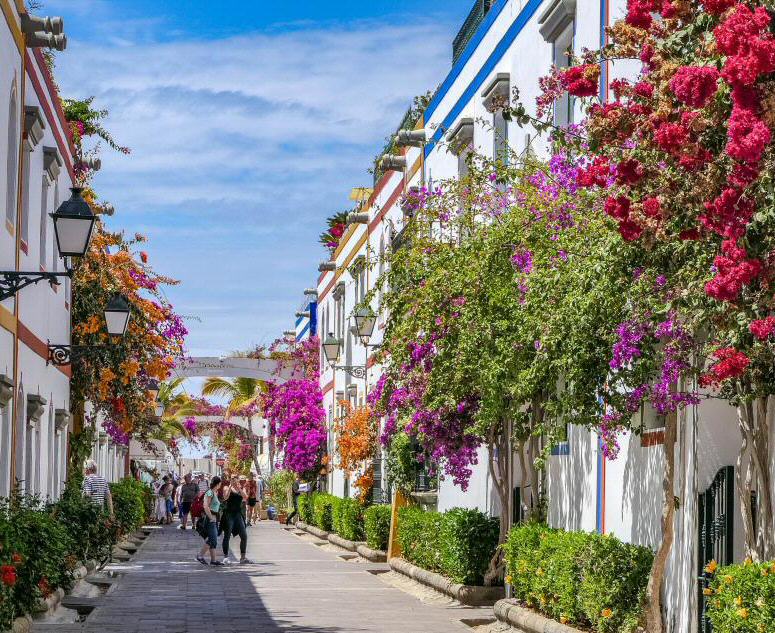
En Puerto de Mogán You will find a small, secluded beach and the aforementioned leisure port.
But above all, a very welcoming urban complex of holiday homes with beautiful white facades decorated with different colors and full of flowers.
In short, although visiting it may put you off because it is an enclave full of tourists all year round, I assure you that it is well worth it. walk through Puerto de Mogan, which in some way can remind you of places like Marbella.


It's actually still there at least in a caption 😉
Otherwise, excellent article!
Please correct Caldera de Bandama, it is not Baldama. It appears on several occasions.
Antonio, thanks for the warning, already corrected 🙂
It's actually still there at least in a caption 😉
Otherwise, excellent article!