


El wine tourism is, surely, the main reason that will lead you to visit haro en La Rioja, just as I did many years ago on my first trip to this community.
However Haro It is much more than the Rioja wine capital, which is how it is known.
On the contrary, it is a town with a long history whose historical Center already justifies a getaway in itself, beyond the essential visit to one of their wineries.
DON'T FORGET YOUR TRAVEL INSURANCE
Are you planning your trip or getaway? Don't leave without take out your travel insurance before, and here we explain whyIf you contract it with us, you have a 10% discount with the code GUIASVIAJAR10.
The current location of the town of Haro It was already occupied beforehand by the Celts and later by the Romans, and apparently its name comes from a lighthouse that was at the confluence of the Tirón River ’s relationship with the ebro.
All the information in detail
- 1 Curiosities of the history of Haro
- 2 What to see and do when visiting Haro
- 2.1 Station District, century-old wineries in Haro
- 2.2 Tapas in La Herradura de Haro
- 2.3 Peace Square, the heart of Haro
- 2.4 Bendaña or Paternina Palace, headquarters of the Tourist Office
- 2.5 Church of St. Thomas
- 2.6 Basilica of Our Lady of La Vega, the Patron Saint of Haro
- 2.7 Other Palaces in Haro
- 2.8 Convent of San Agustín in Haro
Curiosities of the history of Haro
During the Middle Ages, the village of Haro remained under the lordship of the Count of Haro.
And in 1808, under the Napoleonic occupation, it was one of the first towns in Spain to adapt to the administrative model of Joseph Bonaparte.
But a good fact about its importance is that when we refer to this population, we must call it Haro city, as recognized in 1891 by the queen regent María Cristina.
What to see and do when visiting Haro
Apart from visiting some of the historic wineries where the prestigious wine is made, Rioja wine, you walk through the historic center of Haro will focus on the Peace Square and its surroundings.
On your walk through the heart of the city you will be able to see numerous palaces.
Station District, century-old wineries in Haro
Now, in your Haro's visit You have an unavoidable appointment in what is known as Station neighborhood.
This is the largest concentration of century-old wine cellars that you can find in the world, so the visit not only has a wine tourism aspect, but also a cultural attraction.
Keep in mind that this is also where you find some of the best wine cellars in Rioja, well in said neighborhood near the center of Haro the most important of the Rioja wine capital.
That is the case, for example, CVNE Wineries, with its highly awarded wine Imperial and where you can see his famous eiffel ship where the wine ages.
O Bodegas Muga, the only one in the world that has a cooper on staff to make its own wine vats, and where you can see the curious wine clarification process by which it is cleaned with egg whites, once the yolks have been removed.
O Stem, the youngest of the wineries in the Station District, which only makes wine with Grapes from old vines picked by hand, and which has a curious bioclimatic ship.
For your trip to La Rioja, you will surely be interested in pointing out some of the numerous Guided tours, excursions and activities that are offered, of which you have all the information here
In short, a visit where you can really enjoy Rioja wine, and learn about its history, an approximation of which we tell you in the video that accompanies this article.
Tapas in La Herradura de Haro
Already in the historic center of Haro, your visit must start in La Herradura, which is how the two streets that join the aforementioned are known. Peace Square with the square Santo Tomas Parish Church They form the shape of a horseshoe.

La Herradura It is the daily meeting place for wine for residents and tourists who visit Haro, because in these narrow streets the tapas and pinchos bars, as well as restaurants.
Peace Square, the heart of Haro
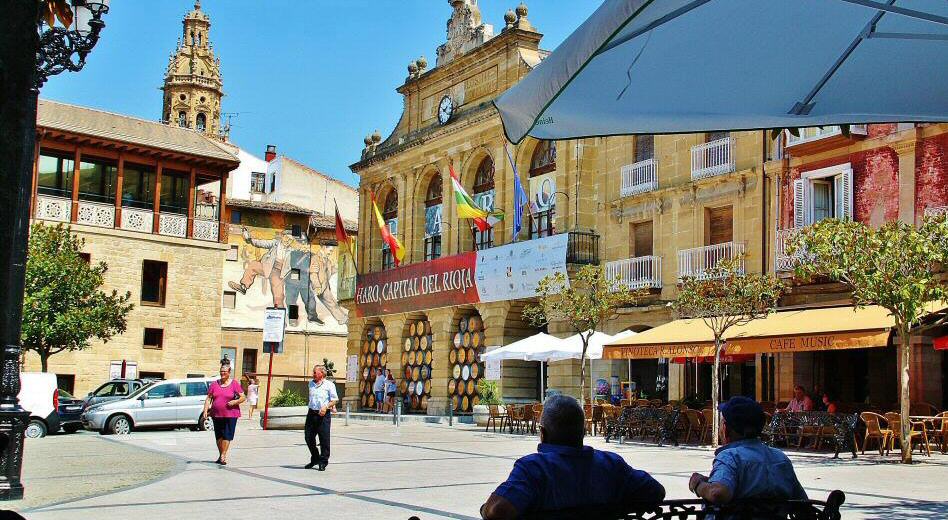
El Haro nerve center is Peace Square.
ORGANIZE your TRIP
- Don't forget your TRAVEL INSURANCE with a 10% discount
- Book the HOTEL for your trip
- eSIM card to have INTERNET at a discount
- The best TOURS and EXCURSIONS in Spanish
- TOURS and ACTIVITIES in English and other languages
- NO-LINE TICKETS for museums and monuments
- RENT a CAR for your trip
- Has your flight been cancelled? How to claim compensation
- Book your TRANSFER from the airport
There the characteristic kiosk located in the center will catch your attention, and the 18th century building of the town hall, with its arcades with four arches.
This corner is still decorated with a group of wine barrels which reminds us of the roots of its production in this place in Rioja, which is also influenced by the great graphite that decorates the façade of one of the houses that faces the square.
Bendaña or Paternina Palace, headquarters of the Tourist Office
In the aforementioned square there is also the Bendana Palace o Paternina palace.
Plateresque style, this palatial building has a Mudejar gallery from the 15th century.
It will be easy for you to recognize it because that is where the Haro Tourist Office.
Church of St. Thomas
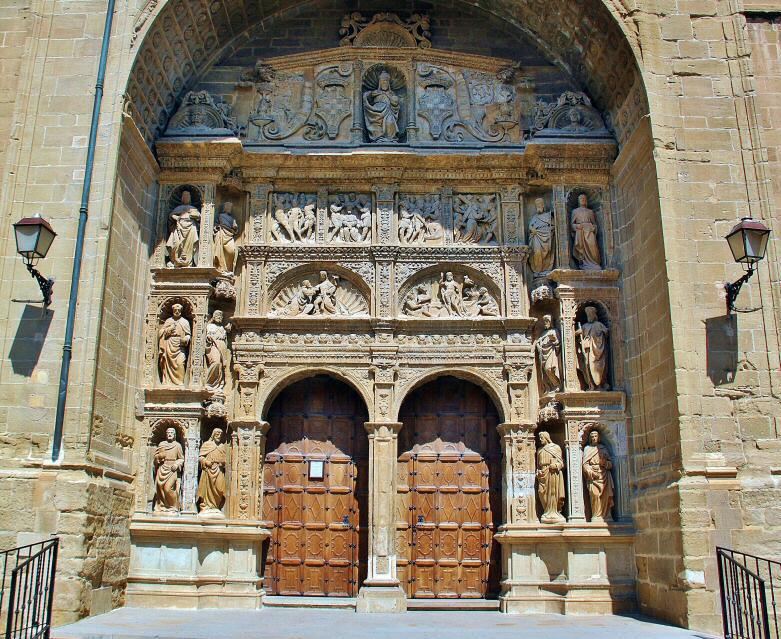
Meanwhile, in La Herradura, on the opposite side of the Peace Square, you find the St. Thomas Church from the 16th century, which is built in a flowery Gothic style.
This is the parish church of Haro and the one closest to the Peace Square, and externally its beautiful cover will catch your attention.
Basilica of Our Lady of La Vega, the Patron Saint of Haro
However, the most important church in the city is the Basilica of Our Lady of La Vega.
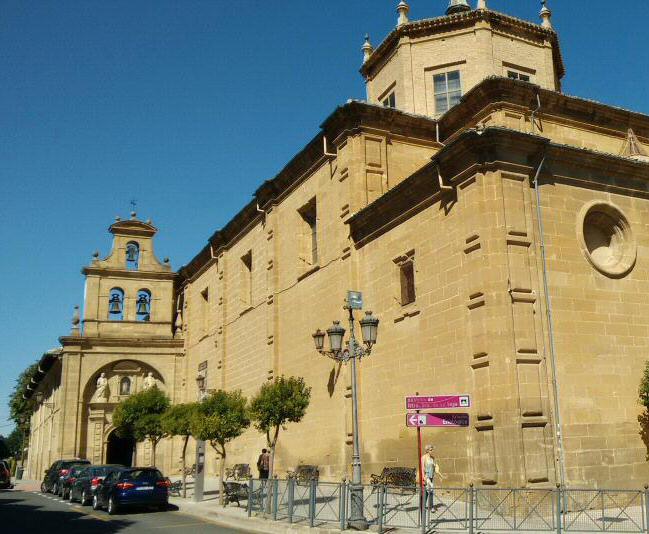
Gothic style from the mid-15th century, this church stands out for housing the image of the Patron Saint of Haro, the aforementioned Virgin of the Vega.
Originally from the 10th century and located next to the Vegetable Gardensa, the current building dates from 1703, and inside the main altarpiece in the baroque style, from 1740, stands out.
Other Palaces in Haro
Now, in your walk through Haro It will be its palaces that will attract your attention the most.
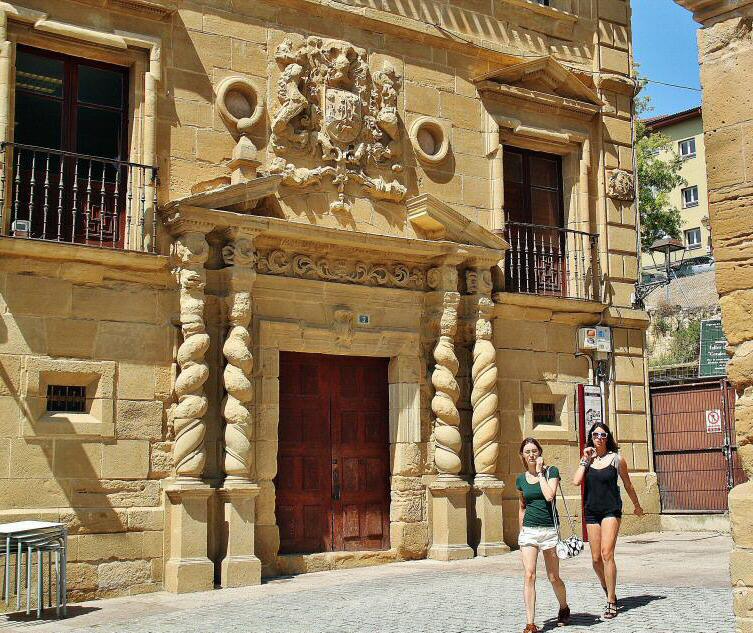
For example, the palace of the Counts of HaroLocated next to the church of Santo Tomas, baroque style, from the 16th to the 17th century.
On the outside, the large doorway with Solomonic columns stands out.

Or the palace of the Bezaras, a baroque building from the 18th century also known as the palace of the storks for the large nest on one of its chimneys, which you find in the central Vega Street and now it is the headquarters of a banking institution.
Another building worth highlighting in Haro is the former headquarters of the branch of the Bank of Spain.
Established in 1892, its presence is an example of the great importance that historically this Riojan city has always had as a wine producer.
Convent of San Agustín in Haro
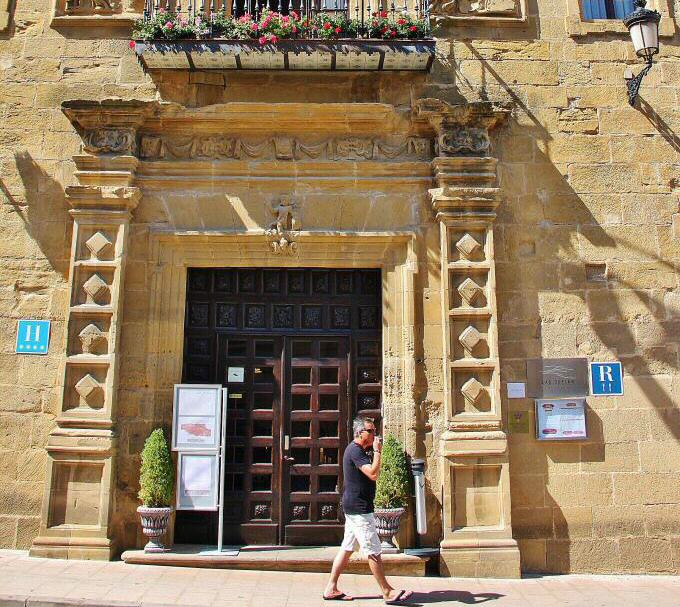
Also the building of Convent of San Agustín, now headquarters of Hotel Los Agustinos, which since the 16th century has had various uses, such as a prison, school or hospital.
In short, you Haro's visit It will be a walk through history, both of its wine and the strength of a city.



Comment