

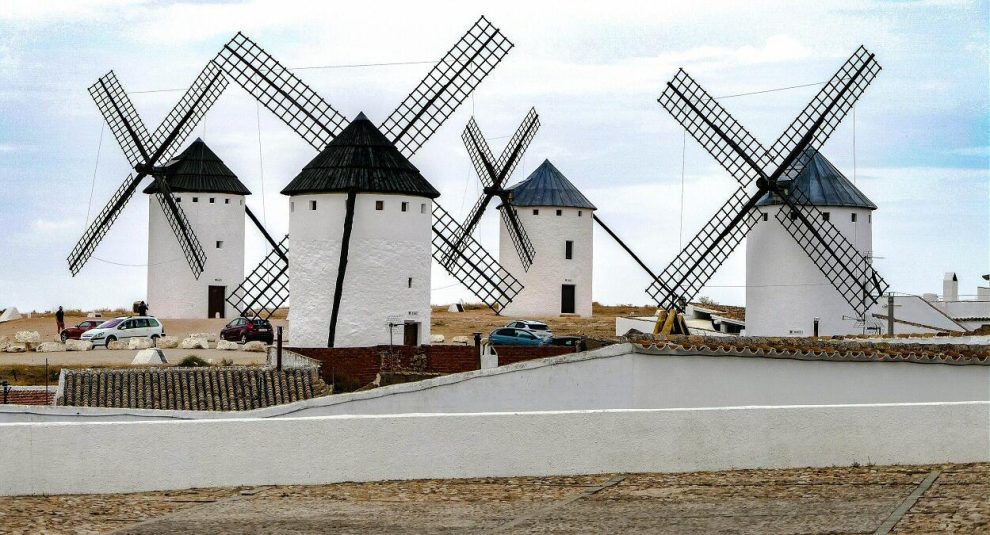

La natural and historical region de La Mancha, which extends between the provinces of Ciudad Real, Toledo, Cuenca and Albacete, in the Community of Castile-La Mancha, has huge attractions to justify various tourism getaways o routes by car.
There you find from charming towns or very interesting heritage sites, amazing landscapes or a delicious gastronomy; but, on the other hand, La Mancha is one of most important wine tourism destinations in Spain.
Therefore it should not surprise you that on your getaway you can convert wine in a tourist axis, specifically, taking as reference the La Mancha Wine Route, one of the three wine routes certified in Castilla-La Mancha by ACEVIN, Spanish Association of Wine Routes.
DON'T FORGET YOUR TRAVEL INSURANCE
Are you planning your trip or getaway? Don't leave without take out your travel insurance before, and here we explain whyIf you contract it with us, you have a 10% discount with the code GUIASVIAJAR10.
Thus, the La Mancha Wine Route It brings together various tourist attractions that largely coincide with the territory of the DO Wine from La Mancha.
Specifically, in the municipalities of Alcazar of San Juan, Campo de Criptana, The Toboso, Socuélamos, Tomelloso y Villarrobledo.
All the information in detail
- 1 This is the experience of a route through La Mancha, the best things to see and do
- 2 Alcázar de San Juan, from the Knights Hospitaller to Don Quixote
- 3 Campo de Criptana and its windmills
- 4 El Toboso and the footprints of Dulcinea
- 5 Socuéllamos, a wine tourism destination in Ciudad Real
- 6 Tomelloso, the tradition of caves and chimneys
- 7 Villarrobledo and the tradition of clay pots
This is the experience of a route through La Mancha, the best things to see and do
Looking ahead to a future a getaway to La Mancha in which wine tourism it becomes a common thread, with the experience of a recent tripNext, we're going to suggest the most interesting places you should visit in these towns.
And specifically with regard to wine world, here you have more extensive information about which wineries to visit on the La Mancha Wine Route.
Alcázar de San Juan, from the Knights Hospitaller to Don Quixote
when you get to Alcazar of San Juan, you will be surprised by its dimensions because, in reality, it is a small town of about 30.000 inhabitants, the result of commercial development after becoming an important railway junction in the mid-19th century.
Its history dates back to the time of the Celtiberians, but today you can also see archaeological remains from the time of the Romans.
A key moment in that story was the arrival in 1189 of the Order of the Knights Hospitaller of Saint John after their expulsion from Malta, which remained for up to 600 years.
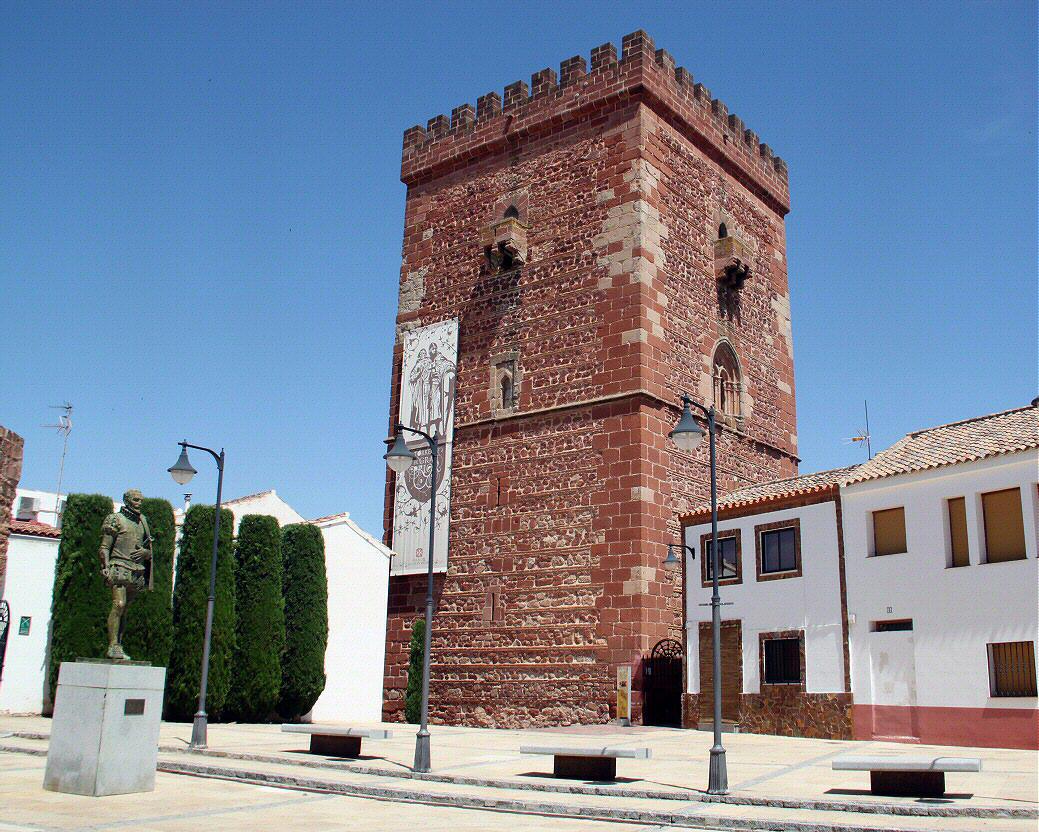
Tower of the Great Prior in Alcázar de San Juan
At that time the Great Priory of Castile and León and in Alcazar of San Juan was built the Tower of the Grand Prior, which is now the city's most prominent heritage site.
In reality it is a monumental complex that brings together the remains of the walls and old arab citadel, as well as the tower and the Palace Chapel.
These premises are currently set up as a museum, which you can visit, as well as climb to the top of the aforementioned tower.

Here you have information about schedules and prices to visit the Torreón del Gran Prior, next to which you can see the remains of an ancient Roman villa.
Museum of the Hidalgo in Alcázar de San Juan
But also Alcazar of San Juan, in Ciudad Real, is one of the landmarks of El Quijote, since there are indications that he was born there Miguel de Cervantes.
This information will be useful for your road trip through this area. Best tours and activities in the province of Ciudad Real which you can sign up for, and I should mention that a comfortable base for accommodation is the Hotel Intur, an four stars ideal for both tourists and business travelers, reflecting the commercial boom of Alcazar of San Juan
On your walk through the historic center you will be able to see a house whose façade has an inscription indicating that the house where he was born was located in that place. Cervantes, could it be true?
The most interesting visit you can make in this regard is to the Museum of the Hidalgo, old manor house from the 16th century whose facilities have been modernized to house a curious collection of original pieces related to the life of the noblemen.
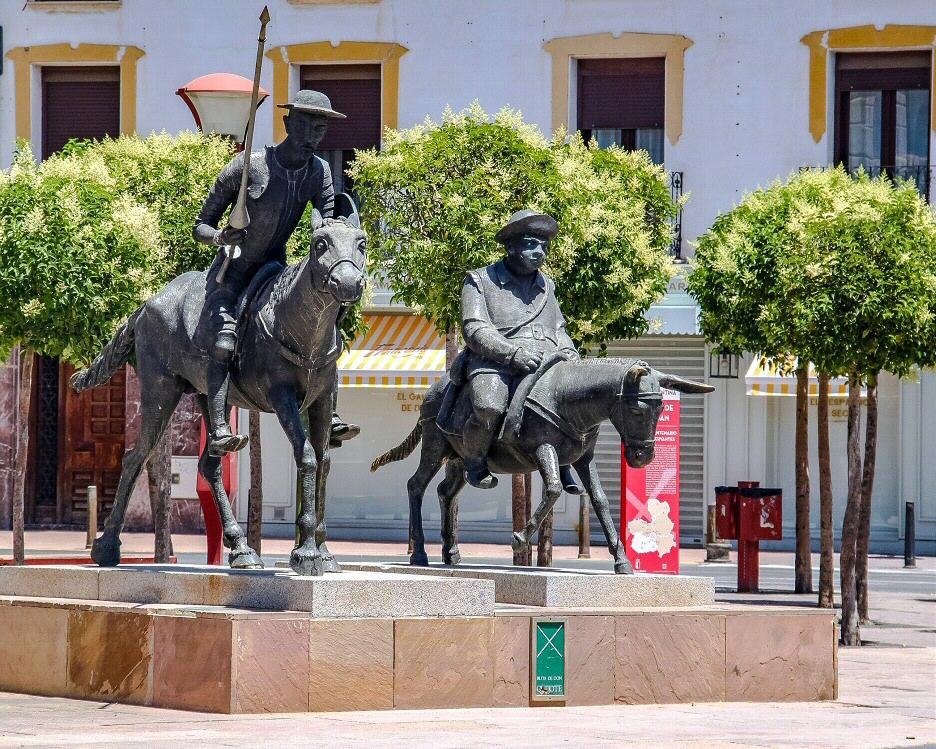
The noblemen They represent the rural aristocracy during the Middle Ages, and in the museum that is distributed over two floors you will be able to see various objects and information that allows you to know what his life was like.
La Mancha Pottery Museum in Alcázar de San Juan
Another museum you can visit in Alcázar de San Juan is the La Mancha Pottery, located in the old Convent of San José XNUMXth century.
In its collection arranged on three floors and different themes, you can see everything from farming tools to a wide variety of agricultural utensils and furniture.
ORGANIZE your TRIP
- Don't forget your TRAVEL INSURANCE with a 10% discount
- Book the HOTEL for your trip
- eSIM card to have INTERNET at a discount
- The best TOURS and EXCURSIONS in Spanish
- TOURS and ACTIVITIES in English and other languages
- NO-LINE TICKETS for museums and monuments
- RENT a CAR for your trip
- Has your flight been cancelled? How to claim compensation
- Book your TRANSFER from the airport
Here you have more information for visit Alcazar de San Juan.
Campo de Criptana and its windmills
The great attraction that will undoubtedly lead you to visit Campo de Criptana, Ciudad Real , they are his famous windmills, which are located in the Hill of Peace, in the highest area of the town, an enclave known as Sierra de los Molinos.

Windmills in Campo de Criptana
It is considered that the famous mills scene in El Quijote it took place in Campo de Criptana, according to his own Cervantes in his work, a town where there were 34 mills, of which ten remain today.
At present you can visit one of the mills, Infanto, one of the three that are preserved from the 16th century, whose machinery is preserved in perfect condition,
You can book the visit in advance at Tourist Office located in another of the mills, and on the first Sunday of each month you can also see how the grinding is done.
Albaicín neighborhood in Campo de Criptana
But Campo de Criptana You should also walk through the area known as Albaicín neighborhood cryptanero, which is made up of the streets and squares with typical La Mancha houses made of Arabic tiles and facades painted white and indigo.
A central point of this picturesque neighborhood located in the Hill of Peace it's the square gazebo where is located hermitage of peace, as well as a gazebo from where you have very good panoramic views of the town and its surroundings.

If you decide to walk down to the center of town, you will be able to see the Royal Deposit, a 16th century building that houses a museum of history and culture of Campo de Criptana.
Finally, it is also worth highlighting the good gastronomic option what you have in Campo de Criptana with the Las Musas restaurantLocated in Sierra de los Molinos, which has different environments, such as the living room or the patio from where you have beautiful panoramic views of the town.
El Toboso and the footprints of Dulcinea
And if of Quijote We talk, what better place than The Toboso to visit on your getaway La Mancha, In province of Toledo, where the great role is played by the character of Dulcinea.
It is a small town where you can walk around charming streets in which the cervantine theme It envelops everything.
Its heart is the Plaza Mayor, where the great church of San Antonio Abad and you can see some metal sculptures that represent Don Quixote y Dulcinea.
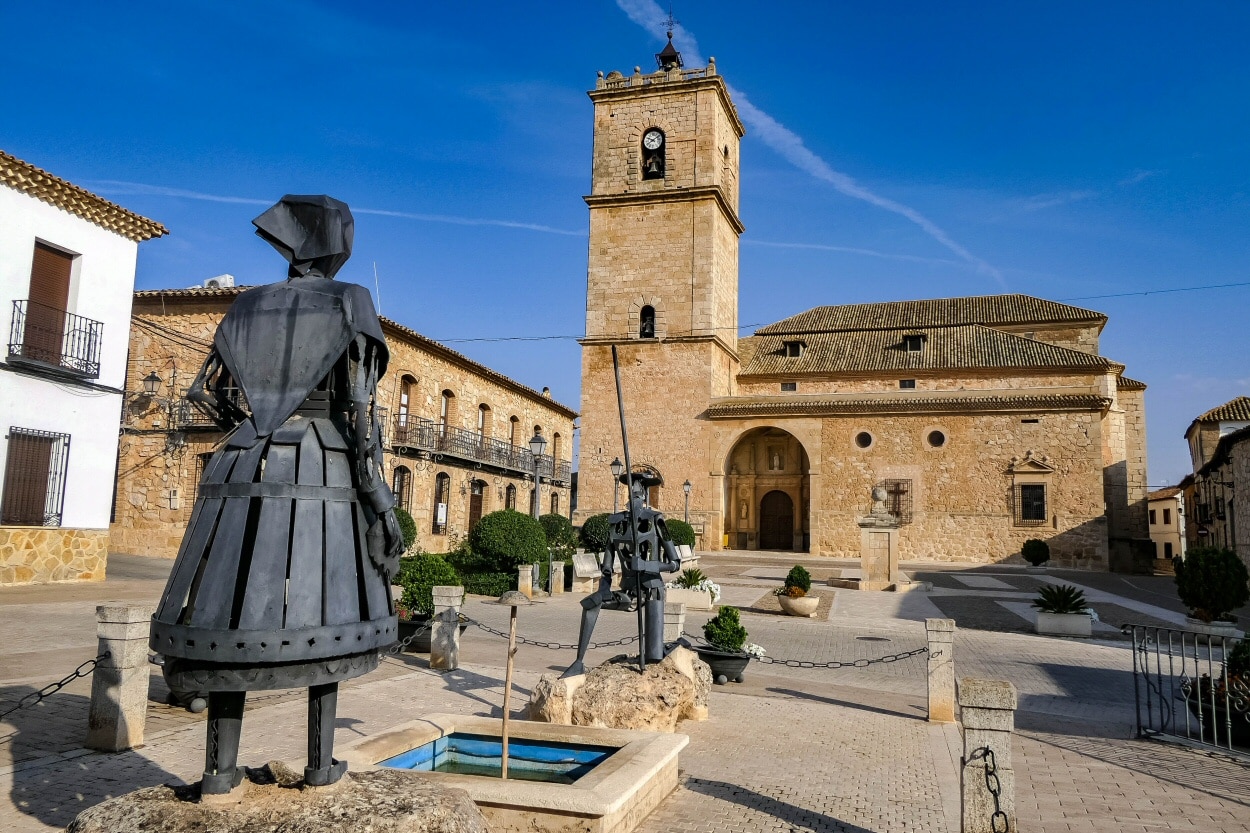
Dulcinea House Museum in El Toboso
En The Toboso you must visit the Dulcinea House Museum, reproduction of a Manchego mansion from the 16th century where you will see decoration and numerous utensils from that time.
If you want to stay in a country house where you feel transported to the environment of El QuijoteYou should definitely go to the Tower House, a 17th century mansion that its owner, Isabel, has been decorated with furniture from the 18th and 19th centuries
Cervantino Museum in El Toboso
Other curious visits are the Cervantino Museum, with an interesting exhibition of editions of El Quijote in more than 70 different languages, and the Museum of Graphic Humor, with a collection of drawings dedicated to the figure of Dulcinea.
And on the other hand, be sure to visit the charming corner of the Convent of the Poor Clares, from the 16th century, where you can buy their sweets from the nuns Fluff y Dulcinea's Whims.
Socuéllamos, a wine tourism destination in Ciudad Real
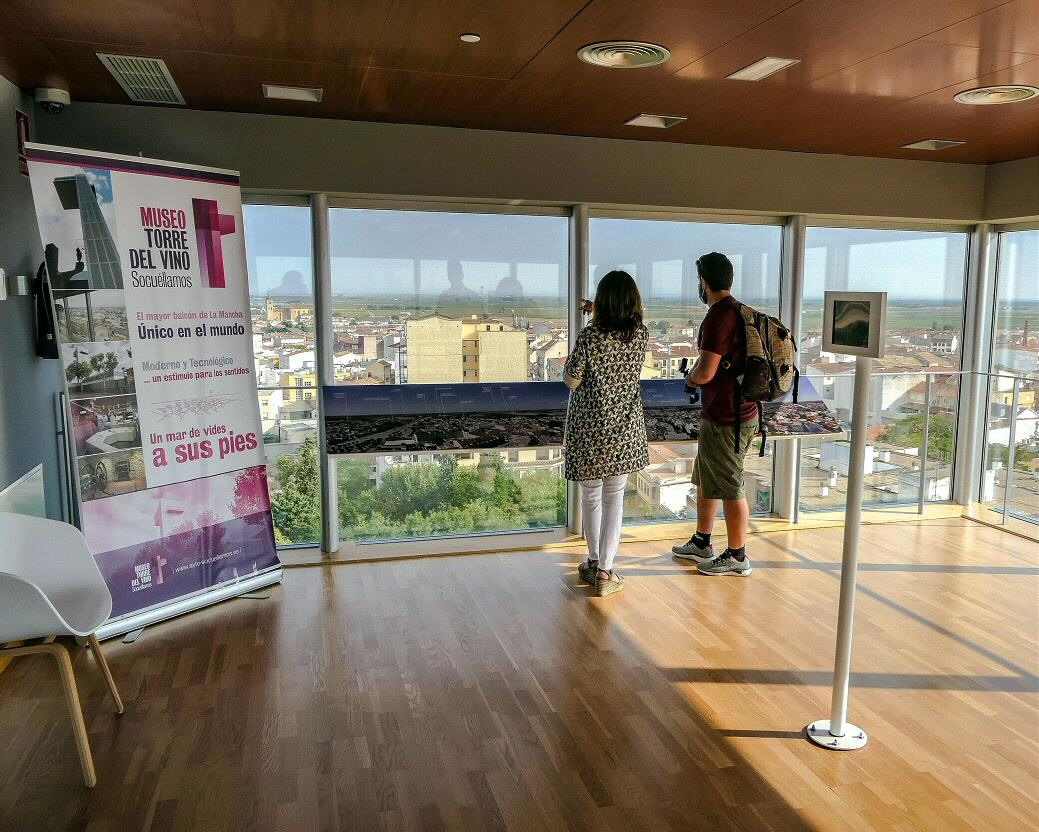
Socuélamos, another of the towns in the natural region of La Mancha, In Ciudad Real provinceAt first you will be surprised by the large and modern tower that you can already see as you enter it.

Wine Tower Museum in Socuéllamos
This is the Wine Tower museum, a landmark of an eminently wine-growing area, with a sea of vineyards that surround this town where there are 13 wineries, among which are the Bodegas Cristo de la Vega (Crisve), one of the largest in Europe, or the EHD Winery.
This museum is located in the old bus station, and it shows the history of this town in La Mancha and its relationship with wine, in addition to offering numerous activities, such as wine tasting.
From the top of the tower you have splendid views panoramic views of Socuéllamos and its surroundings, of which the aforementioned will draw your attention vineyard landscape that surrounds it.
Book your hotel, 15% discount, free cancellation
When planning your trip, we advise you to, well in advance, Book your hotel now on booking.com where you can find discounts from 15% and you will have a possible cancellation for free
House of the Encomienda in Socuéllamos
On your walk through the historic area of Socuélamos, can you see her House of the Encomienda, Also known as House of the Mendoza, typical ancestral mansion built in 1440, which was the home of the Commanders of the Order of Santiago.
Next to said house is the Church of the Assumption from the end of the 15th century, with late Gothic style architecture and Renaissance elements; It is worth entering its interior to see its ribbed vault and its large altarpiece.
In preparation for your visit, here you have extensive information about the best to see and visit in Socuéllamos
Tomelloso, the tradition of caves and chimneys
Another of the towns of great wine tradition that you can visit during this tourist route through the Ciudad Real province es Tomelloso, a town where in the past up to 4.000 caves were catalogued.
But it was not until the last quarter of the 19th century when vines began to be cultivated in its fields, and in parallel, a large number of wineries were opened. alcohol makers dedicated to alcoholic distillation.
As a consequence of this development, since the middle of the last century Tomelloso it has become the first producer of wine alcohol in the world, which is largely destined for Jerez for the production of brandy.
A sample of this boom were the more than 60 distilleries and 100 chimneys that came to be in Tomelloso in the 50s, and even today on your tour of the town you can see, as industrial heritage, 19 large chimneys more than 20 meters high and 13 shorter.
Posada de los Portales in Tomelloso
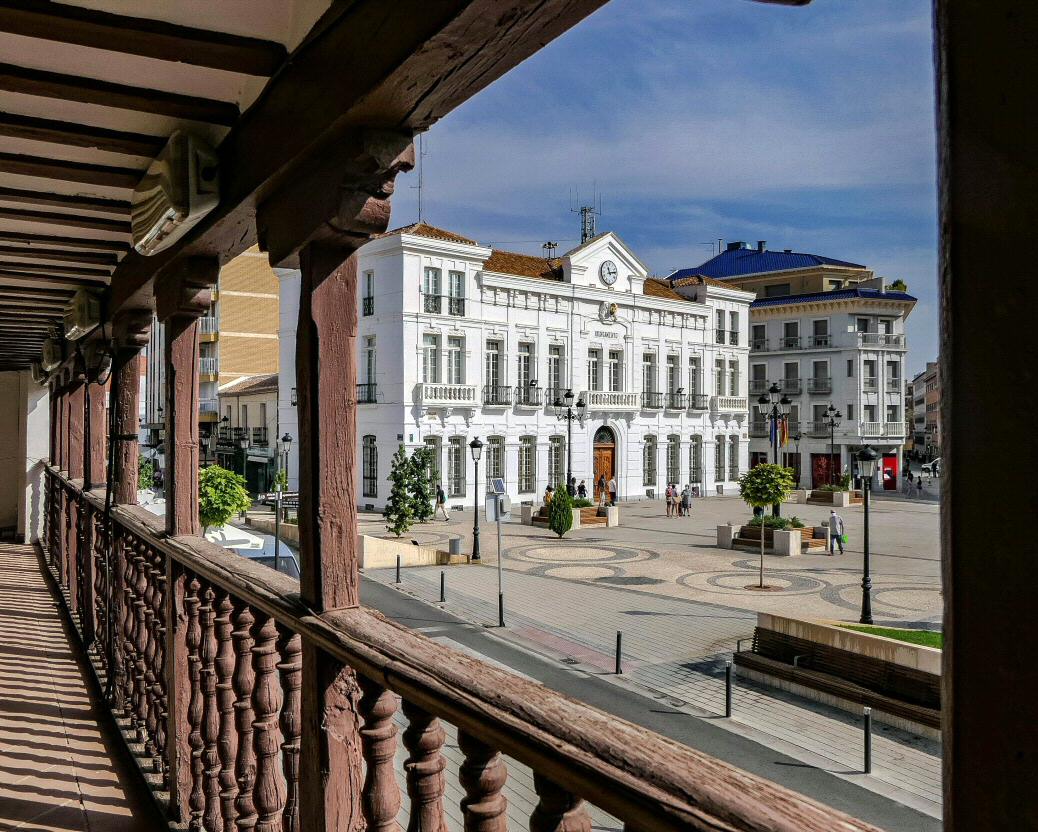
Facing your Tomelloso sightseeing tour, plus visit wineries or some cave, like that of the old Perales Wineries, in the heart of the town, the Spain Square can you see her Inn of the Portals.
Built in the second half of the 18th century, the building is a typical La Mancha sale, with its central corral patio, and with a striking façade with an arcade with columns that support two galleries with wooden balconies.
Car Museum in Tomelloso
Regarding museums, Tomelloso you have the one of Contemporary Art Infanta Elena located in the Virgen de las Viñas Cooperative, one of the largest in the world.
Reserve your RENTAL CAR now for your trip
Looking ahead to your trip, book your rental car now on this website that offers you the best price guaranteed and allows you a possible free cancellation in most cases. Here you have more information with tips for renting a car
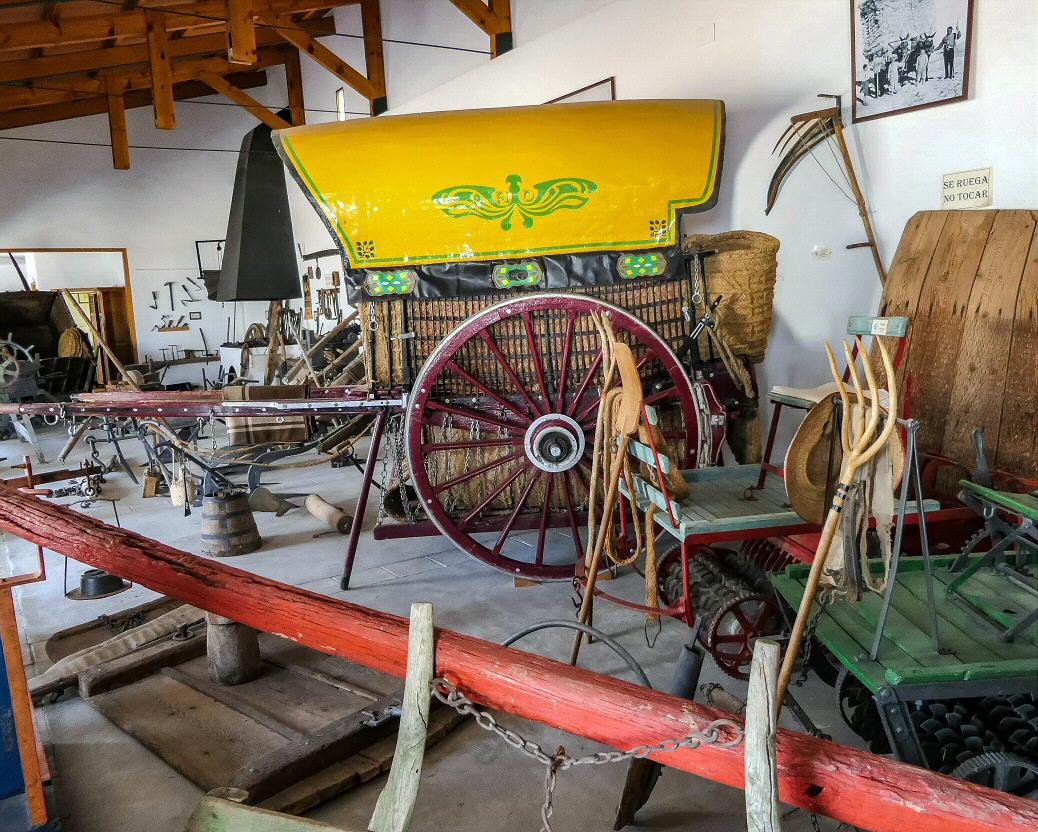
But if you want to go deeper into the agricultural tradition of Tomelloso, you should not miss visiting the Museum of Cars and Farm Tools, where in addition to numerous agricultural utensils, you can see a drum, a typical rural construction of the area built with thousands of small stones.
Finally, from the gastronomic point of view, it is worth highlighting the La Antigua restaurant, located in a traditional La Mancha house, where you can enjoy both the typical La Mancha food like one more elaborate cuisine, with a very good quality/price ratio.
Villarrobledo and the tradition of clay pots
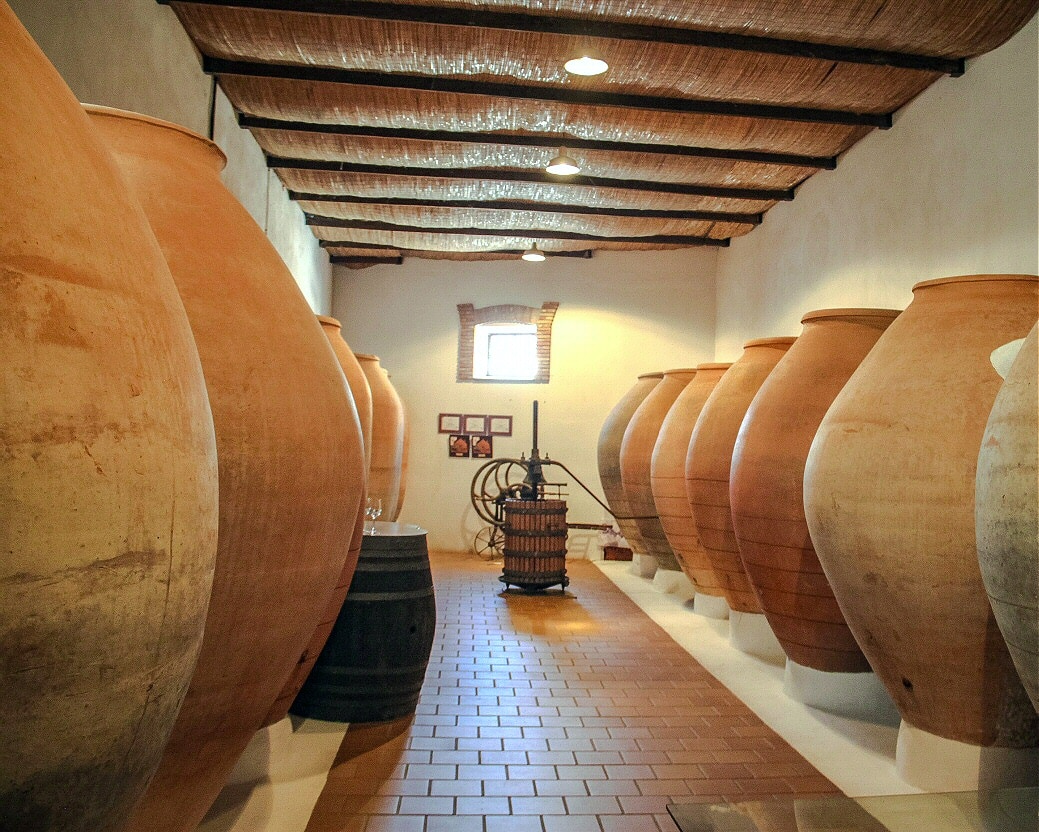
One of the most prominent wine traditions of La Mancha is, without a doubt, that of the fermentation of wine in large fired clay jars, and the place where you will best be able to experience it is in Villarrobledo, In Ciudad Real province.
Tradition of clay jars in Villarrobledo
There are already references that since the mid-10th century, jars with a capacity of 11-XNUMX arrobas were manufactured, reaching the point of counting Villarrobledo at the beginning of the 70th century with more than XNUMX kilns for the production of clay jars.
In the middle of that century the decline began with the arrival of cement deposits, and currently the stainless steel tanks, located in Villarrobledo three of the most important production companies.
Esta tradition of clay jars you can see it by visiting César Velasco Winery where, currently, 52 jars are still used.
Tinajera Pottery Museum in Villarrobledo
And you can delve deeper into this tradition with a visit to the Tinajera Pottery Interpretation Center located in a old pottery and kiln, where you can see utensils and learn about the history of this economic activity that has marked the history of Villarrobledo.
Town Hall of Villarrobledo
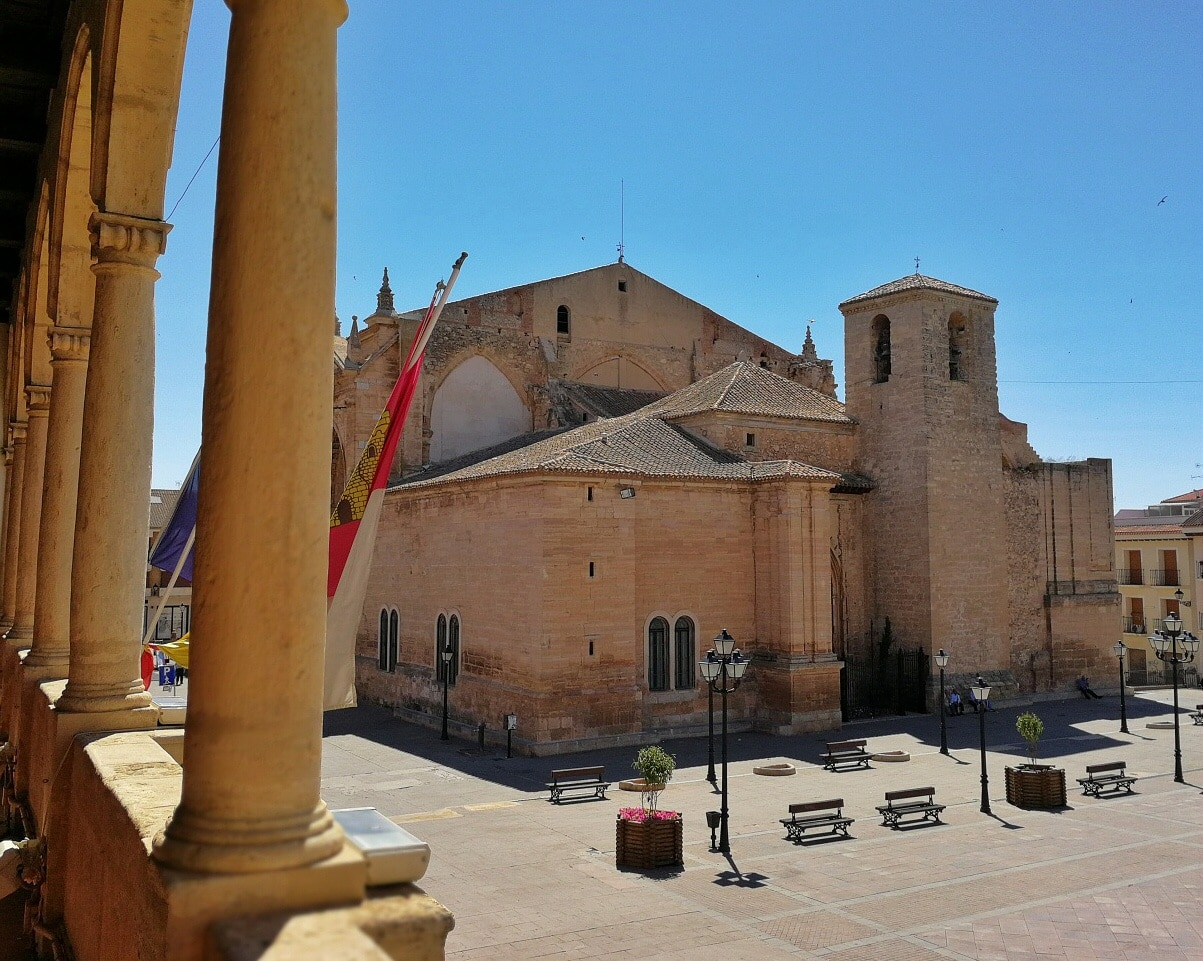
Now, in your visit of Villarrobledo It is essential to go to the heart of the town, the Ramón y Cajal square, where you can see its two most emblematic buildings.
This is the Town Hall, headquarters of the town hall, a construction that dates back to the 14th century and which stands out for its beautiful façade with a renaissance arcade from 1559, and the interior cloister, completely restored.
The other building to note is the church of San Blas, from the 16th century, a mixture of Gothic and Renaissance styles, inside whose ribbed vaults will catch your attention.
On your walk through the town you will also be able to see some other interesting buildings, such as the House of the Tellez, with its baroque façade, or the building of the Commercial and Industrial Circle, built in 1911 in postmodernist style.
Finally, and on the gastronomic level, in Villarrobledo it is worth knowing the Saffron restaurant.
Awarded by the Michelin Guide and owned by Teresa Rodriguez, cook who gained fame with her participation in the program Top chef, in this restaurant you can taste a updated version of the traditional Castilian-La Mancha cuisine.



Comment