

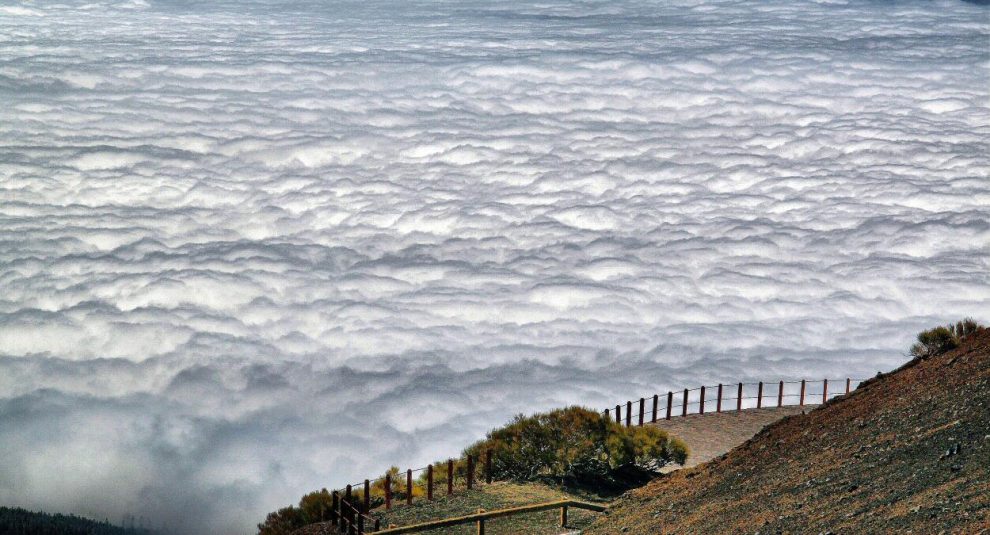

Many landscape attractions of the island of Tenerife, Canary Islands, but if you have not yet had the opportunity to visit these beautiful Atlantic islands, you may be surprised to know that seeing the sea of clouds at the feet of Teide It is one of the essentials.
But what is the sea of clouds?
Popularly known as donkey belly, is the result of the trade winds coming from the Azores anticyclone that blows constantly.
DON'T FORGET YOUR TRAVEL INSURANCE
Are you planning your trip or getaway? Don't leave without take out your travel insurance before, and here we explain whyIf you contract it with us, you have a 10% discount with the code GUIASVIAJAR10.
All the information in detail
What is it and how is the sea of clouds formed in Tenerife?
Due to the humidity they carry, these winds create a cloud front at a height between 500 and 1.200 meters, which collides with the mountain range that rises around the Teide.
These clouds usually stagnate for months, especially in summer.
Therefore, when from the Puerto de la Cruz, in the Orotava Valley, you go up to Canyons of Teide, once you get over the clouds, you can find a completely clear day...and the impressive cloud sea landscape.
When you cross the sea of clouds on the road, you will notice a high humidity of almost one hundred percent.
As a result, for a couple of kilometers you will find landscapes more typical of regions such as Galicia o Asturias, due to the effect of the so-called horizontal rain.
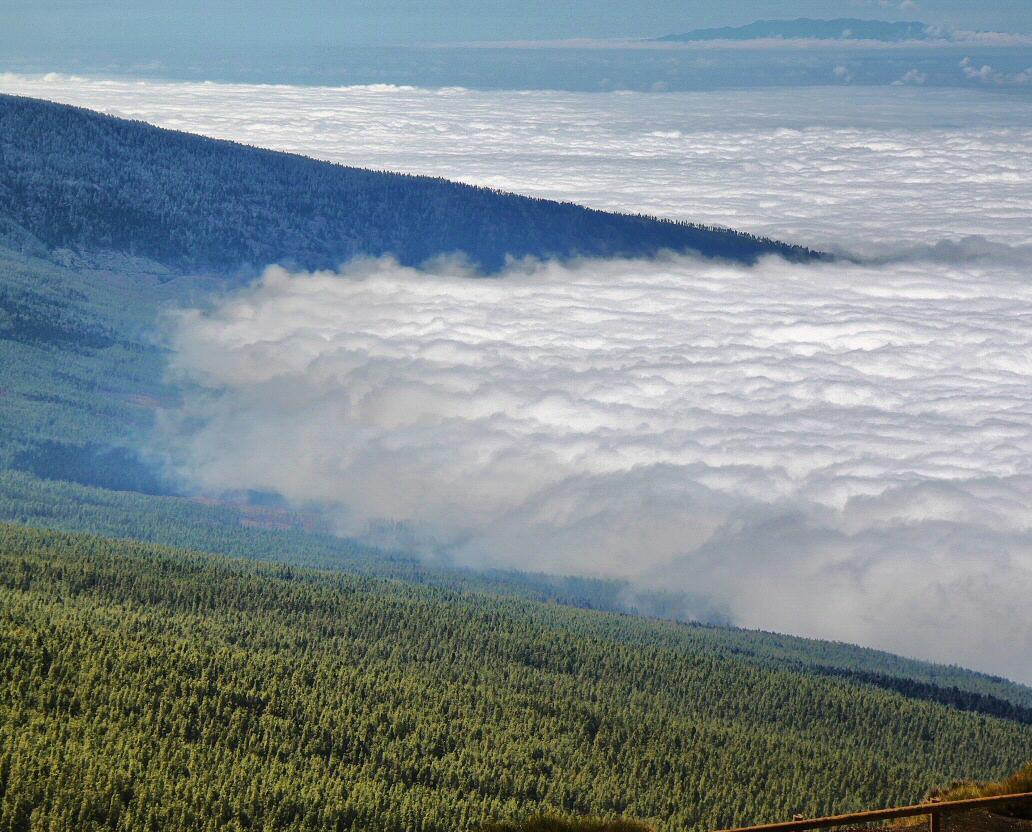
Normally you can see the sea of clouds in all its splendor in summer.
To do this, it is best to follow the TF-24 highway, which from the Mount of Hope, southwest of La Laguna, will take you along the upper edge of the mountain range to the Canyons of Teide.
Viewpoints where you can see the sea of clouds of Teide and Orotava
Along this road there are various viewpoints, from which you will have diverse and spectacular perspectives of the sea of clouds, with the imposing Teide volcano at the bottom, and at the foot, the Orotava Valley.
Of all of them, without a doubt the best is the viewpoint of the Teide Cake.
This is the volcanic landscape of the Teide Cake
But this viewpoint has a double aspect, since it is actually two viewpoints.
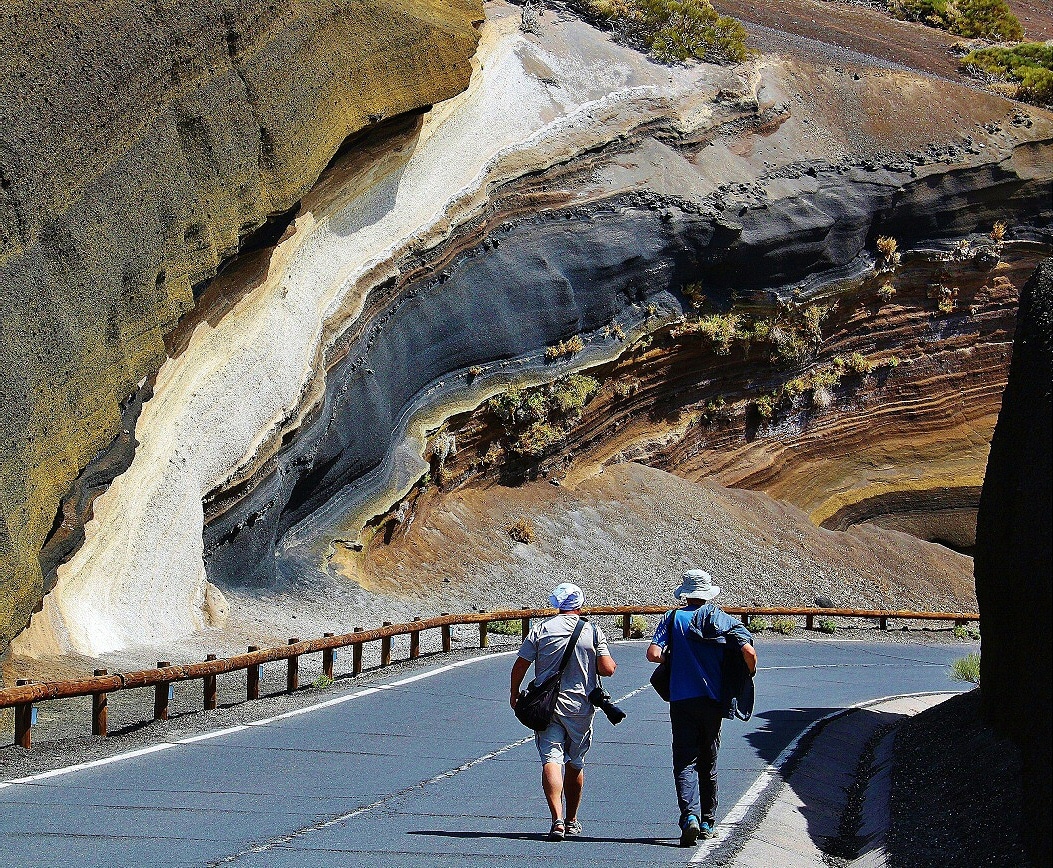
On the TF-24 highway that starts from La Laguna Go to the Mount of Hope, takes you along the upper edge of the mountain range to the Cañadas del Teide, you will find a curve that crosses an old Lava river.
In this volcanic area known as the Teide cake It is where the viewpoint is located.
The denomination of pie It comes because here you can see very well the results of different eruptions, each of which corresponds to a different color layer.
These rashes They could have taken place for days or weeks, dragging materials of different characteristics.
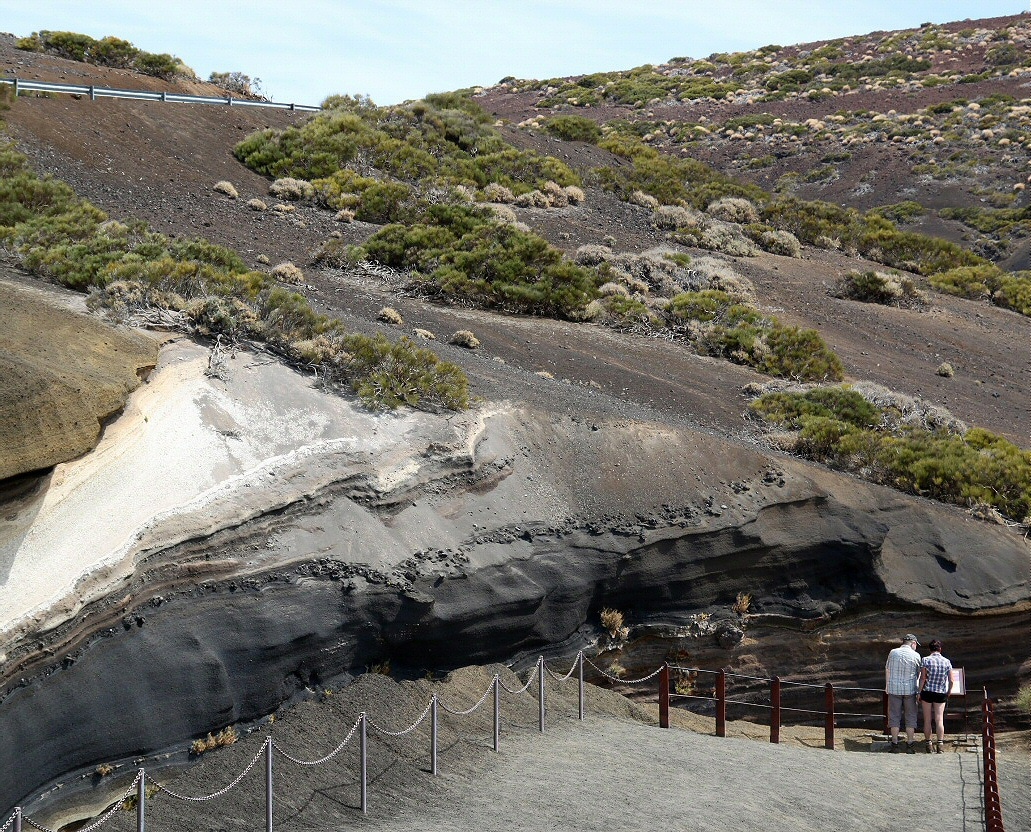
And between each of the layers that you can now see in the Teide cake Centuries or millennia may have passed.
As indicated on the information sign that you find at the viewpoint of this volcanic site, the white layer is made up of fragments of pumice and it is very porous and light.
The black layers are formed by basaltic picon, characteristic of eruptions with low gas emissions.
ORGANIZE your TRIP
- Don't forget your TRAVEL INSURANCE with a 10% discount
- Book the HOTEL for your trip
- eSIM card to have INTERNET at a discount
- The best TOURS and EXCURSIONS in Spanish
- TOURS and ACTIVITIES in English and other languages
- NO-LINE TICKETS for museums and monuments
- RENT a CAR for your trip
- Has your flight been cancelled? How to claim compensation
- Book your TRANSFER from the airport
And, for their part, the reddish layers are also basaltic picon, but its color is the result of having come into contact with groundwater that has oxidized the material before evaporating due to heat.
In short, the Teide cake is one of most beautiful landscapes and one of the best places in the island of Tenerife to appreciate how the eruptions have created beautiful volcanic landscapes.
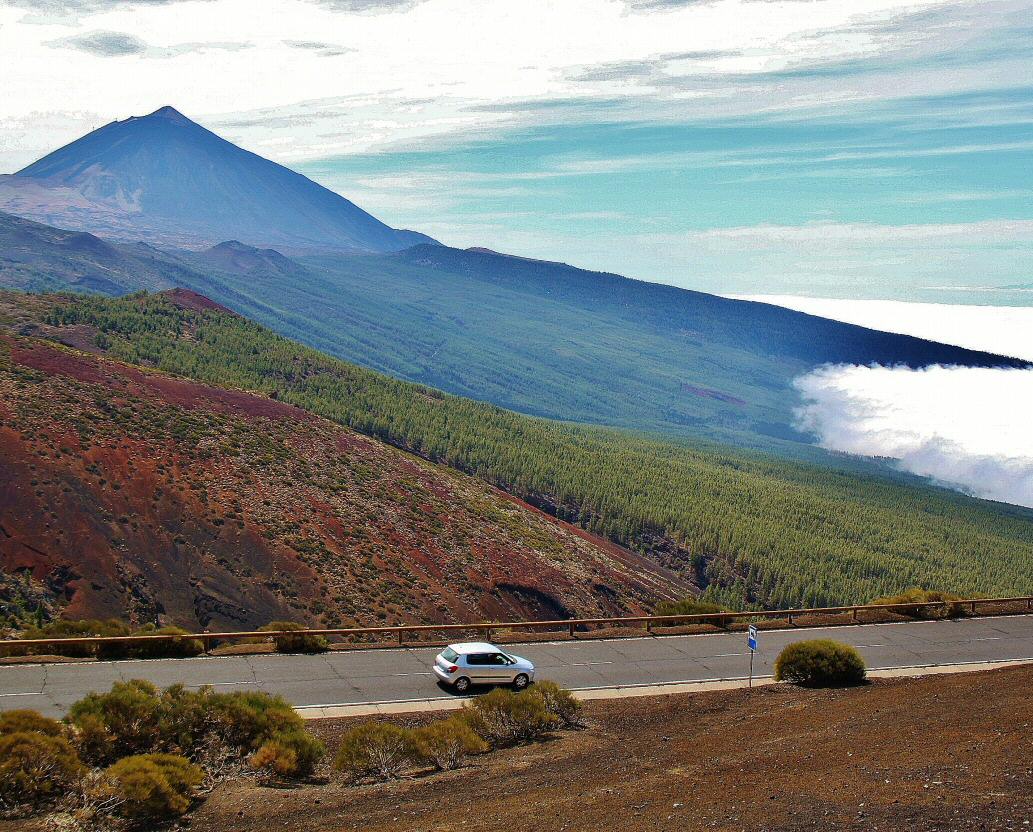
El sea of clouds It also occurs on the other islands of the archipelago where the height of the mountains exceeds the level of the clouds, above 1.000 meters.
This is not the case, for example, of the island of Fuerteventura where the mountains do not reach that height
I have only had the opportunity to see it in Tenerife, yes, numerous times, and due to its spectacular nature, I advise you not to miss it on your tourist trip to this beautiful island.


Good morning, I read on Facebook that you have been visiting Agaete, Victor's farm! Next time you could stop by my house, the only rural house in the same town!
all the best
Loreto Herrera
Loreto, let's see if I can visit your house next time. This time I have been to Las Longueras.