

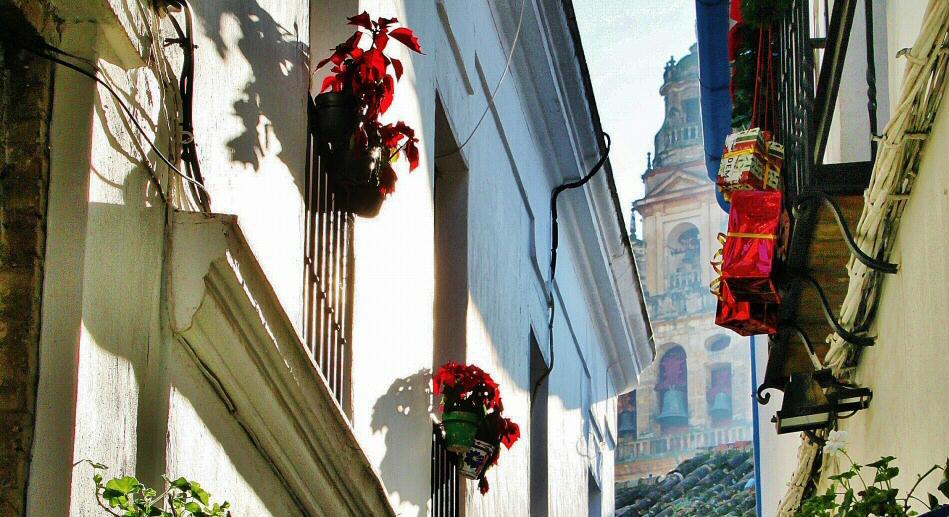

If there is a city that is really worth knowing and that justifies a trip to Andalusia, that is, without a doubt, Cordoba.
And I admit that perhaps it is not objective since it is our favorite city in said community in southern Spain.
The impressive monument of the old mosquedeclared Heritage, or the historic quarter of the city, the old Jewish Quarter, they will be the center of your visit.
DON'T FORGET YOUR TRAVEL INSURANCE
Are you planning your trip or getaway? Don't leave without take out your travel insurance before, and here we explain whyIf you contract it with us, you have a 10% discount with the code GUIASVIAJAR10.
But from our experience, and apart from other notable monuments such as the Alcazar of the Christian Monarchs, we want to highlight several curious and interesting places, some little known among tourists, that you should not miss see and visit on your getaway to Córdoba.
All the information in detail
Callejón de las Flores, most touristic corner of Córdoba
One of the more typical photos from a corner of the historic center of Cordoba is the one that heads this topic, without a doubt, one of the prettier and more touristy places of the ancient caliphal city.
This is the Flower Alley (actually called Alley of Flowers), and the characteristic view allows you to glimpse the tower of the grounds of the cathedral mosque between the walls of a very narrow alley decorated with plants full of flowers.
Where is the Alley of Flowers
Butwhere you can see the Alley of Flowers in Córdoba?
This such a picturesque corner you find it in full Jewish Quarter, specifically, near the Cardenal Herrero Street.
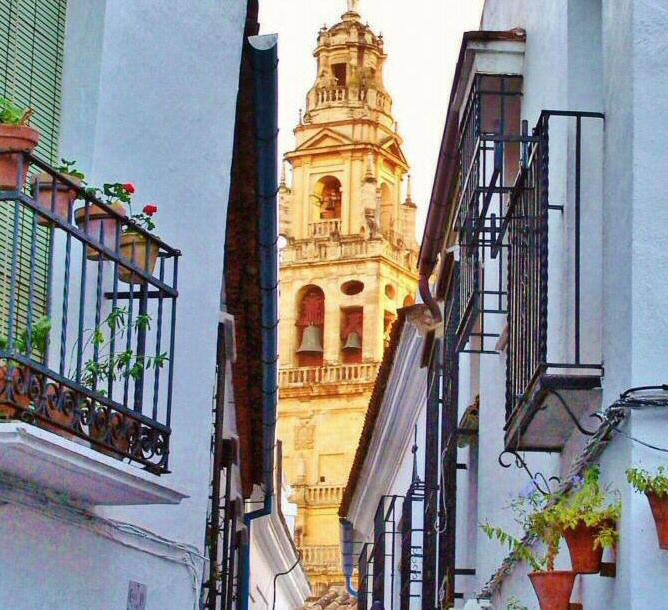
This is the street that runs along the northwest façade of the walled enclosure of the Patio de los Naranjos, In Mosque of Cordoba, almost in the north corner.
If you are one of those who likes to sign up for a tour to get to know the city, here we leave you the link where you can hire the visits, excursions and tours with guide in Spanish more interesting
From there starts an alley called Velazquez Bosco where several taverns are located.
Enter it and about 15 meters to the right you find the Alley of Flowers, where you are sure to see people coming and going.
Also enter this already very narrow alley that ends in a small interior patio; turn around, and through the walls and flowers of the alley you will glimpse the cathedral tower.
This corner is very popular with tourists, and don't be surprised if it is full of people, especially Japanese, as happened to me the last time I visited.

At this point take out the camera and take all the photos you want.
Of course, I recommend that you go at dusk to take advantage of the light that will illuminate the tower of the Mosque Cathedral of Córdoba.
Where to see the Virgin of Flowers
Very close to this corner, when you go to access the aforementioned Patio de los Naranjos that extends along the north façade in the wall where the Door of Forgiveness you will surely go through a altarpiece that will catch your attention.
This is the Virgin of the Lanterns, which is located next to the Caño Gordo Gate, close to the aforementioned Puerta del Perdón, the main access to the old mosque of the andalusian city.
This altarpiece, which is accessed by stairs, acquires its name from the lanterns that illuminate it from the fence that surrounds it, and displays a painting that represents a Immaculate.
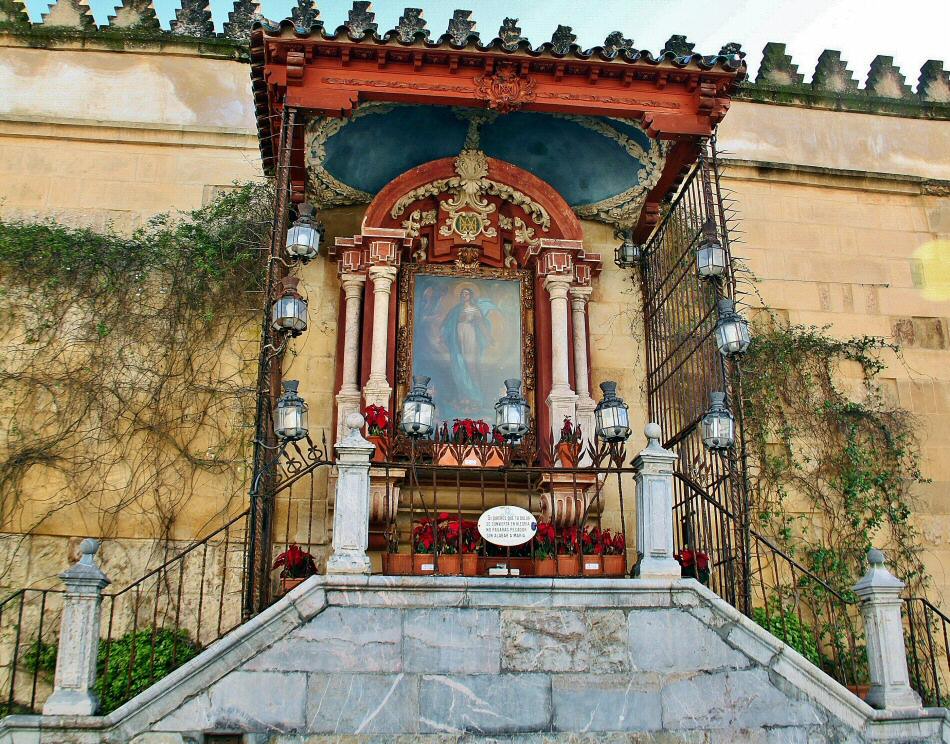
When the original painting was destroyed by fire in 1928, the Córdoba City Council commissioned the great local artist Julio Romero de Torres a new work.
Years later it was decided that, given its artistic value, the work would be kept in the museum that in Cordoba is dedicated to the aforementioned Julio Romero de Torres and, therefore, the painting that you can now see on the altarpiece is a copy made by his own son.
ORGANIZE your TRIP
- Don't forget your TRAVEL INSURANCE with a 10% discount
- Book the HOTEL for your trip
- eSIM card to have INTERNET at a discount
- The best TOURS and EXCURSIONS in Spanish
- TOURS and ACTIVITIES in English and other languages
- NO-LINE TICKETS for museums and monuments
- RENT a CAR for your trip
- Has your flight been cancelled? How to claim compensation
- Book your TRANSFER from the airport
As you will see on your trip to the Andalusian city, the lanterns have a great role in its streets.
Old Synagogue in the Jewish Quarter of Córdoba
You cannot fully appreciate the historic multicultural character of this Andalusian city if you do not visit the Synagogue en the Jewish quarter.
Along with the most important historical exponents of Muslim and Christian cultures in the city, the Mosque and the Alcázar, the circle is completed by a much more modest monument.

This is the ancient Jewish Synagogue, which you should not miss during your walk through the beautiful Jewish Quarter.
La Synagogue of Córdoba It dates back to the year 1315, and was built to replace a large synagogue that the Jews of the city intended to build, which was not authorized by the Pope Innocent I.
In Spain only in Toledo you will find synagogues from that time, the Transit Synagogue y Saint Mary the White.
This small building Jewry, after the expulsion of the Jews by the Catholic kings, it became a hospital, and in subsequent centuries it was also a church and a school.
It was in 1884 when inscriptions in Hebrew were discovered, and then it was declared A Cultural.
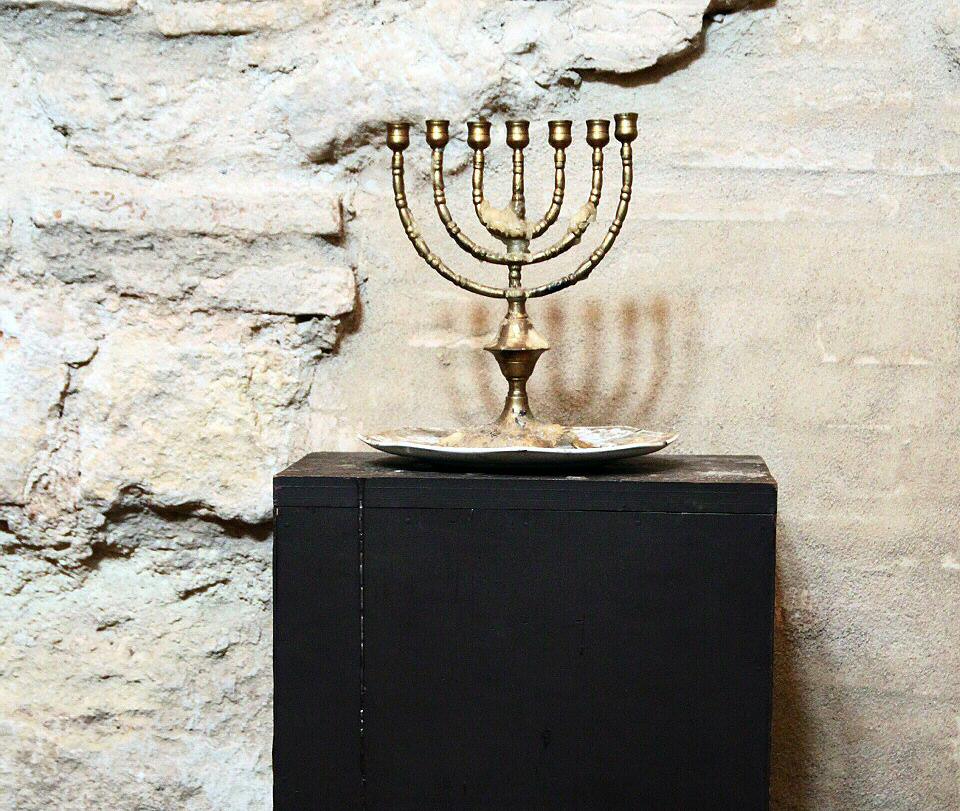
Where is the Synagogue of Córdoba
La Synagogue you find it west of the Jewish quarter, In 20 Jewish Street, which runs parallel to the wall.
You will surely discover the Synagogue by the tourists who enter or leave the small patio that precedes it.
To the right of the patio, and after crossing a vestibule, you enter the only room of the temple, which will surely surprise you with its small dimensions.
Indeed, the building has a square shape with sides of just over six meters.
At the top of the walls you will see a rich decoration of Mudejar style plasterwork and, for its part, the ceiling shows you a wooden coffered ceiling.
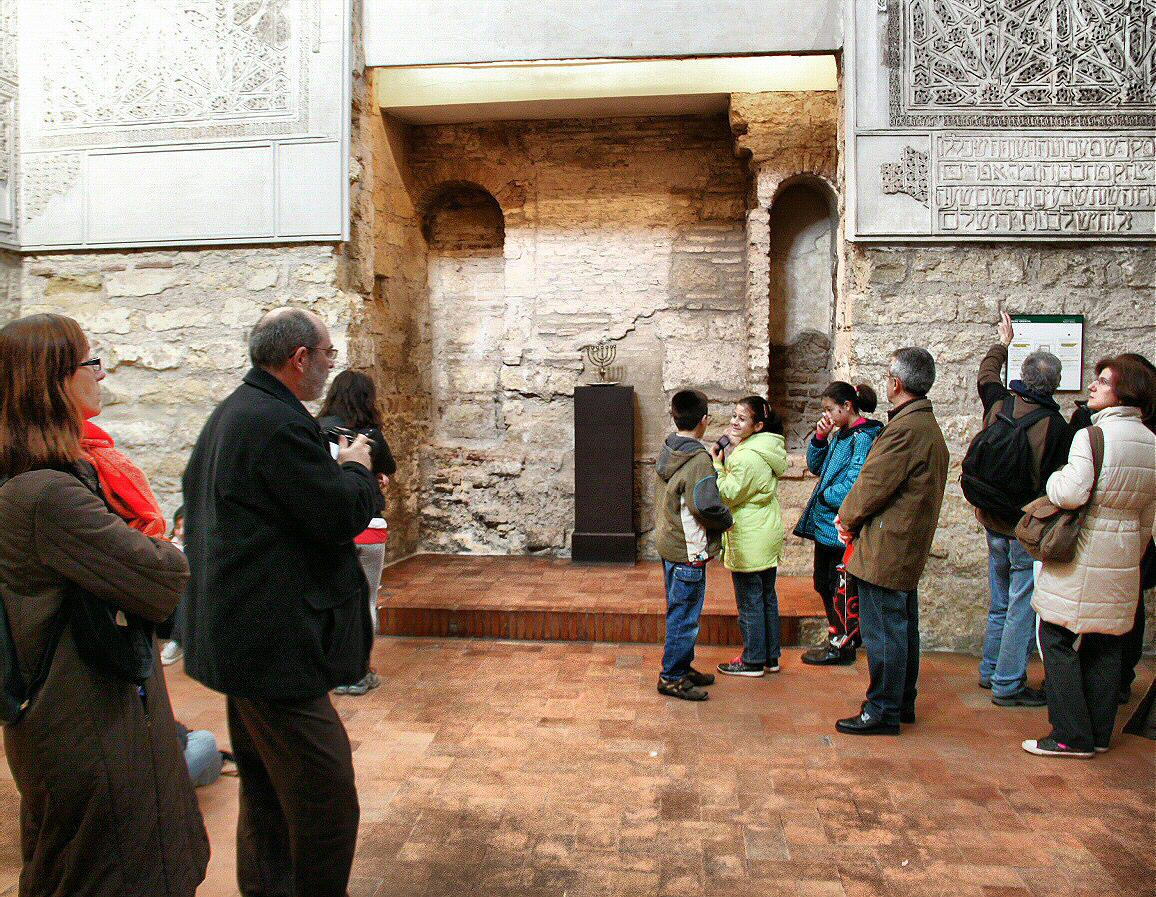
In the upper part is the traditional room for women, which is accessed by stairs from the hall.
True, it is a very brief visit that cannot be compared with the majesty of the Mosque, or even with the Alcazar of the Christian Monarchs, but it is the best trace of the presence of the Jews in Córdoba.
Schedules and prices for visiting the Synagogue of Córdoba
The Synagogue visiting hours, in the Jewish quarter of Córdoba, are, from Tuesday to Saturday, from 9 a.m. to 21 p.m., and on Sundays, from 9 a.m. to 15 p.m.
On Mondays it is closed for visits.
The ticket prices are free for citizens of the European Union, and 0,30 euros for the rest of the visitors.
Christ of the Lanterns in the Plaza de los Capuchinos
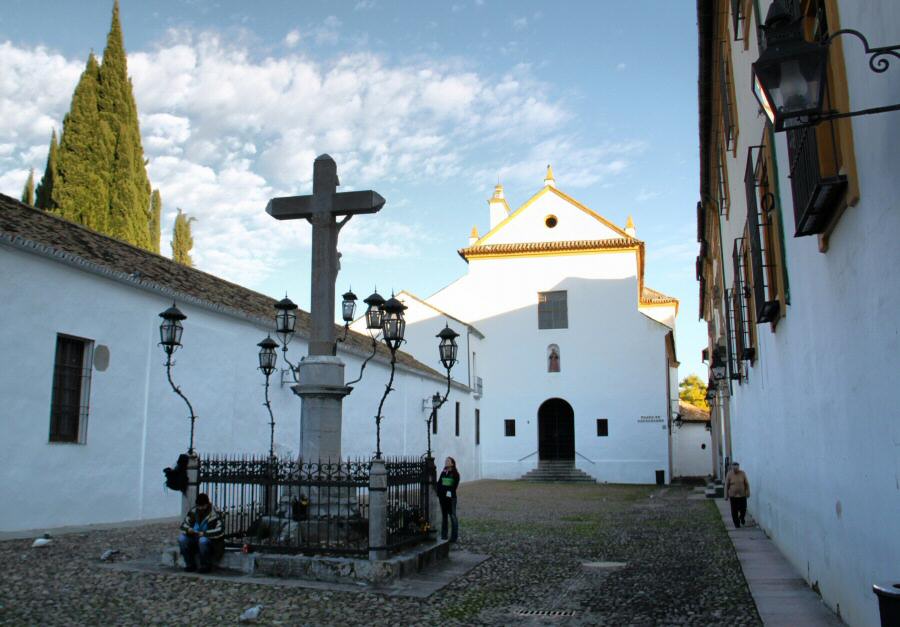
One of the most charismatic corners of the historic center of Cordoba is Capuchin Square,
There you will find one of the most popular sculpture groups in the city of Córdoba, the Christ of the Lanterns.
Book your hotel, 15% discount, free cancellation
When planning your trip, we advise you to, well in advance, Book your hotel now on booking.com where you can find discounts from 15% and you will have a possible cancellation for free
You can visit this corner of the Plaza de los Capuchinos on your walk through the northern part of the historic center, next to the also famous Cuesta del Bailio, and not far from Palacio de Viana or Fernandina church of Santa Marina.
When you reach the Capuchin Square, don't expect to find a large monumental area; A poet from Córdoba has even said that It is nothing more than a rectangle with lime and sky.
Without a doubt, a good time to visit this corner of Cordoba It is at dusk, the moment when the Christ of the Lanterns It reaches its greatest splendor when the set of lanterns that surround this sculpture are illuminated.
To visit this beautiful Andalusian city, you can sign up for this Free Tour of Córdoba two hours long, and here you go other alternatives so you can choose
El Christ of the Lanterns It is a monument that was built in 1794, although the fence and lanterns were placed in the last XNUMXth century.
But Capuchin Square, whose configuration dates back to the 17th century, and in which the lime walls are also major protagonists, contains two other monuments.
Church of Sorrows
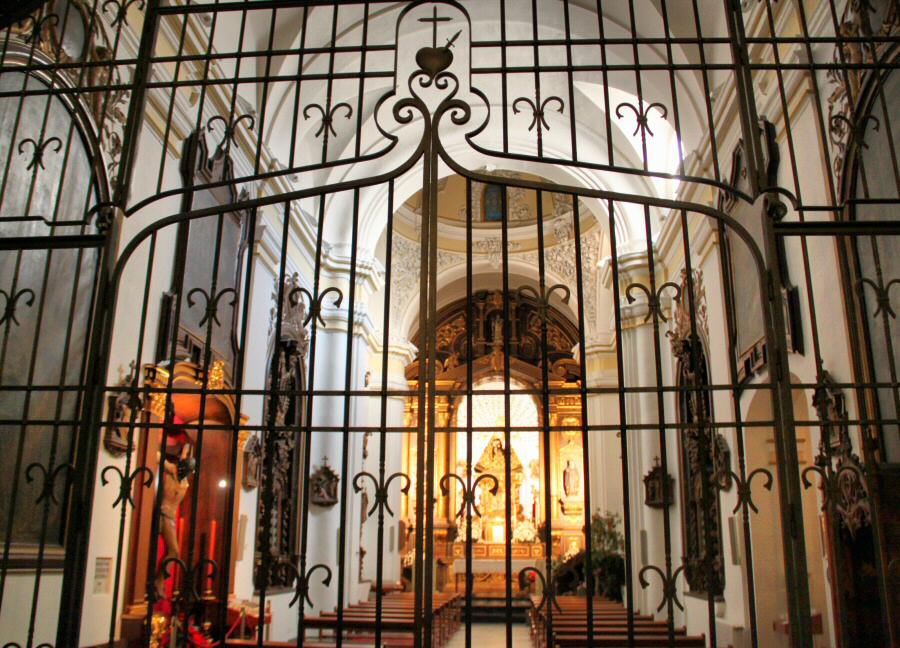
On the one hand, the Church of Sorrows, from 1728, which given the sobriety of its façade, you will only recognize by its cover, which already announces a baroque style interior.
With a single nave and a large dome, behind the interior door with bars, on the main altar you will distinguish the image of the Virgin of Sorrows, one of the most prominent in Córdoba.

Church of the Capuchin Convent
And on the other hand, next to the passage that connects the Plaza de los Capuchinos and the Cuesta del Bailio, you will see the small building of the church of the former Capuchin ConventOf 1638.
Of this convent now only the aforementioned church, the cloister and the orchard remain.
Reserve your RENTAL CAR now for your trip
Looking ahead to your trip, book your rental car now on this website that offers you the best price guaranteed and allows you a possible free cancellation in most cases. Here you have more information with tips for renting a car
Where is the Cuesta del Bailío and what is it like?
The one known as Cuesta del Bailío It is a historic street with a large staircase, which linked the upper areas of Córdoba (Medina) with the lower zone (Farmhouse), and crossed the old wall of Roman origin with a gate.
To see the Cuesta del Bailío You can access from the lower part through the Alfaros street, in the area where the fernandina churches., and from the upper part you will arrive from the Capuchin Square.
Why is it called Cuesta del Bailío?
The history of this famous hill of Córdoba You find it on an information sign at the top of it.
The name of bailio refers to the knight of the Order of Saint John that by seniority or a special grace acquired the distinction of dance.
And the reason the slope is called that way is because the house that is located at the top of it was a residence in the 16th century of Brother Pedro Nuñez de Herrera, who in his day was Bailío de Lors, and that belonged to the family of Fernandez of Cordoba.
What will you see on your visit to the Cuesta del Bailío?
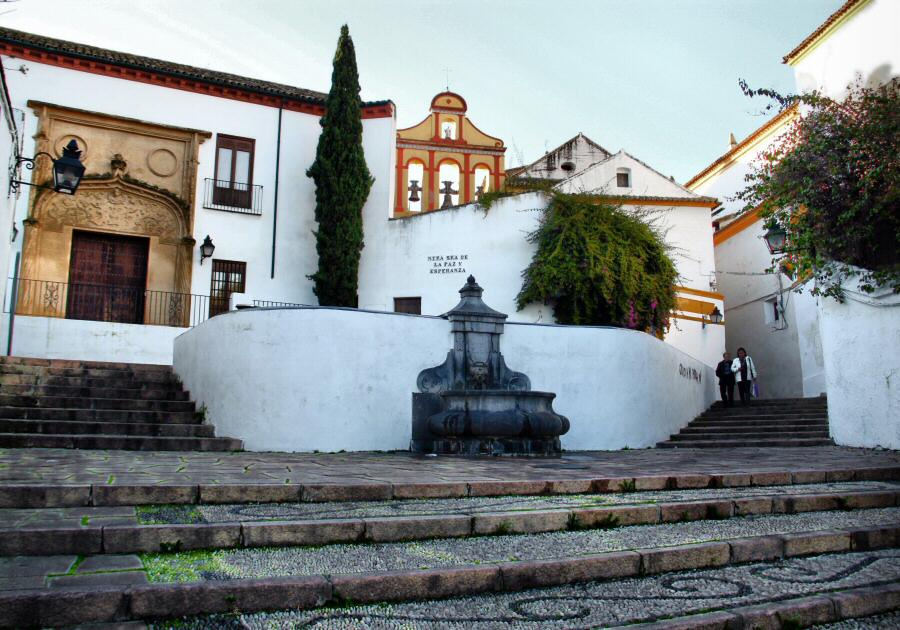
If you come from the next Capuchin Square, in front you will find the wide and steep staircase with 32 steps, although before the reform of the 40s, the slope did not have the same.
On the right you will precisely see the Bailío House, on whose façade the Renaissance doorway from 1530 will catch your attention.

The building is currently shared by a foundation and a hotel and, although I have not had the opportunity to see it, inside there are wall paintings with scenes from the life of the Great Captain (Gonzalo Fernandez de Cordoba) and a neo-Arabic style room.
At the top of the stairs Bailío House There is a fountain, and when you go down the steps and turn your head, you will see that at the top the bell tower of the nearby one stands out. church of the Capuchin Convent.



Comment