

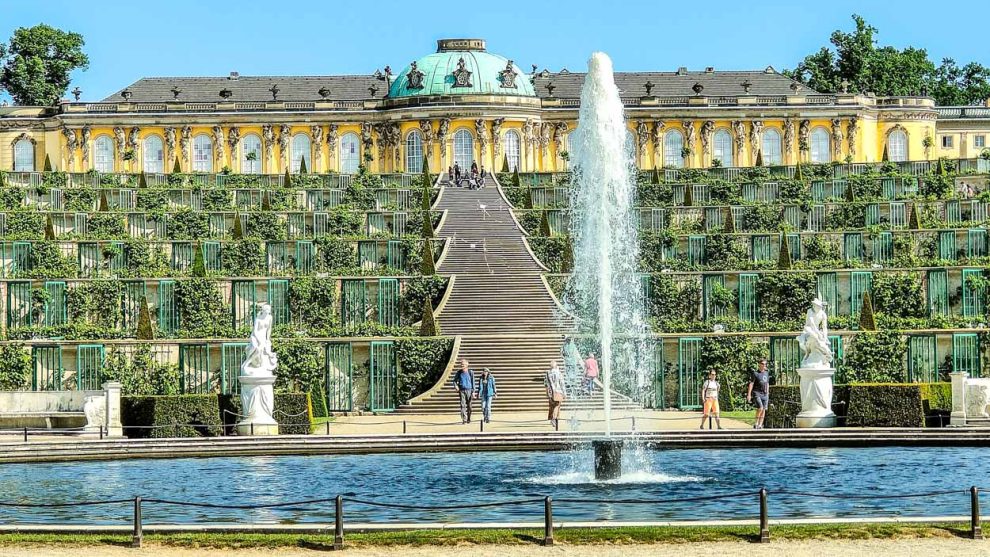

The best site of Germany, to know the past of the kingdom of Prussia, it is undoubtedly the city of Potsdam.
Located just 25 kilometers from Berlin, a excursion to Potsdam It has become essential for tourists who travel to the German capital.
It is currently the capital of the state of Brandenburg, which surrounds the Berlin city, which is also a state of Germany.
DON'T FORGET YOUR TRAVEL INSURANCE
Are you planning your trip or getaway? Don't leave without take out your travel insurance before, and here we explain whyIf you contract it with us, you have a 10% discount with the code GUIASVIAJAR10.
En Potsdam The kings and prince-electors of Prussia created a resting place that combines three large parks and where now you can see up 17 original palaces.
This landscape and architectural complex located on an island surrounded by parks and the lakes of the havel river, it is declared Heritage awarded by the UNESCO.
But Potsdam, you will also see corners that have been key in the history of Germany during the 20th century, such as the palace where the Treaty of Potsdam at the end of the Second World War in which the United States, Russia and Great Britain agreed on what the future of defeated Germany would be.
You will also see places that are part of the history of the German Democratic Republic, since this city was located in the area controlled by the Soviet regime bordering the Berlin Wall.
All the information in detail
- 1 Curiosities of the history of Potsdam
- 2 Why Potsdam is a World Heritage Site
- 3 This is the experience of visiting Potsdam, the best things to see
- 3.1 How to visit Potsdam by bike
- 3.2 Boat cruise in Potsdam
- 3.3 Old Market Square
- 3.4 St. Nicholas Church in Potsdam
- 3.5 Potsdam Film Museum
- 3.6 New Market Square, baroque square in Germany
- 3.7 Brandenburg Street, the most touristy area
- 3.8 Dutch Quarter in Potsdam
- 3.9 Sanssouci, the largest park in the city
- 3.10 Sanssouci Palace
- 3.11 New Palace in Potsdam
- 3.12 Chinese Pavilion in Sanssouci Park
- 3.13 Orangerie, Italian palace in Potsdam
- 3.14 Russian Colony Alexandrowka in Potsdam
- 3.15 Cecilienhof Palace, site of the Potsdam Conference
- 3.16 Glienicker Bridge, the bridge of spies
Curiosities of the history of Potsdam
Before your trip to Potsdam, you might be interested in knowing some curiosities and historical data of the Kingdom of Prussia.

Prussia It was a state located on the banks of the Baltic Sea, which occupied part of the north of present-day Germany and Poland.
Until 1701, when it became Kingdom of Prussia, was run by elector princes.
It was from this time onwards that the main urban and architectural development of Potsdam, with Federico Guillermo l, which was known as the soldier king because he always wore a military uniform and dedicated a large part of his resources to the development of the Army.
It was from 1740 when he ascended the throne Frederick II the Great, who built several palaces, and specifically that of Sanssouci, which is currently the most visited by tourists.
Why Potsdam is a World Heritage Site
In December 1990, just two months after the German reunification, it was when the UNESCO said Heritage to the set of parks and palaces of Potsdam.
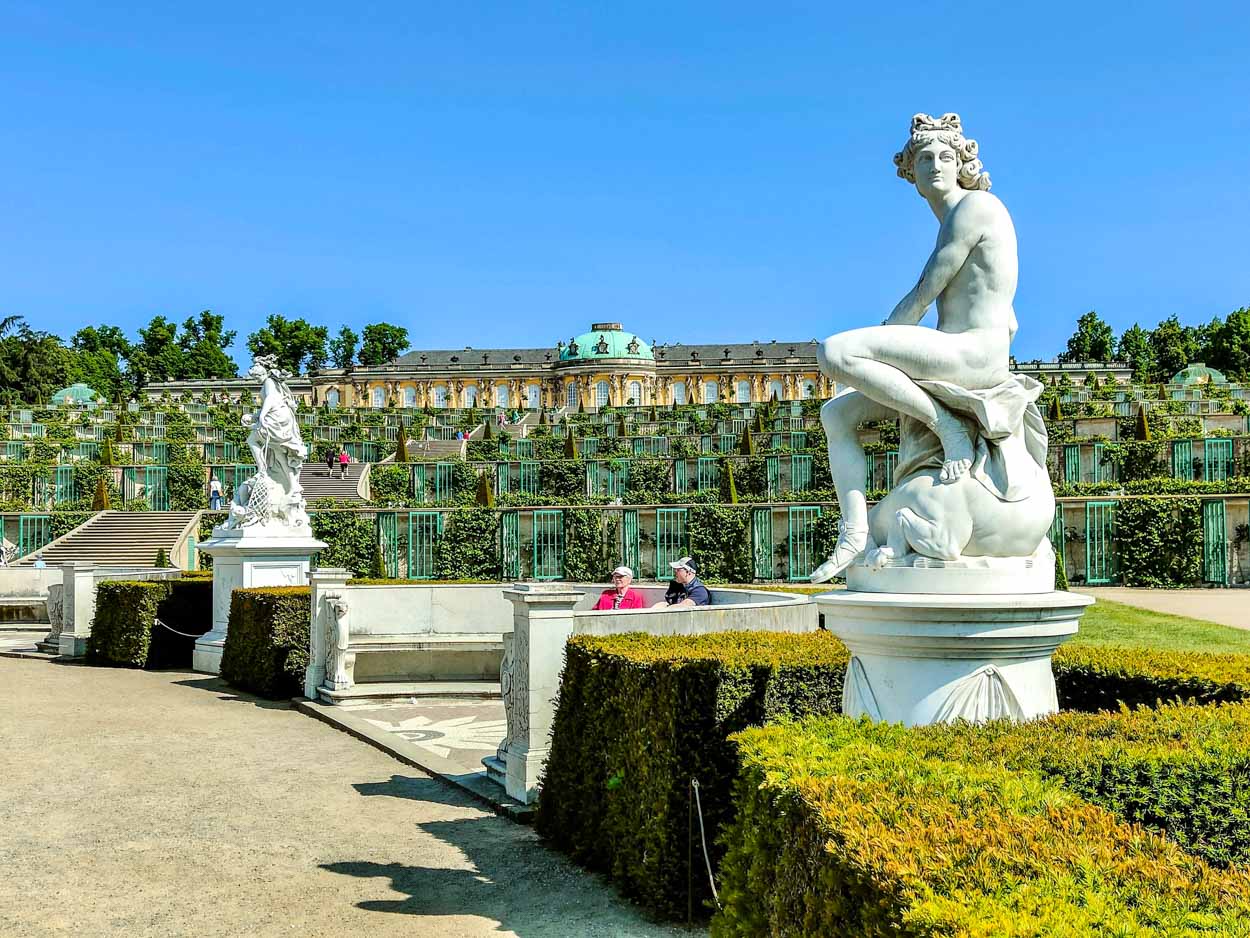
The protected site has subsequently been expanded twice, also including the Berlin Pfaueninsel and the Glienicke Park, and is one of the few sites that crosses borders between two German states.
It includes 500 hectares of parks and the 150 palatial buildings of Potsdam, built between 1730 and 1916, with a total area of more than 2.000 hectares.
Here you have the best tours and guided tours in Potsdam, and if you are staying in Berlin, to visit the Prussian city, you can sign up for this Tour to Potsdam from Berlin 6 hours long, or this full-day excursion in which you will also visit the former concentration camp of Sachsenhausen
This is the experience of visiting Potsdam, the best things to see
In view of your trip, I can tell you that, from the experience of our visit, the best way to visit Potsdam is by bike.
It is the typical completely flat German city, in which due to the location of the palaces and main sites to visit in the gardens and the historic center, the bicycle becomes the best means of transportation.
Possibly you will arrive in Potsdam by train from Berlin (25 minutes), and at the same station you can rent your bike.
How to visit Potsdam by bike
You have the option to sign up for one guided bike tour three hours long, which will allow you to have an overview of the most interesting palaces and other corners of the city.
If you go on your own, you will be free to not only take a tour, but also visit some of the palaces and spend as much time as you need.
ORGANIZE your TRIP
- Don't forget your TRAVEL INSURANCE with a 10% discount
- Book the HOTEL for your trip
- eSIM card to have INTERNET at a discount
- The best TOURS and EXCURSIONS in Spanish
- TOURS and ACTIVITIES in English and other languages
- NO-LINE TICKETS for museums and monuments
- RENT a CAR for your trip
- Has your flight been cancelled? How to claim compensation
- Book your TRANSFER from the airport
Boat cruise in Potsdam
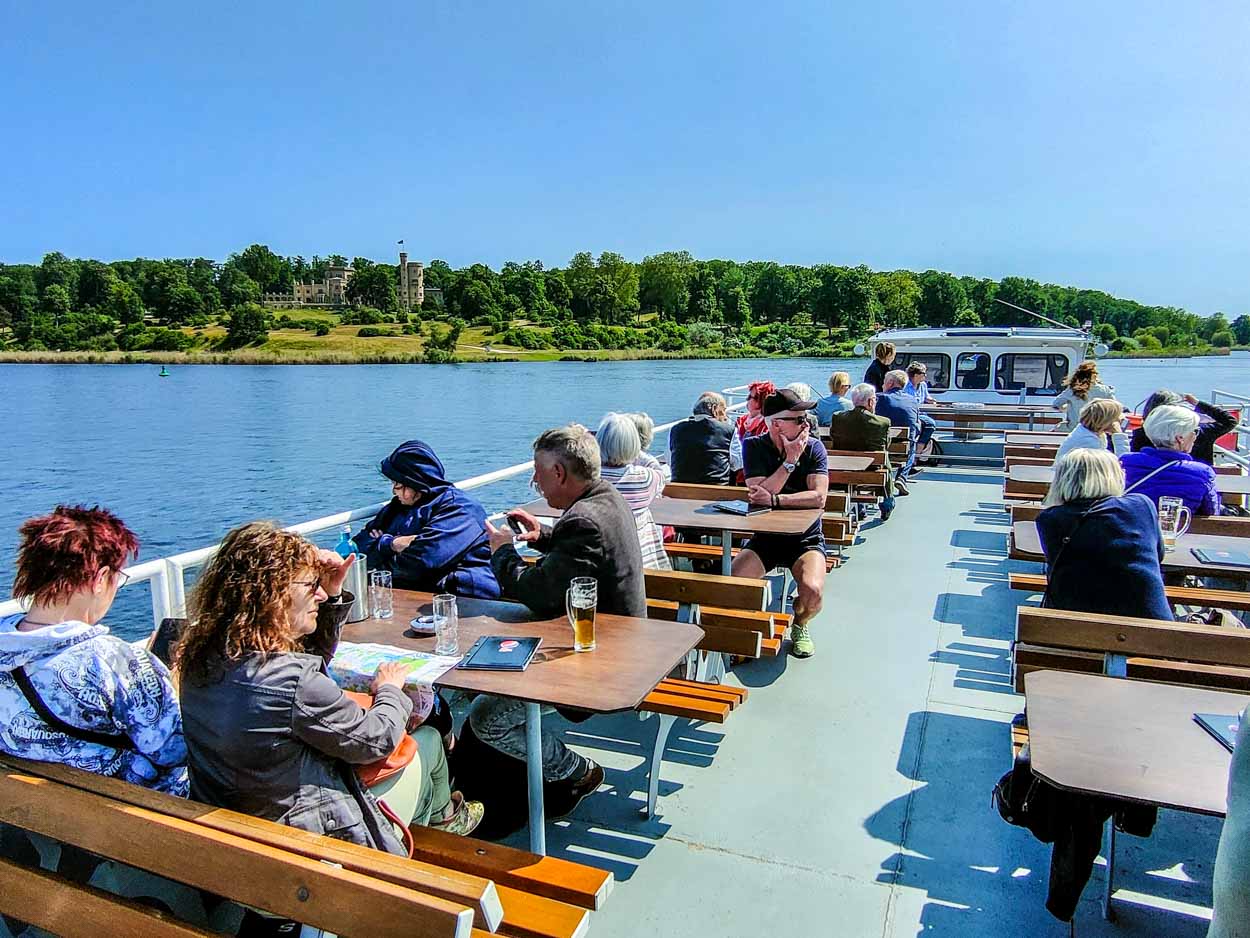
Another alternative that you also have next to the train station is to make a cruise on a boat havel river, during which you will be able to see the gardens with their lush forests and spot some interesting buildings.
Facing your Potsdam visit, Below we are going to detail the palaces and most interesting corners of the baroque city which you can discover by following a bicycle tour from the station.
Old Market Square
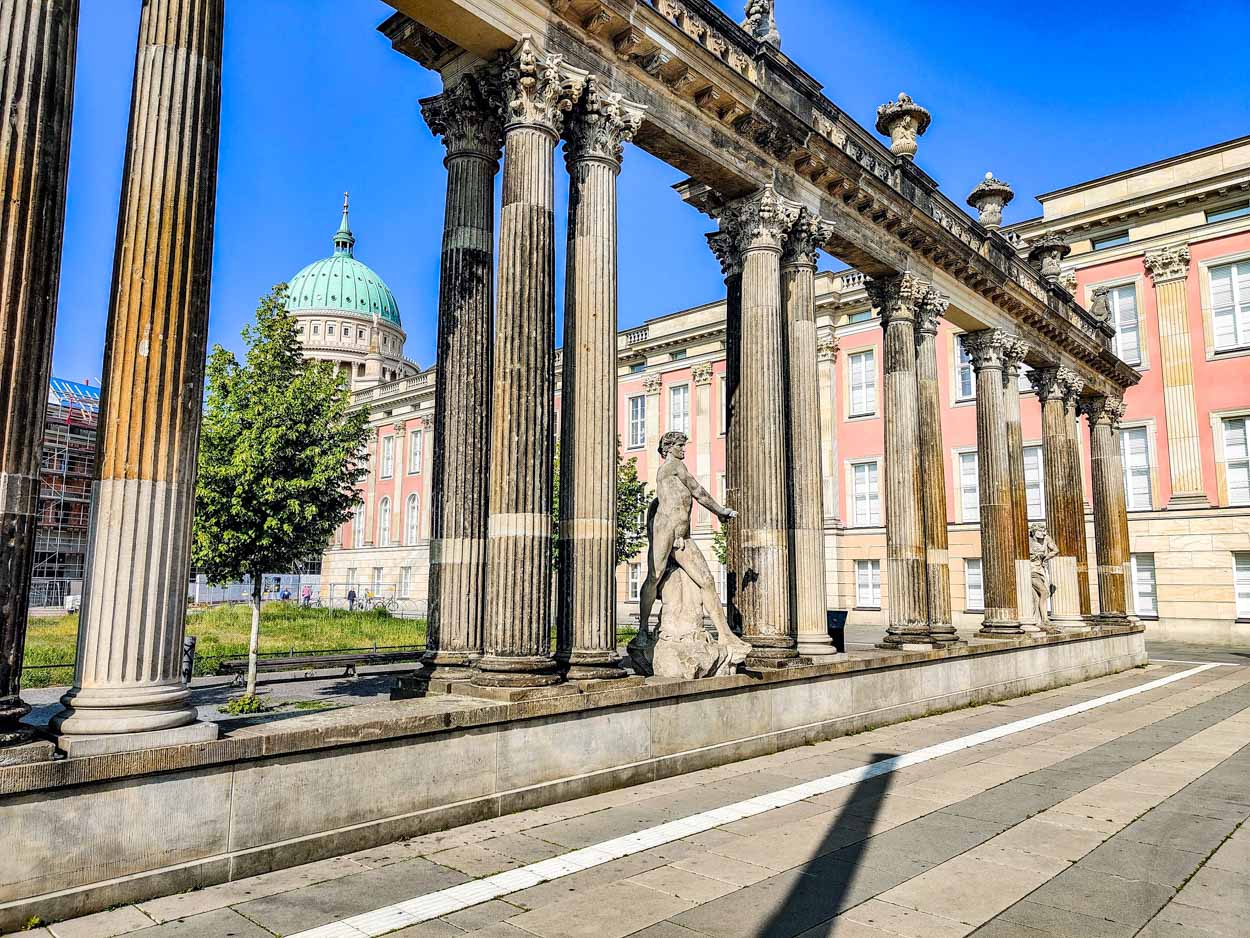
Crossing the bridge next to which the cruise pier is located, you arrive at the large square that is the historic center and political heart de la ciudad.
From afar, what will catch your attention the most is Old Market Square (old market) the large dome of the church of Saint Nicholas, although the largest building is the current one Brandenburg State Parliament.
This large building was completed rebuilt in 2013 inspired by the architectural style of the ancient Potsdam City Palace.
It was very destroyed in the Second World War and totally demolished by the GDR for considering it a symbol of Prussian power.
This building will catch your attention small exterior staircase with a great golden element decoration, which is explained because it was the one used by the emperor to leave the palace to watch the parades along the large avenue that extends in front of it.
In the square there is also the Town Hall and the Barberini Museum, a private institution owned by a businessman art collector whose collection is estimated to be worth more than 50 million euros.
Important international exhibitions and events are now held in this art center.
El great obelisk which is located in the center of the square in front of the façade of the Church of San Nicolás It is a sample of what is known as City of obelisks, whose profusion in it is due to the fact that this architectural element was considered a symbol of power.
St. Nicholas Church in Potsdam
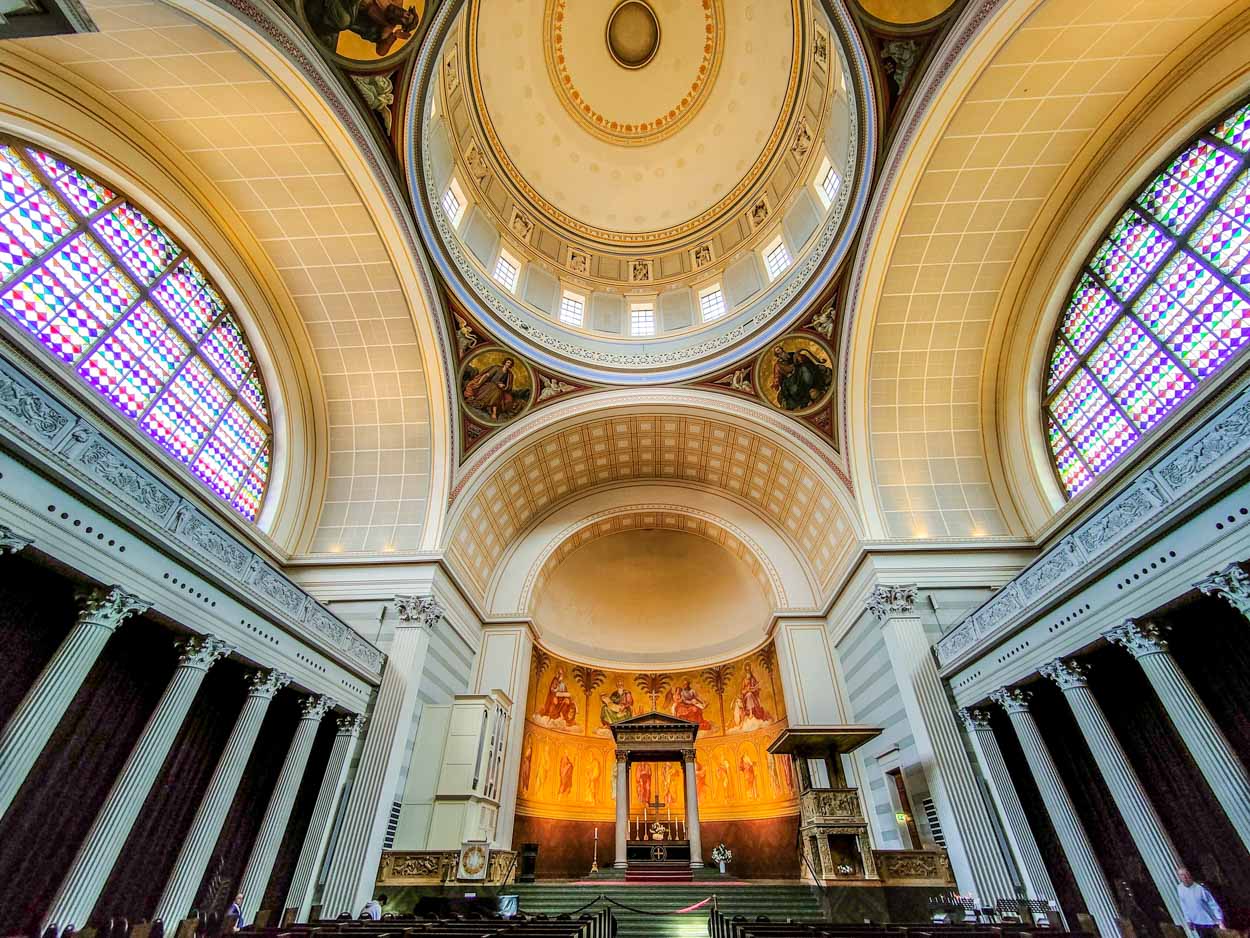
For its part, San Nicolás is largest Protestant church in Potsdam and its architectural style has changed many times throughout history.
Thus, for example, its exterior aesthetics from the 1850th century have nothing to do with the current one; In fact, the majestic dome was built in XNUMX and from the front of the church from that time only the colonnade and the lower part remain.
Potsdam Film Museum
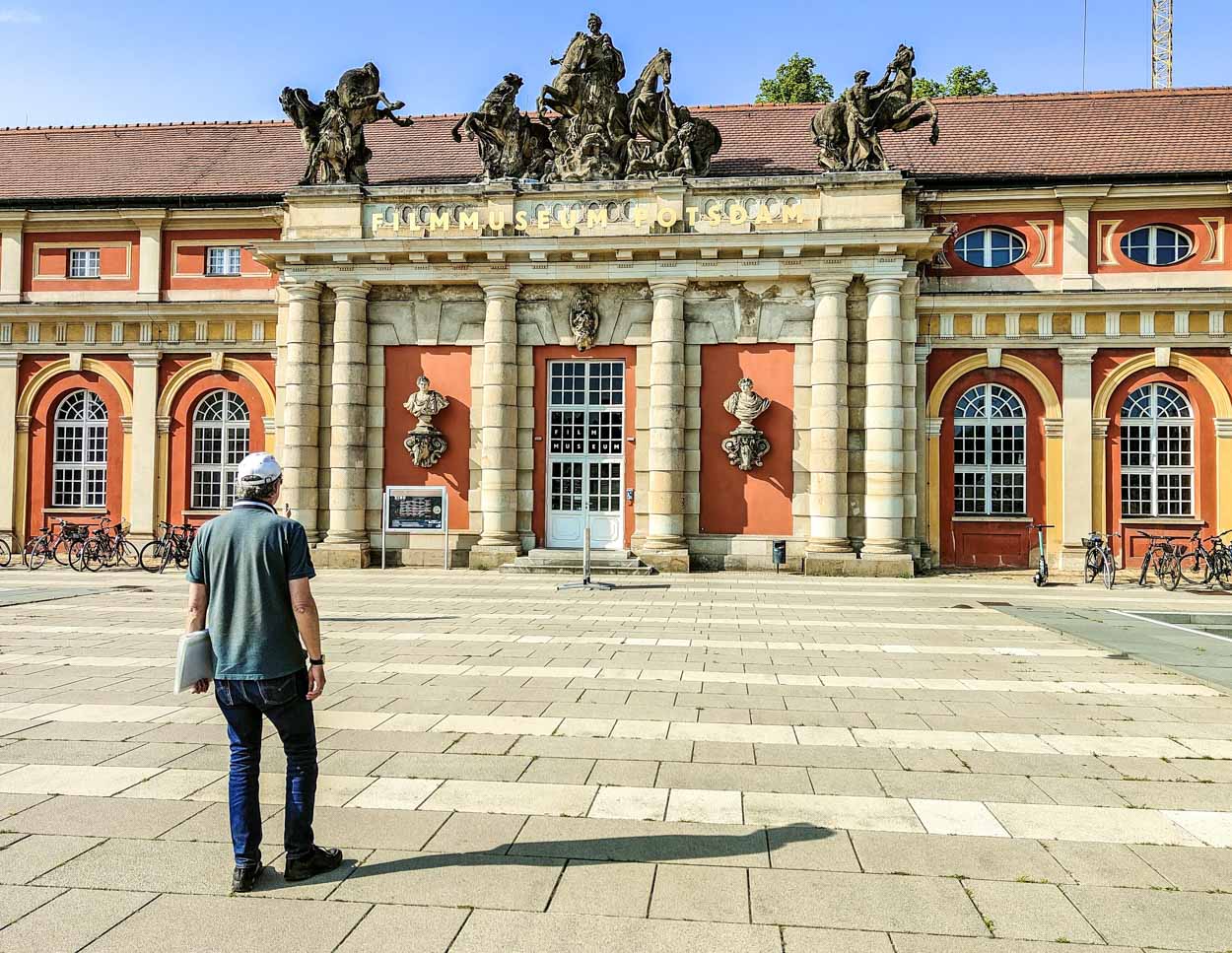
Next to the palace is the building of the former Royal Stables, which is now the headquarters of the Potsdam Film Museum.
When visiting this building built in 1685 you can now see a permanent exhibition dedicated to cinema, which shows what the film creation process is like.
This is one of the four museums in the historic center of Potsdam that you can visit with the MUSEUM Kombikarte card.
New Market Square, baroque square in Germany
Very close is the New Market Square, one of the best examples of baroque square in germany, and one of those that best preserves its original buildings in Europe.
In this square you find the Brandenburg House of Prussian History, and as a curiosity, the old Weighing House where the cars arriving to the city were weighed.
Brandenburg Street, the most touristy area
This entire area of the historic center is characterized by large buildings and wide avenues, where you will be surprised not to find any type of establishment.
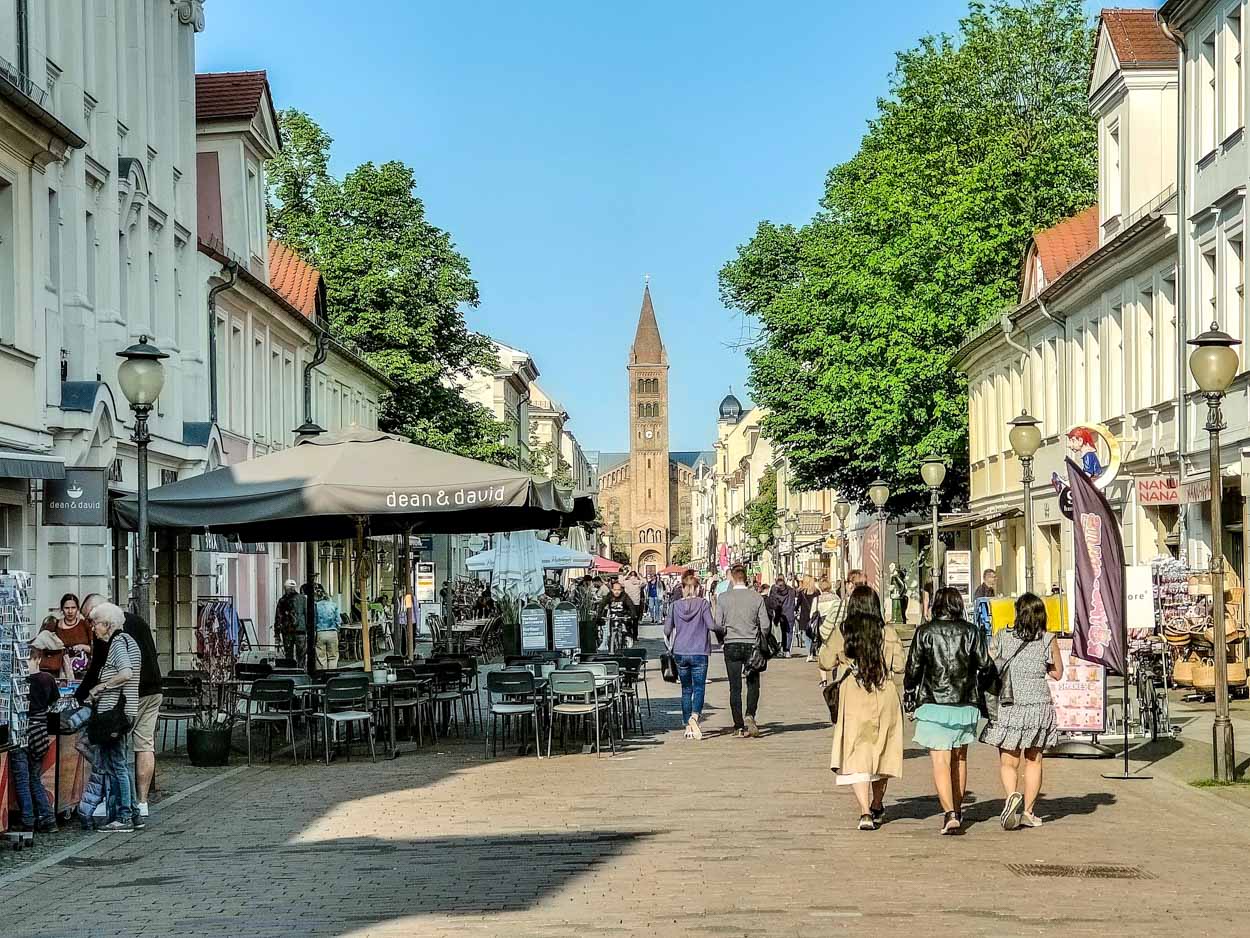
To know the most touristy area of Potsdam you have to go to the Brandenburg street, which begins in one of the old gates of the city wall, the Brandenburg Gate.
The wall extends to the church of San Pedro and San Pablo, the largest Catholic church in Potsdam.
Book your hotel, 15% discount, free cancellation
When planning your trip, we advise you to, well in advance, Book your hotel now on booking.com where you can find discounts from 15% and you will have a possible cancellation for free
The old city wall was demolished in the 19th century and had several gates, the Brandenburg Gate being one of the most notable.
Its exterior façade with sumptuous classic columns will catch your attention, while the interior is much more concise.

That of Brandenburg is the typical charming tourist street, where shops, bars, restaurants and terraces take place.
Dutch Quarter in Potsdam
Very close to this street is the Dutch Quarter of Potsdam, which is currently one of the most visited corners by tourists.
It will be easy for you to identify it because it is a succession of Dutch style red brick houses.
Specifically, there are 134 houses distributed in four blocks and it is the largest Dutch-style architectural complex that can be seen outside of Holland.
It was built from 1720 by order of the king frederick the soldier and it was completed in 1740, already in his son's time Frederick the Great.
The intention was to attract the arrival of Dutch engineers and craftsmen and today these streets are full of design and craft shops, cafes, bars and restaurants.
Sanssouci, the largest park in the city
The center of your visit to Potsdam will undoubtedly be the Sanssouci Park.
This is the largest park in the city, with an area of 300 hectares and a distance of two and a half kilometers from the entrance to the New Palace.
Reserve your RENTAL CAR now for your trip
Looking ahead to your trip, book your rental car now on this website that offers you the best price guaranteed and allows you a possible free cancellation in most cases. Here you have more information with tips for renting a car
In this park you will see several of the city's famous palaces, and as a curiosity, I will tell you that up to 130.000 plants can be seen in it every year.
Sanssouci Palace
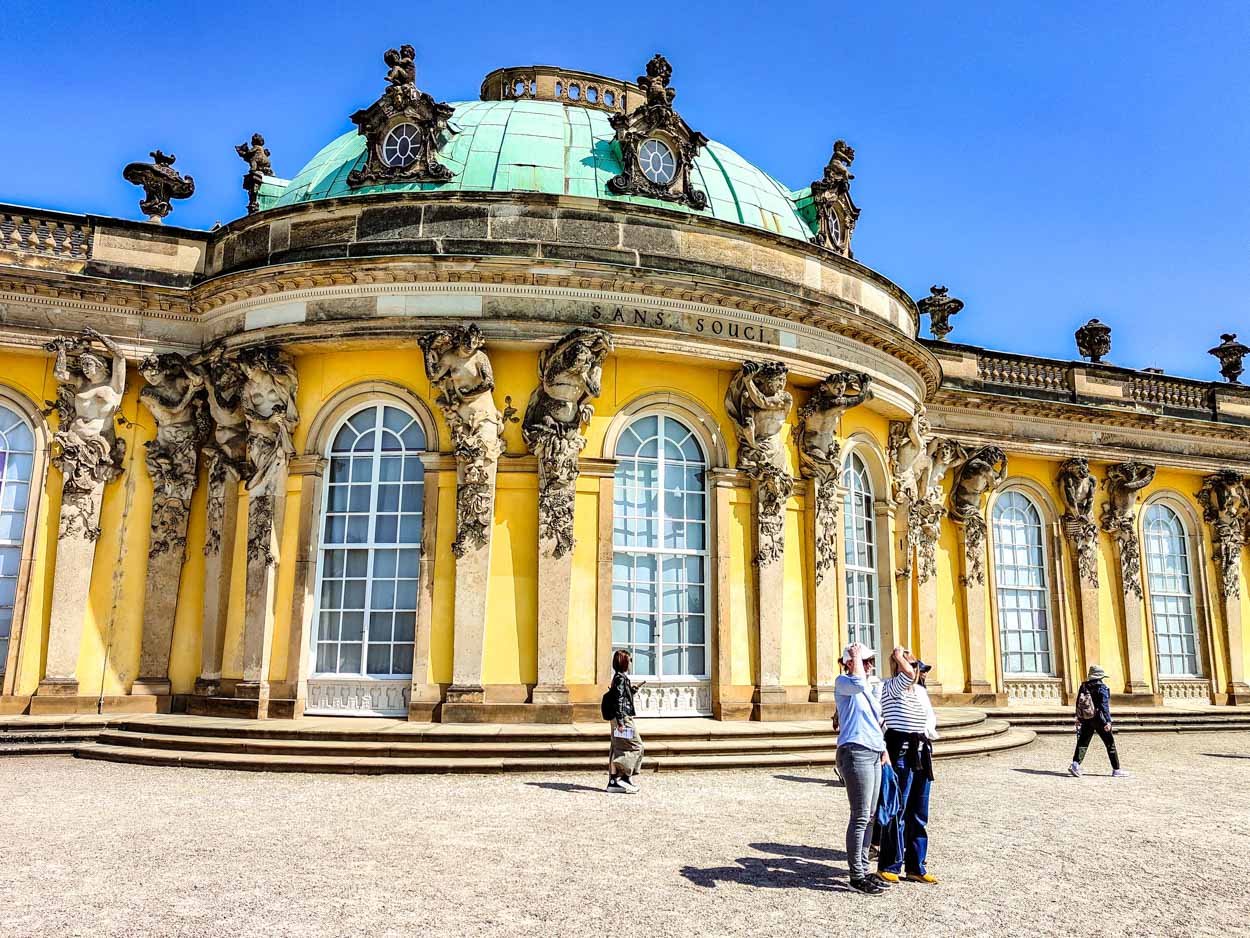
El most famous and visited palace in the Prussian city It is the one with the name of the park, although it is not the largest.
On the contrary, it is the smallest since it has only 12 rooms, of which only five were occupied by the King Frederick the Great.
Of course, in the palace gardens In front of its main façade is the very simple tomb where his remains have been buried since 1991.
It is a pleasure palace during whose visit you will be able to tour its numerous rooms.
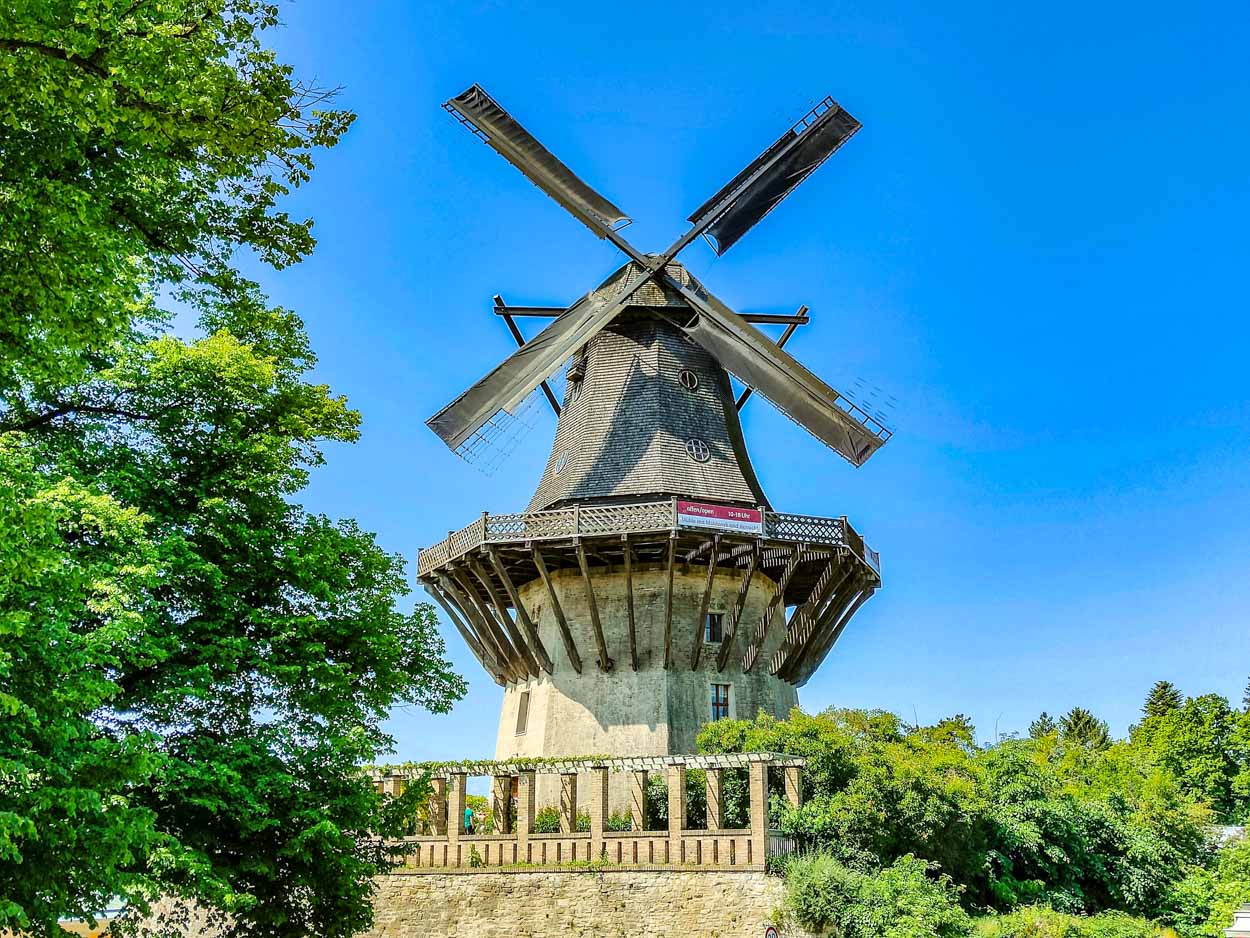
In the entrance area to visit the palace you can also see the Historic Mill Dutch style, the only one that remains of up to 40 that were built during the XNUMXth century.
And next to the palace building, on its east side and somewhat hidden in the forest, you can visit the building of the Painting Gallery of the King Frederick the Great, a huge double room with great decoration.
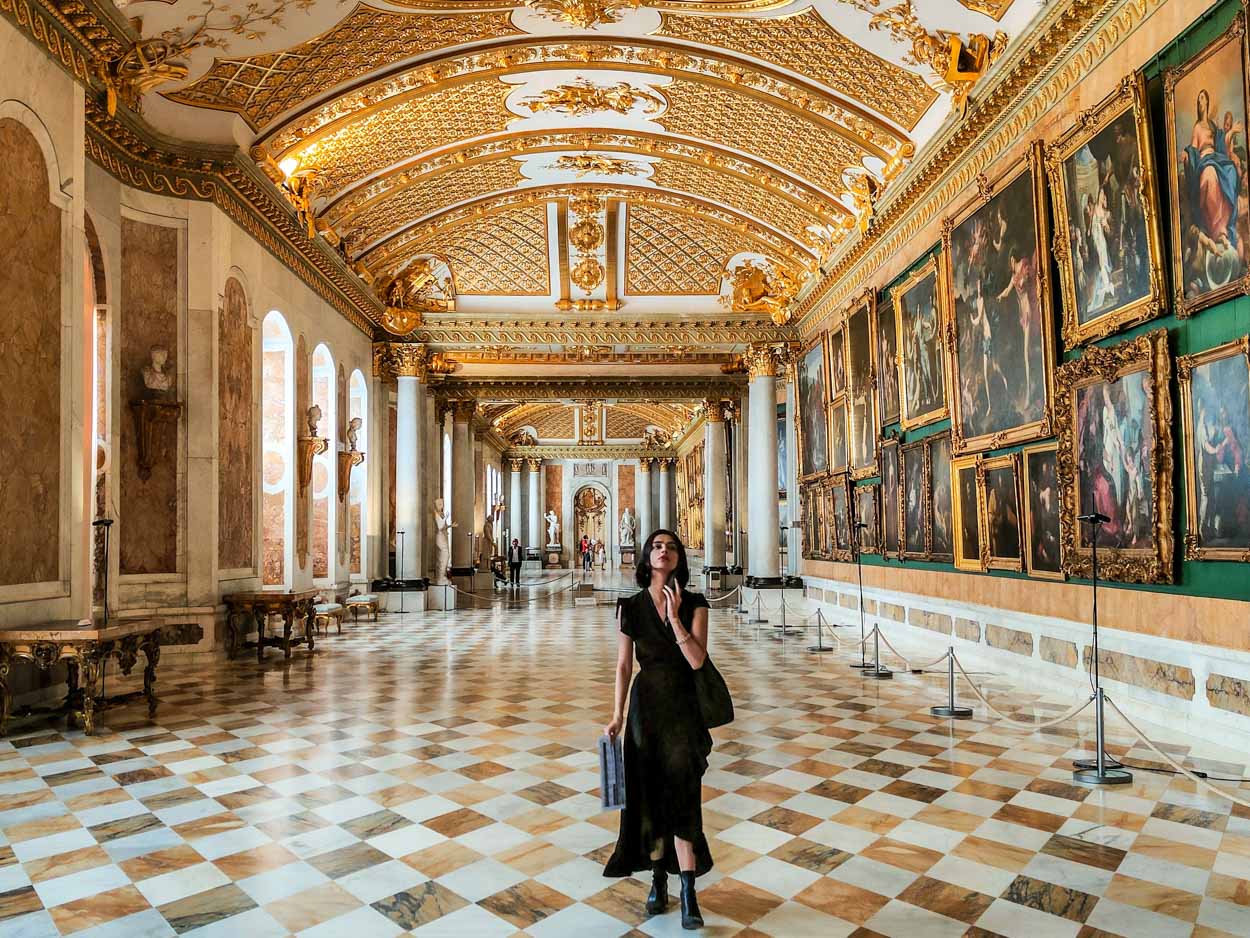
Perhaps it is the most majestic space of the Potsdam palaces, where a large collection of paintings of the Dutch, Flemish and Italian schools.
New Palace in Potsdam
The largest palace in the city is known as New Palace, which is also the oldest of those built.
Dating back to 1750, it has 400 rooms, and as a curiosity, it shows an apparently brick façade, but in reality they are painted on stone, which was a faster way to build the building.
This palace was until 1917 the residence of William II, the last of the Prussian emperors.
Chinese Pavilion in Sanssouci Park
One of the most striking corners of Sanssouci Park is, without a doubt, the surprising Chinese pavilion.
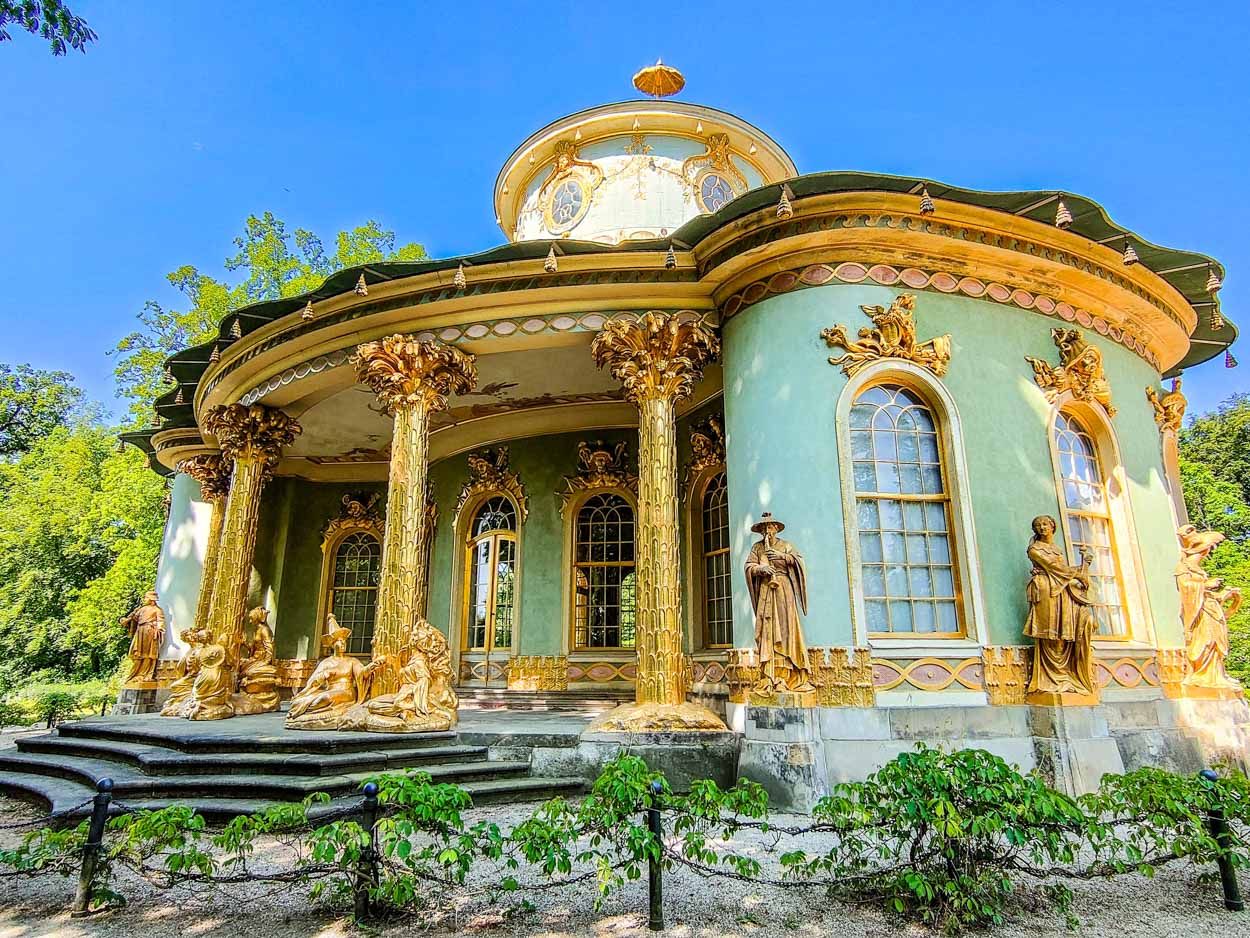
It is a small oriental style building, whose exterior highlights the great golden decoration of statues, columns and other architectural elements, and inside, a large painting on the ceiling that represents Chinese custom scenes.
Orangerie, Italian palace in Potsdam
Another of the palaces that make up the group of World Heritage is the Orangery, which with its 300 meters in length is the longest you can see in the Sanssouci Park.
The construction is in the Italian architectural style as this palace is inspired, among other places, by the Villa Medici in Rome.
The most prominent corner of its interior is known as Raphael Room, a two-story gallery displaying 50 copies of paintings by the Renaissance painter, where concerts are currently held.
Russian Colony Alexandrowka in Potsdam
During your visit to Potsdam you will also be able to see the so-called Russian colony Alexandrowka, a park where 12 Russian-style wooden cabins are located.
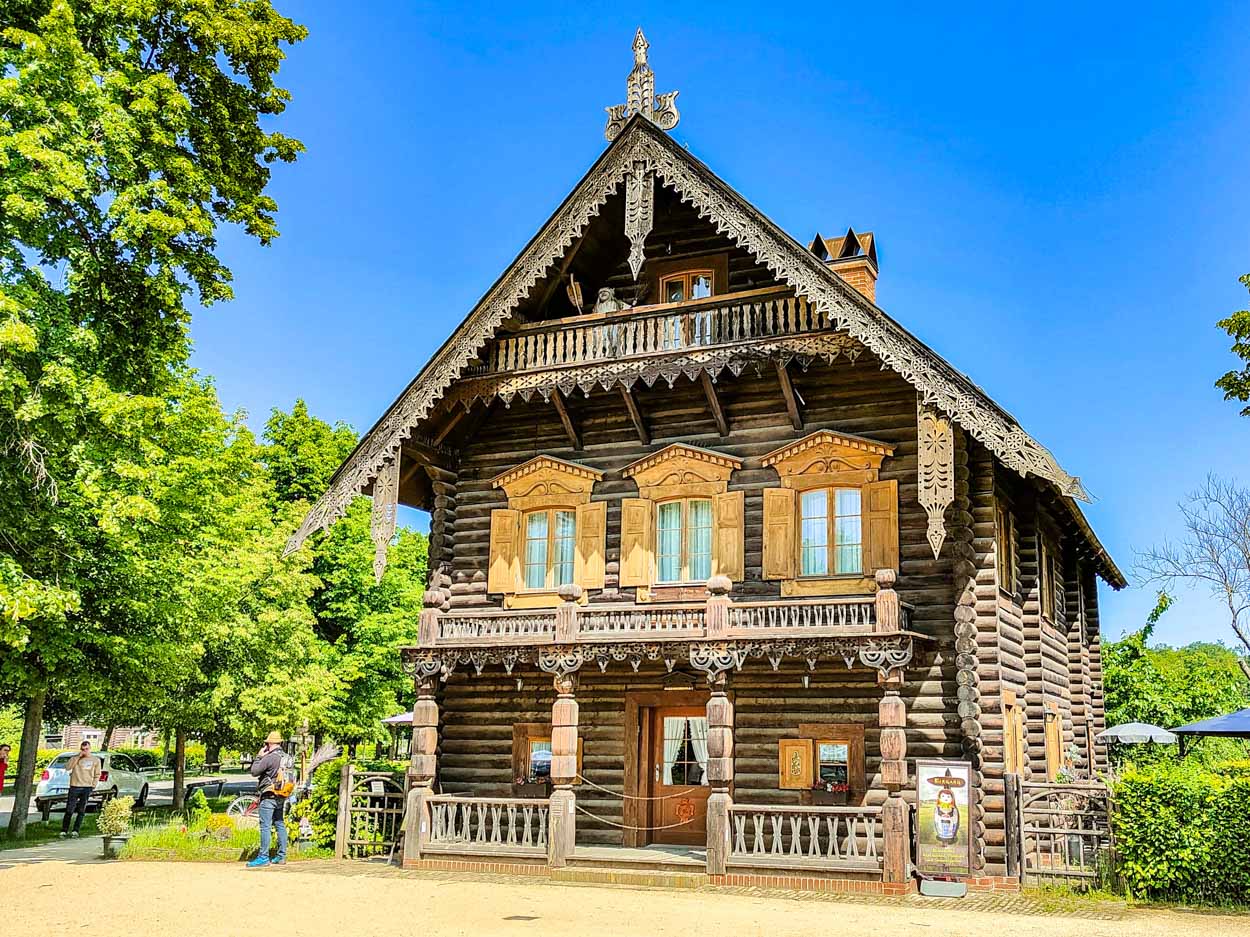
Its origin is found in the friendship between King Frederick William III and the Russian Tsar Alexander I, and to honor his death it was built in this colony in 1826.
Esta russian colony is also part of World Heritage, and after its construction, Russian singers who remained at the royal court after returning from a war resided there.
The cabins that you can now see are not originals but very faithful reproductions, and in one of the houses you can now visit a small museum where the lifestyle of that time is shown, as well as documentation of the close relationship between the dynasties of Prussia and Russia.
Here you have the best tours and guided tours in Potsdam, and if you are staying in Berlin, to visit the Prussian city, you can sign up for this Tour to Potsdam from Berlin 6 hours long, or this full-day excursion in which you will also visit the former concentration camp of Sachsenhausen
Cecilienhof Palace, site of the Potsdam Conference
One of the most historically important corners that you can see in Potsdam is the Cecilienho Palacef.
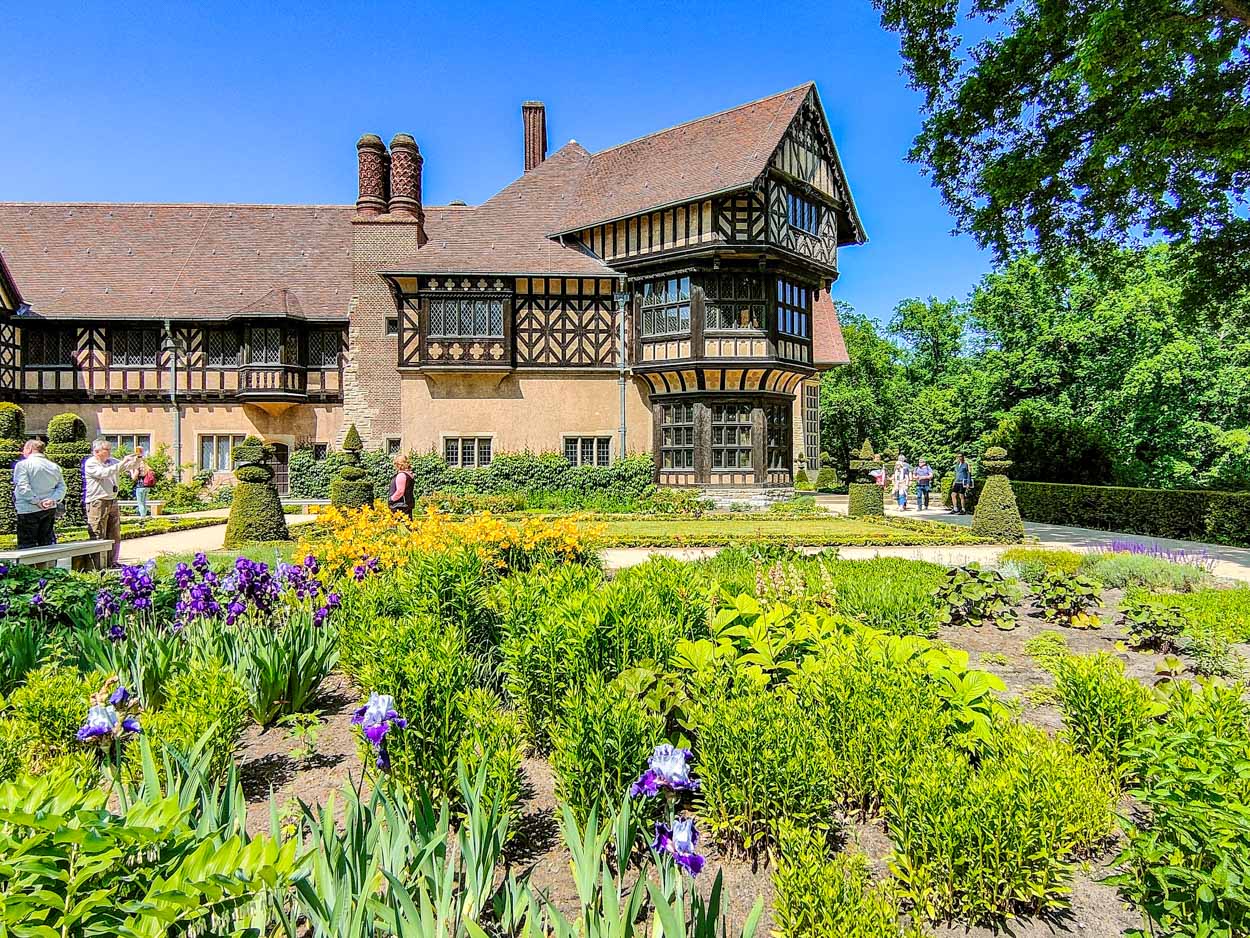
This is the place where at the end of the Second World War, the event known as Potsdam Conference in which the United States, the Soviet Union and the United Kingdom decided the future of defeated Germany.
This historic conference was held from July 17 to August 2, 1945, and Truman, Stalin y Churchill They decided the demilitarization, denazification and division of Germany.
When you arrive in front of the building, you will see that its architectural style is that of an English farm, and it was built between 1913 and 1917 by order of the emperor William II for his firstborn Crown Prince William.
After the fall of the monarchy in 1917, said prince was able to reside in this palace.
Glienicker Bridge, the bridge of spies
Another historically key place in Potsdam is the Glienicker Bridge, located in the New Garden, under which you will sail if you take the boat cruise on the lakes that surround the city.
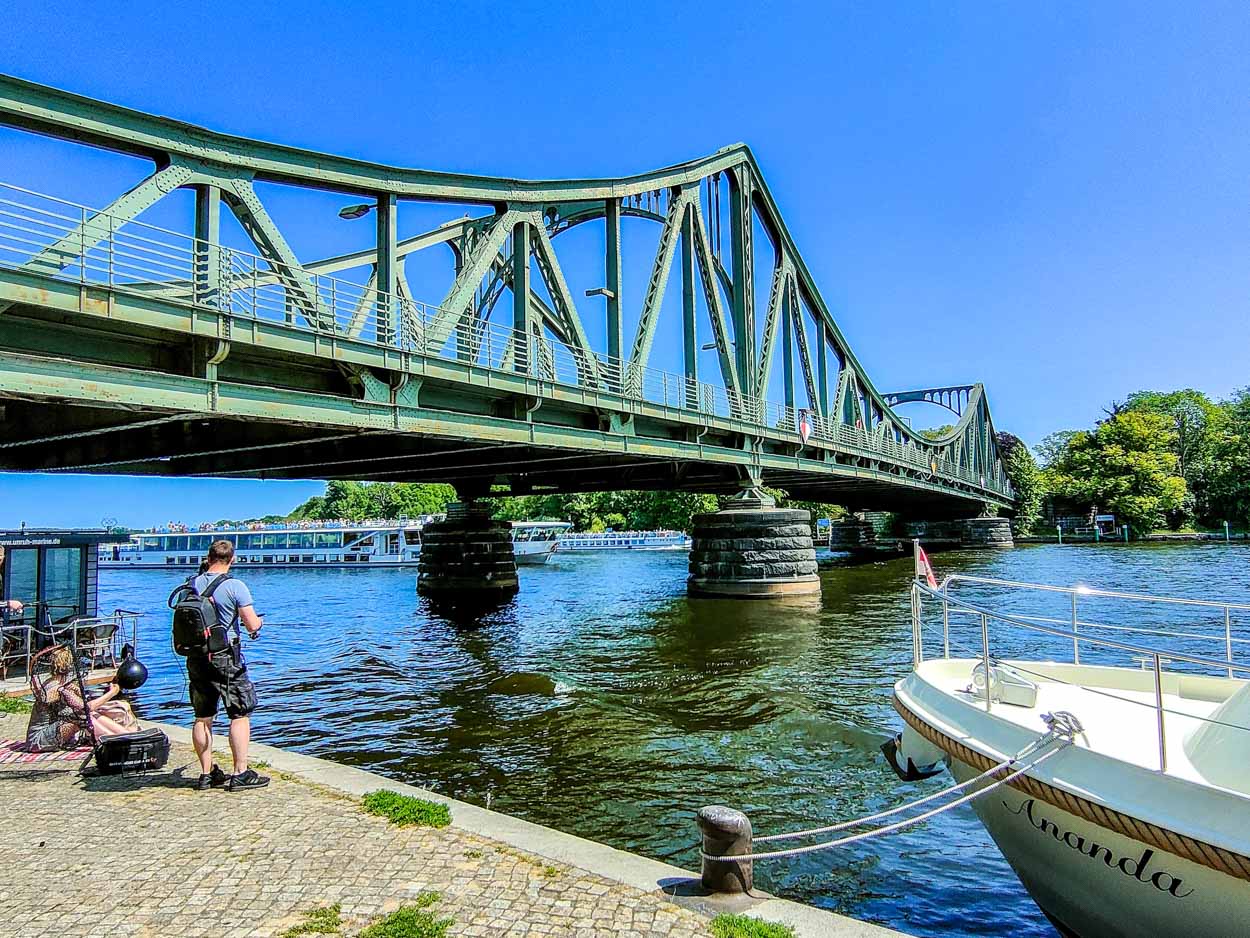
In GDR era, this bridge was a connection point with West Berlin, and due to its location, it became a place where the secret services exchanged spies captured during the Cold War.
This bridge is the protagonist in the movie “Bridge of Spies” played by Tom Hanks, which recounts the first exchange carried out in 1962 between the Soviet Union and the United States.
On the other hand, in the historic center of Potsdam is what is known as the Forbidden City, an area where the Soviet military espionage headquarters was located in the GDR era.
In it you can also see the brick building of an old parish house that in the Cold War it turned into a KGB prison.
At present it is a memorial that can be visited and where you can visit the old cells, on whose walls you can see inscriptions that reflect the harsh living conditions of the political prisoners who were deprived of their freedom.



Comment