



In our recent Graz city tour, AustriaIf there is a corner that has surprised us, it is, without a doubt, the State Armory.
In this Graz Weapons Museum, although it is much more than a museum where you can a great collection of weapons and armor from between the 15th and 18th centuries.
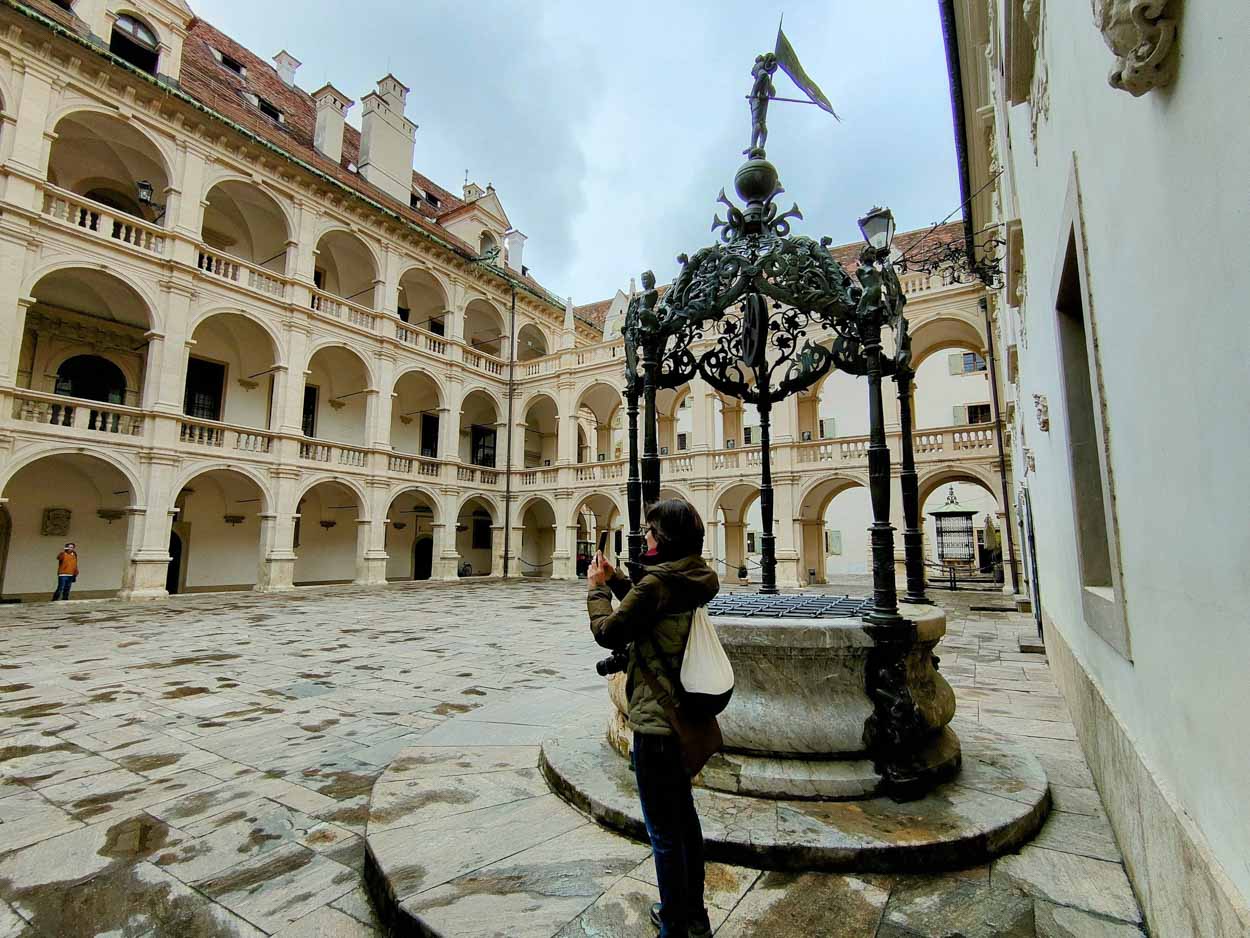
Specifically, with its 32.000 objects, the State Armory is largest historical armory preserved in the world, since it is located in its original building of Country House, current headquarters of Styrian Regional Parliament, one of the federal states of Austria.
I can tell you that due to its historical nature, a visit to this museum will offer you a fascinating vision of the military past during those centuries, as well as the evolution of the art of war.
DON'T FORGET YOUR TRAVEL INSURANCE
Are you planning your trip or getaway? Don't leave without take out your travel insurance before, and here we explain whyIf you contract it with us, you have a 10% discount with the code GUIASVIAJAR10.
All the information in detail
Interesting facts about the history of the Graz Historic Armory
The origins of this historic armory They date back to the mid-17th century, and soon became the most important weapons depot in the southeast of the Habsburg Empire.
At that time, arsenals were built in a type of building with functional architecture in which cannons, as well as weapons and armor, were stored.
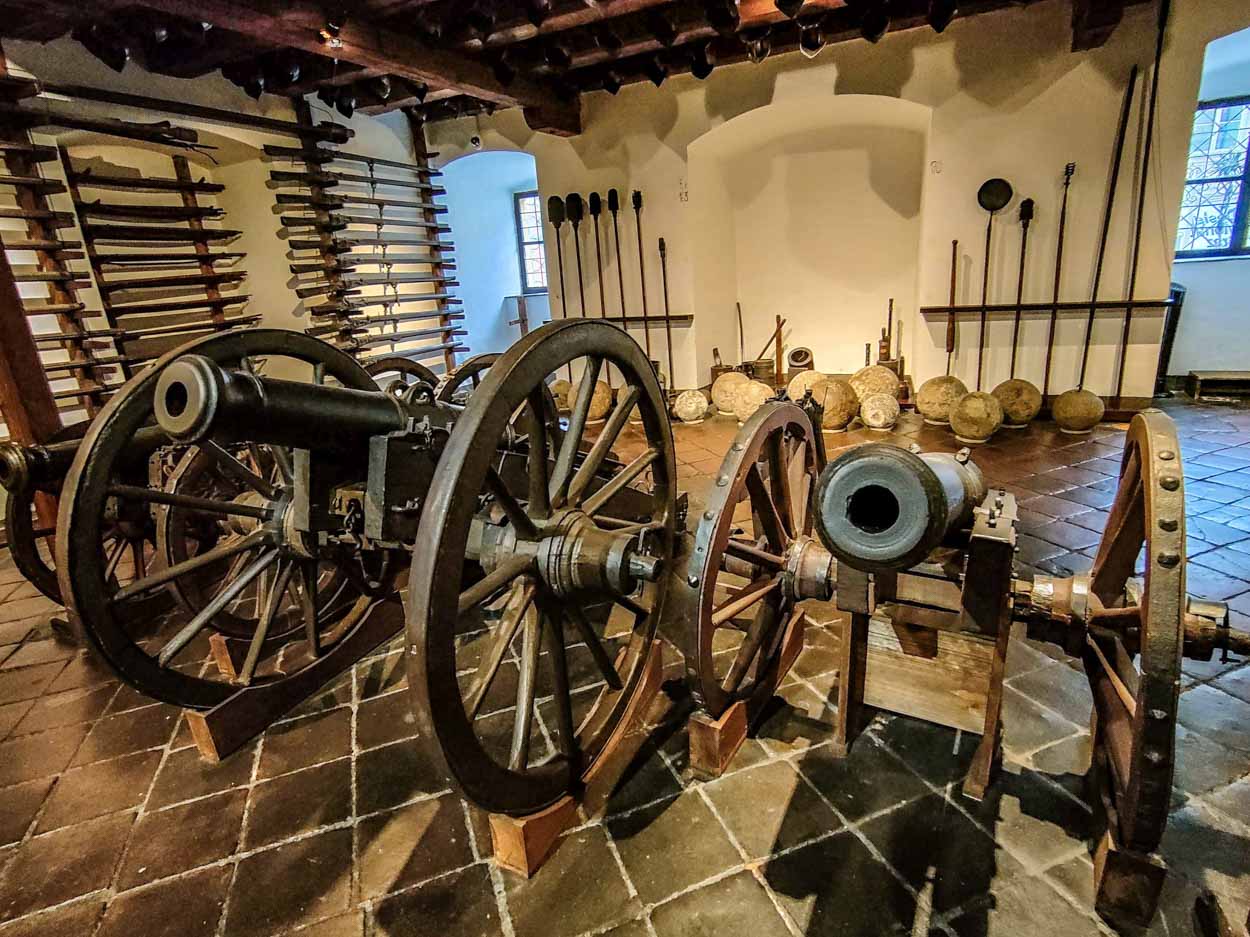
The cannons were stored on the ground floor, while the supplies and weapons for infantry and cavalry were stored on the upper floors, both on rifle racks and on ceilings and walls.
El Graz Arsenal It lost its historical importance as conflicts decreased during the 18th century, so it was closed.
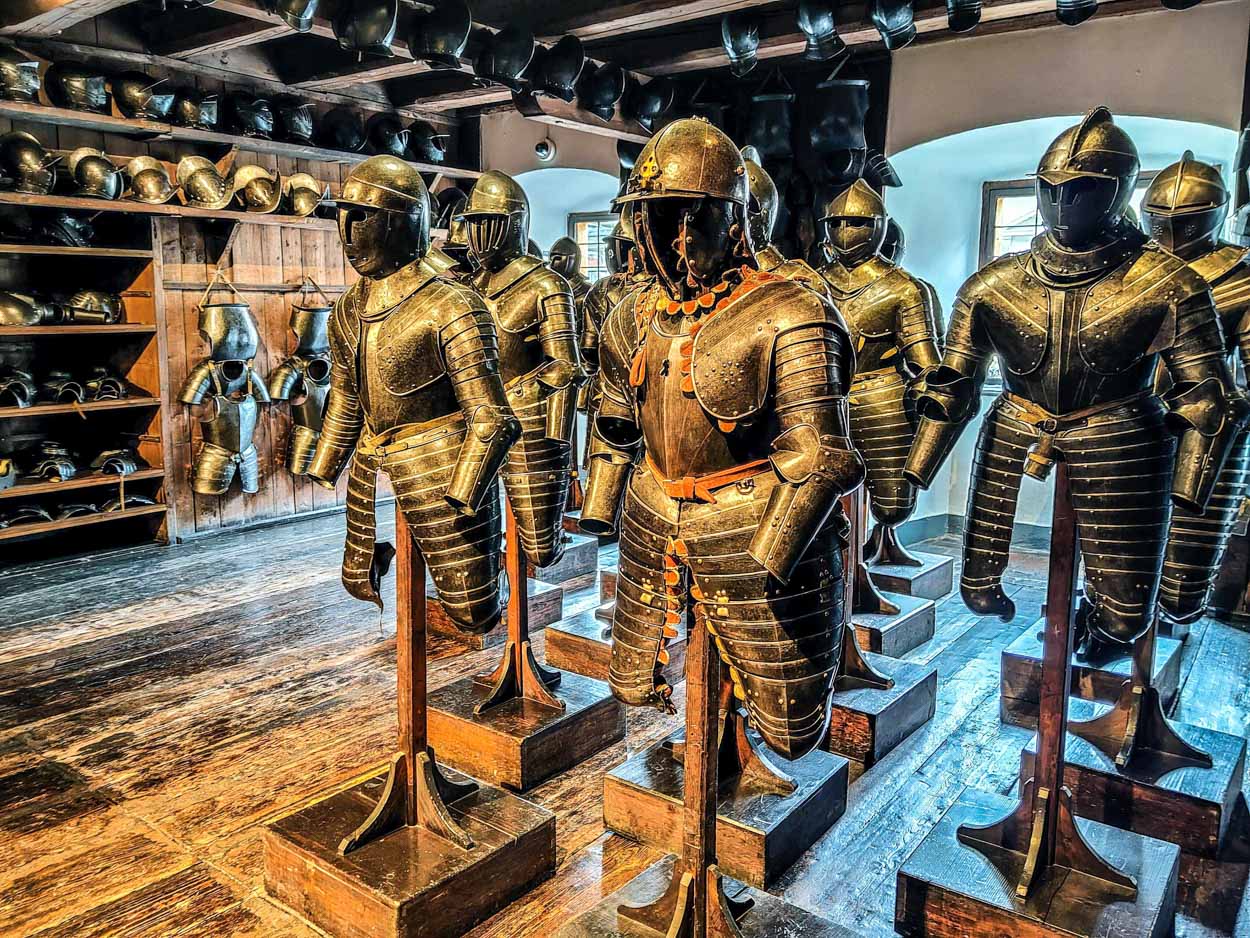
But the provincial authorities of the region asked that it be preserved as a monument to the history of the region.
Its function as a museum open to the public began in 1882, when it joined the Joanneum.
One of the most notable curiosities of the museum is the variety of weapons and armor on display.
La collection spans from Middle Ages until the XNUMXth century and includes swords, spears, full armor, shields, harquebuses and much more.
Visitors can also admire the evolution of weapons manufacturing techniques and the engineering behind protective armor.
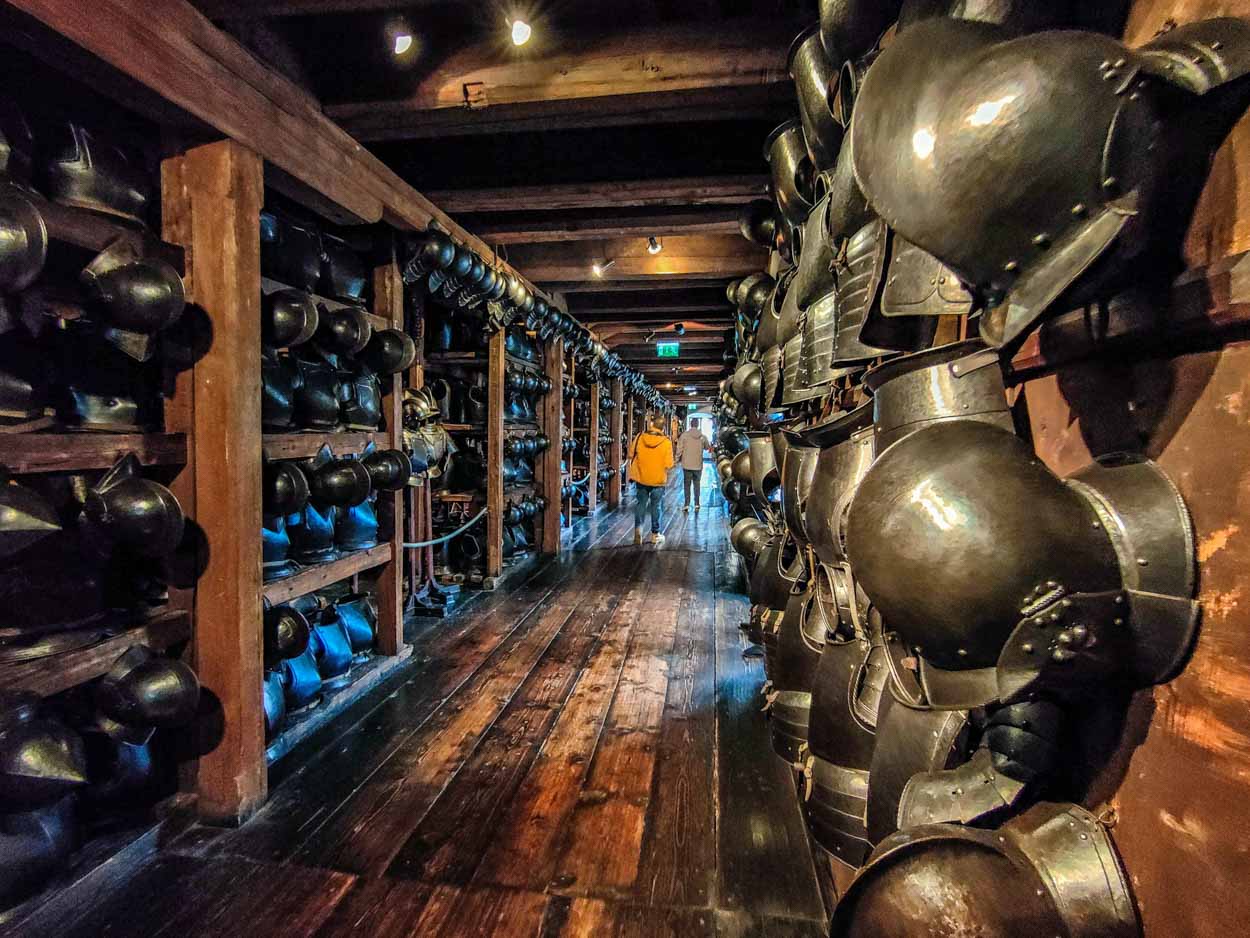
This is what it's like to visit the historic armory in Graz.
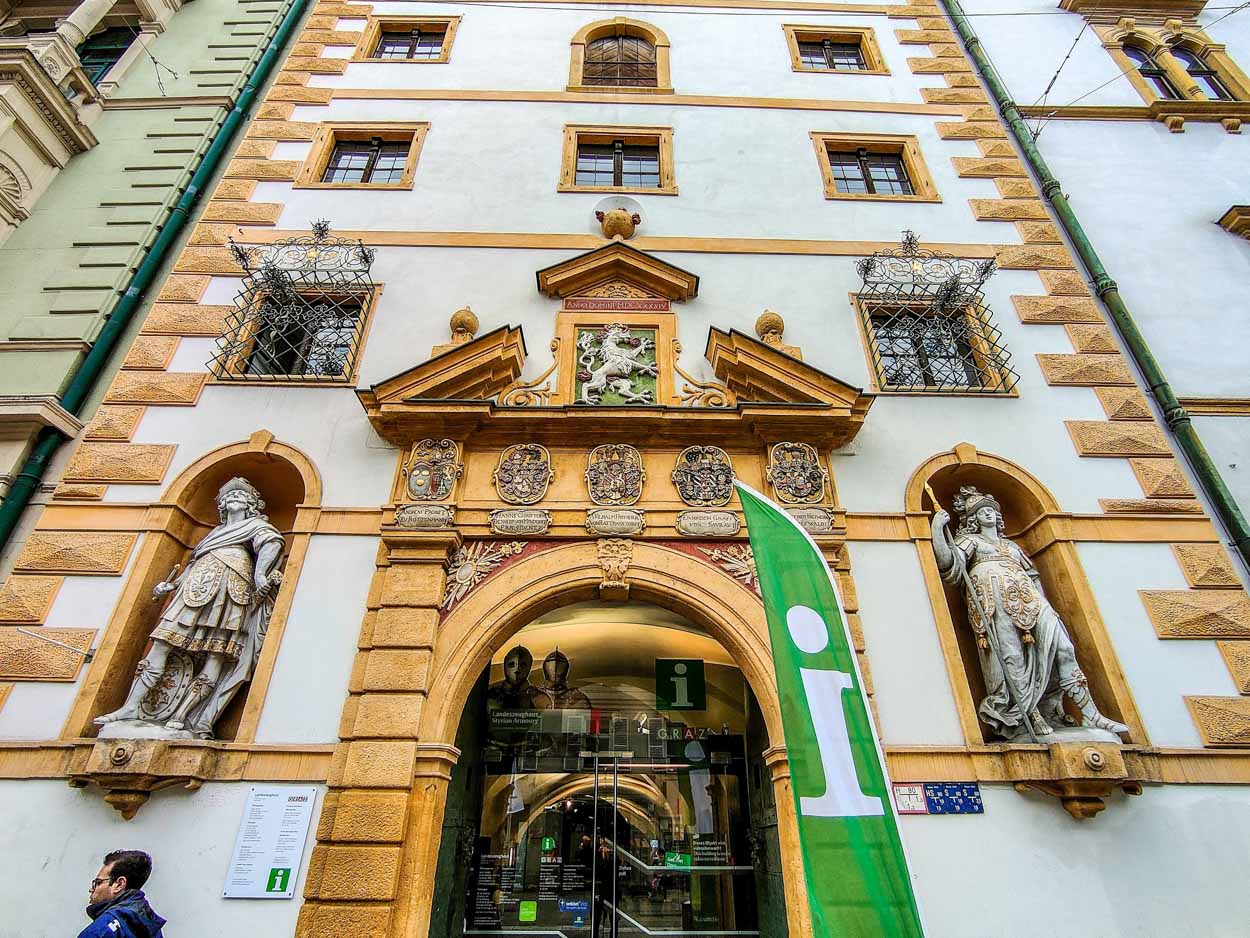
You can access the museum through the main street of Graz, Herrengasse, and its cover maintains an artistic design with emblems and shields that tells you that you are in front of a historic building, where the Tourist Office.
History of weapons since the Middle Ages
The museum is divided into four floors, and the first thing that will shock you is its warehouse appearance with the very sober and functional layout of the old arsenalWell, I remind you that this is not a typical museum in which certain objects are exhibited.
For your trip to Austria, here you have complete information with the best excursions and guided tours which you can sign up for
You are going to walk through the original 17th century armory where the different weapons and armor are accumulated on large wooden shelves so that the visit becomes a history of weapons since the Middle Ages.
In first floor you will see firearms from between the 16th and 18th centuries, times when the infantry used muskets and the cavalry used lighter weapons such as pistols and harquebuses.
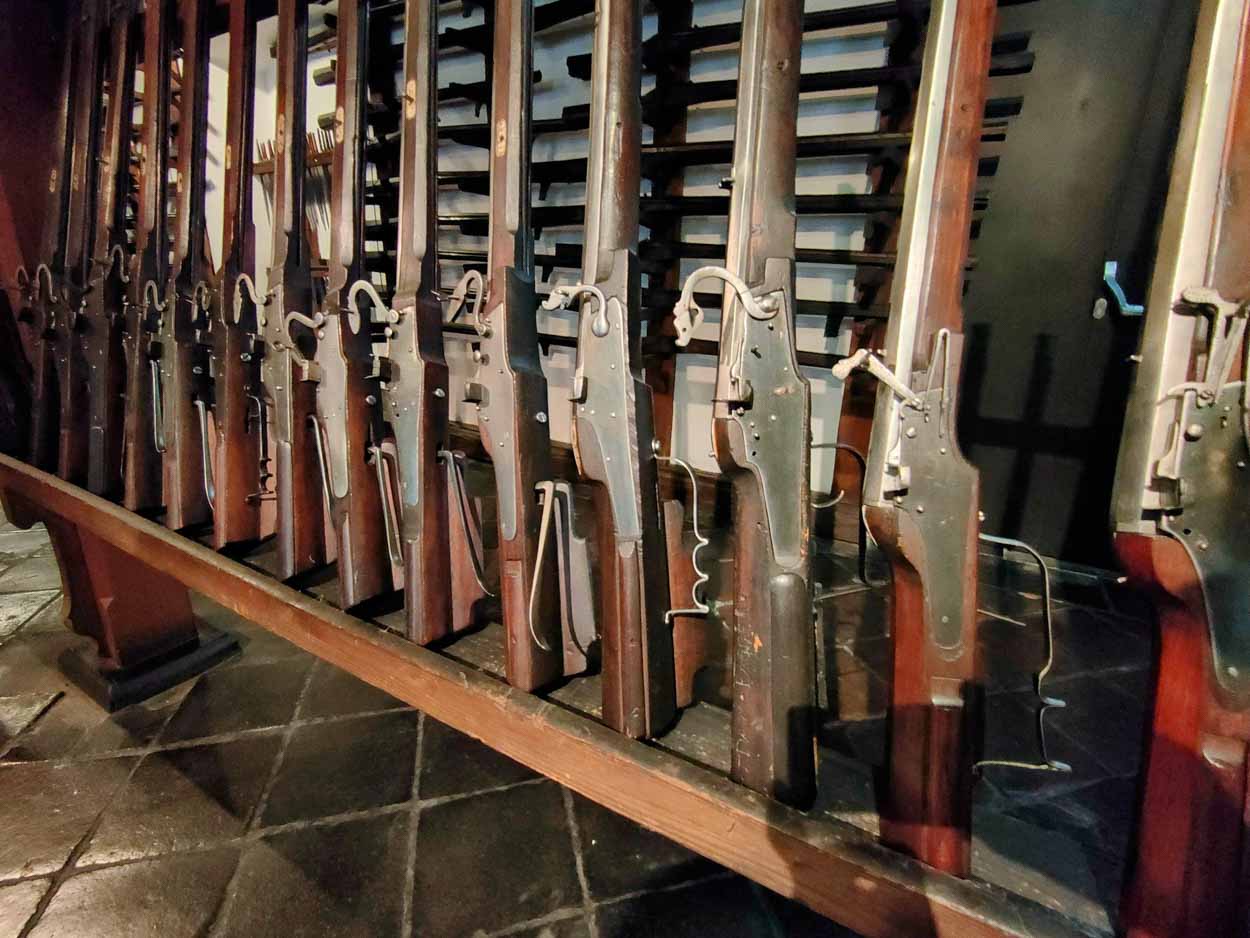
On this floor you can also see some 18th century artillery piece, because during the French invasion at the beginning of the 19th century, most of the cannons were transferred by the Austrians to present-day Serbia to prevent them from passing into the hands of the invading army.
Finally, these cannons were sold and could not be recovered because their iron was used to, for example, make bells for the churches of Belgrade.
On your walk through this first floor you will also see bayonets that stuck into the barrel of the rifle or the so-called post harquebuses, which were fired from walls or loopholes because they weighed up to 32 kilos.
Types of armor in Graz Historical Armory
On the second floor of this former armory and current museum, you will see, above all, various types of armor destined for different troops, from the heavy cavalry cuirass, until the call harquebusier rider harness o equestrian harness, which carried the light cavalry.
ORGANIZE your TRIP
- Don't forget your TRAVEL INSURANCE with a 10% discount
- Book the HOTEL for your trip
- eSIM card to have INTERNET at a discount
- The best TOURS and EXCURSIONS in Spanish
- TOURS and ACTIVITIES in English and other languages
- NO-LINE TICKETS for museums and monuments
- RENT a CAR for your trip
- Has your flight been cancelled? How to claim compensation
- Book your TRANSFER from the airport
Infantry soldiers also used special harnesses.
On this floor you will also see a helmet collection of different types and shapes, as well as numerous pistols with great decoration for which pieces of marquetry made of bovine bones were used.
You will also see the overlapping harness used by the horsemen known as hussars.
During the visit you will see the heavy armor weighing up to 25 kilos carried by the heavy cavalry, the elite of the country's equestrian forces until the mid-17th century.
You may be surprised to see that you are armor They are not too big, as they were designed for an average soldier height of about 160-165 cm.
They offered special protection thanks to their helmet with visor, armguards, breastplate, back plate, iron gloves and knee-length legguards.
Horse armor in Graz Historical Armory
In third floor of the museum Above all, you will see harnesses from German workshops, as the imperial states offered help to Austria to defend itself from the Ottoman Empire.
Here you will be struck by the large armor for horses of aristocrats or used in tournaments.
Specifically, you will be able to see a horse harness that weighs 42 kilos and that, due to its great ornamentation, is very valuable.
On this floor are the calls maximilian armor, One oldest pieces from the Graz Arsenal since they are inventoried in 1557.
Its ribbed shape, which gives greater stability to the thin plate of the harness, also offers a more fashionable design.

Here you can also see the original and complete armor Prince Charles II of Austria, which was made by a gunsmith from Augsburg who was commissioned by the provincial establishments of Styria due to its excellent reputation.
Finally, in the fourth floor of the museum you will see polearms y knives, which were also widely used along with firearms.
In fact, pike halberds o morning stars were long considered the primary weapons of infantry soldiers, while horse riders used swords and sabers.
This type of weapon was replaced in war confrontations as portable firearms became more used.
You will find it curious to see the aforementioned weapons called morning stars, which were used at the end of the 17th century to defend themselves from the attack of the Ottomans.
These clubs with iron tips spikes that were attached to wooden sticks were given to peasants without experience in combat to protect the border.
Another curiosity is the presence of exquisitely decorated weapons and armor.
Some of the pieces display intricate engravings, ornate details and precious metal inlays, reflecting the artistry and luxury associated with combat in bygone eras.
Visiting hours of the Graz Historical Armory
The Visiting hours of the Ladeszeughaus Graz They are, from April to October, from 10 a.m. to 18 p.m., and the rest of the year, at the same times but only guided tours, in English, at 12,30:11 p.m., and in German, at 14 a.m. and XNUMX p.m.
Book your hotel, 15% discount, free cancellation
When planning your trip, we advise you to, well in advance, Book your hotel now on booking.com where you can find discounts from 15% and you will have a possible cancellation for free
Graz Historical Armory Ticket Prices
The Graz Historical Armory ticket prices They are, in general, 12 euros; seniors and people with disabilities, 11 euros; students from 19 to 26 years old, 5,50 years; and those under 19 years old, free entry.





Comment