

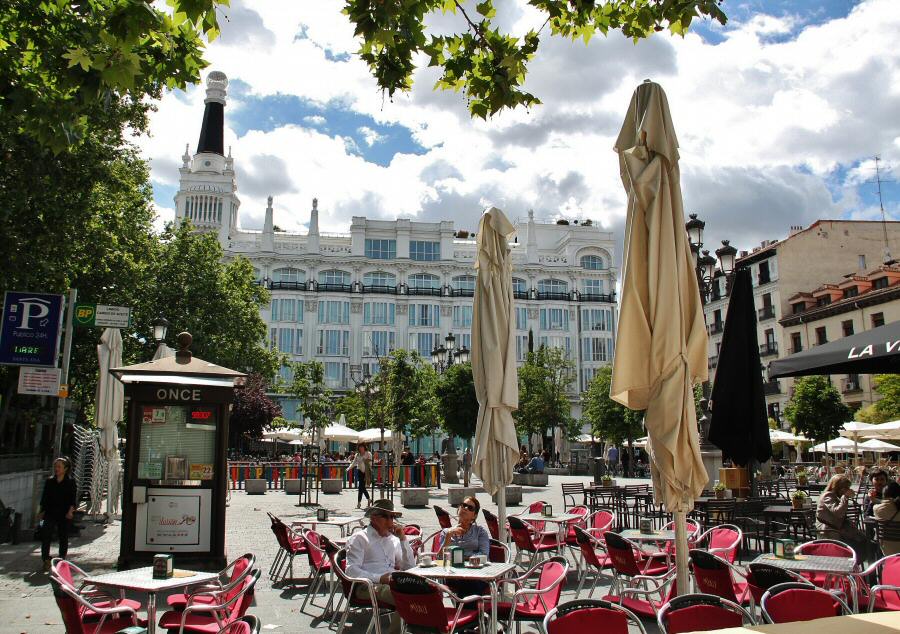

If you are going to do your first tourist trip to MadridI tell you that if you don't visit the Visit Santa Ana Square and stroll through the Literary QuarterYou can't say you've been to Madrid.
Specifically, Santa Ana Square is the heart of this neighborhood linked to the presence of illustrious writers in the history of Spain.
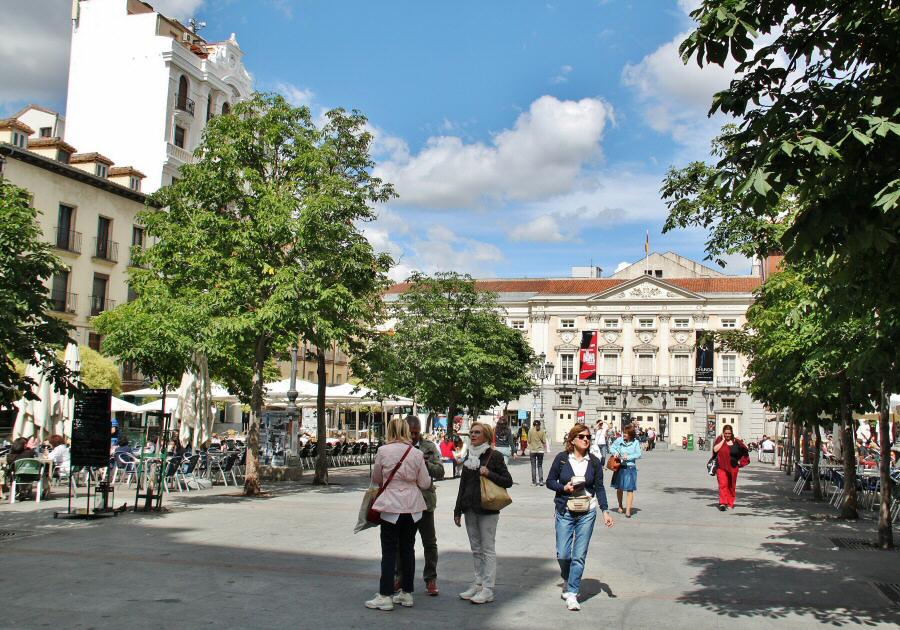
The square is not a place of striking monuments, but it is located in the very center of the city, very close to the Puerta del Sol and also from Prado Museum, I consider it to be one of the squares in the capital that has the greatest charm.
DON'T FORGET YOUR TRAVEL INSURANCE
Are you planning your trip or getaway? Don't leave without take out your travel insurance before, and here we explain whyIf you contract it with us, you have a 10% discount with the code GUIASVIAJAR10.
Surely the vast majority of Madrid residents and those who visit us and already know the square agree with this opinion.
La Santa Ana Square It is, above all, a place to enjoy a chat sitting on one of the numerous terraces that cover its entire pedestrian space.
It is also a square that combines culture with leisure, as the heart of the aforementioned Neighborhood of the letters.
All the information in detail
What to see and do in Plaza Santa Ana
Also known in the past as king alfonso square, its origin dates back to 1810 when the King Joseph I Bonaparte promoted an urban reform of that area of Madrid,
During it he opened the space that the square now occupies, for which an old convent had to be demolished.
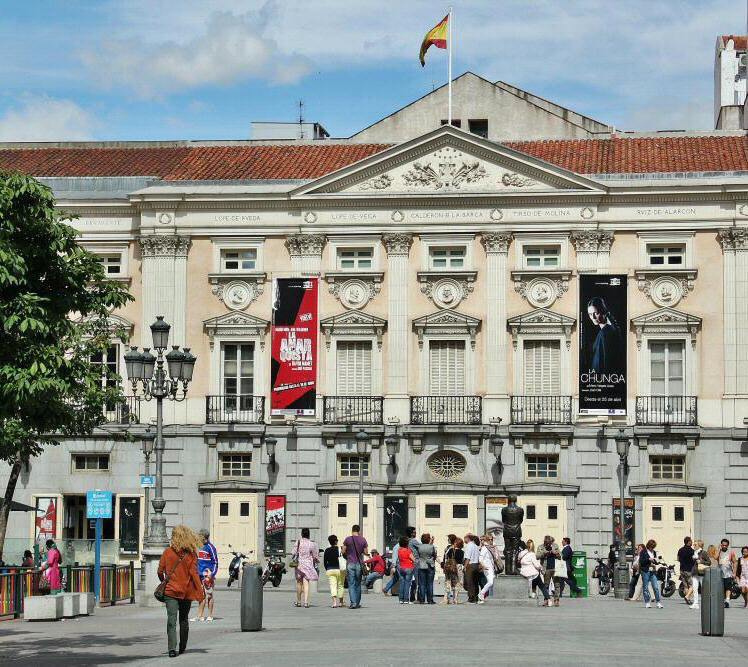
Spanish Theater in Plaza de Santa Ana in Madrid
Later, in 1880, other houses in the area were demolished so that the old square was incorporated into the square. Prince's Theater, currently known as Spanish Theater.
This is without a doubt the building that has the most prominence in the Plaza de Santa Ana in Madrid, whose façade at sunset I consider to be one of the icon images of Madrid.
This cultural spirit of the Plaza de Santa Ana, which is the door of the aforementioned Neighborhood of the letters, already has its origins at the end of the 16th century.
In this place the Prince's Corral, antecedent of the aforementioned theater of the same name and the current Spanish Theater.
Calderón de la Barca Monument in Plaza de Santa Ana
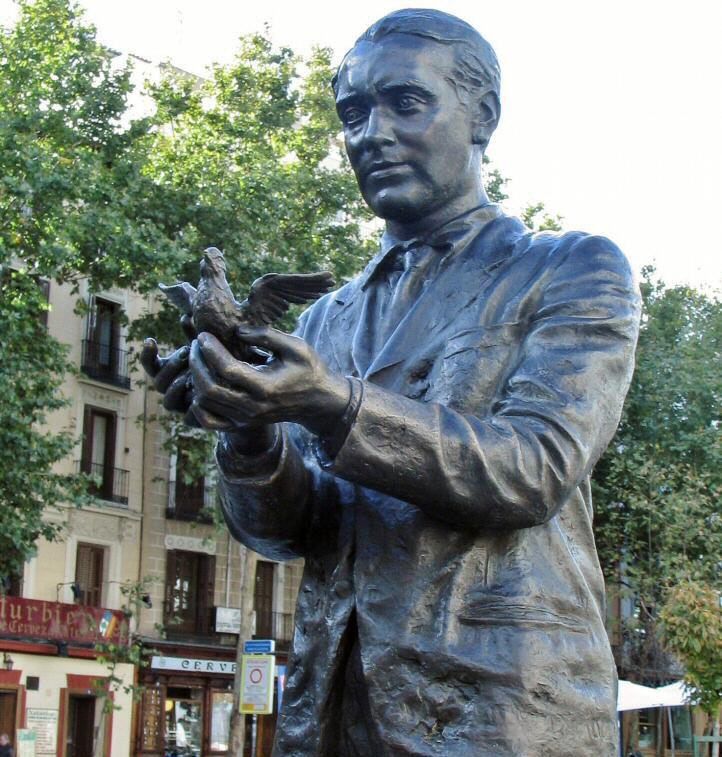
Literary authors share the spotlight in Santa Ana, with notable places such as monument of Calderon de la Barca and the most modern and simple statue of García Lorca.
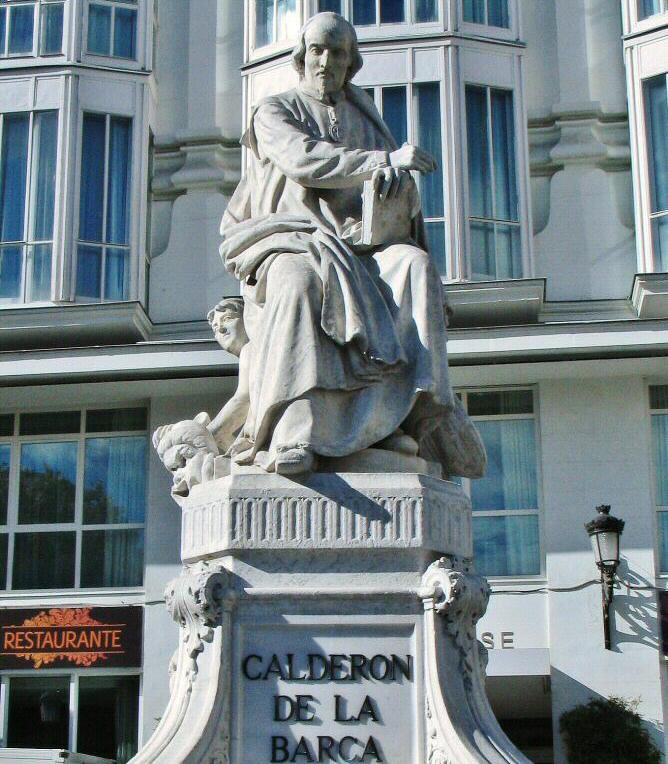
The aforementioned monument of the author of Golden age It is a sculptural group that dates back to 1880.
Located in the west area of the square, next to the figure of Calderon With ecclesiastical clothing, since he was a priest, there are sculptural reliefs that represent some of his most famous literary works.
Here you have complete information with the best Tours and activities in the Community of Madrid which you can sign up for, as well as others alternatives in English and other languages
Monument to García Lorca in Plaza de Santa Ana
In turn, the monument to García Lorca is located in front of the Spanish Theater and was made in 1986 by the sculptor Julio lópez.
Full-length and life-size, it shows the great poet of the 27 Generation with a lark in his hand about to take flight.
Former Reina Victoria hotel in Plaza de Santa Ana
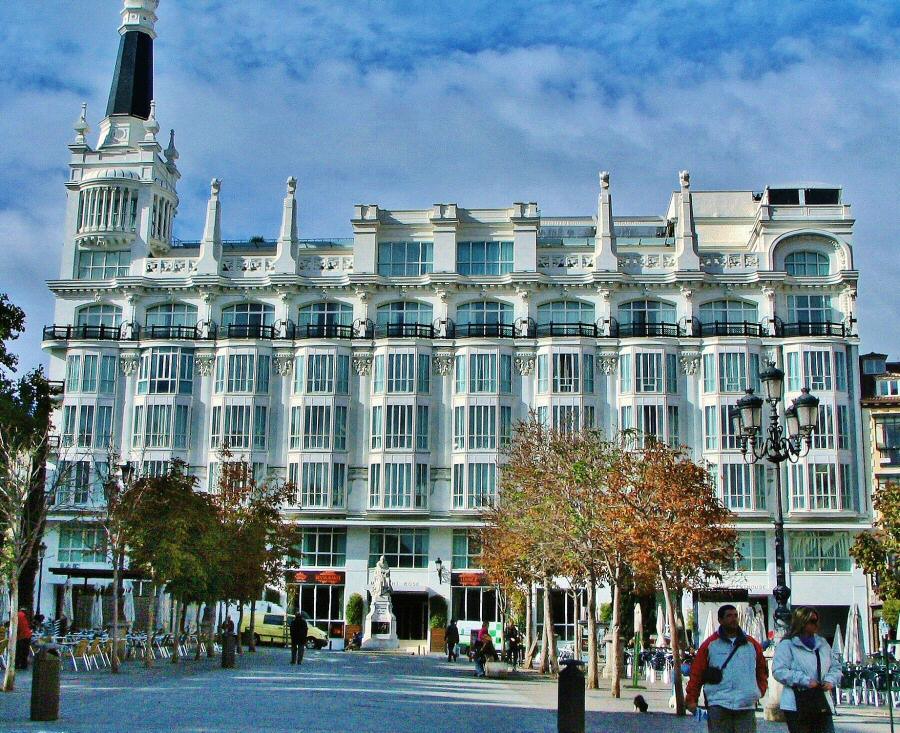
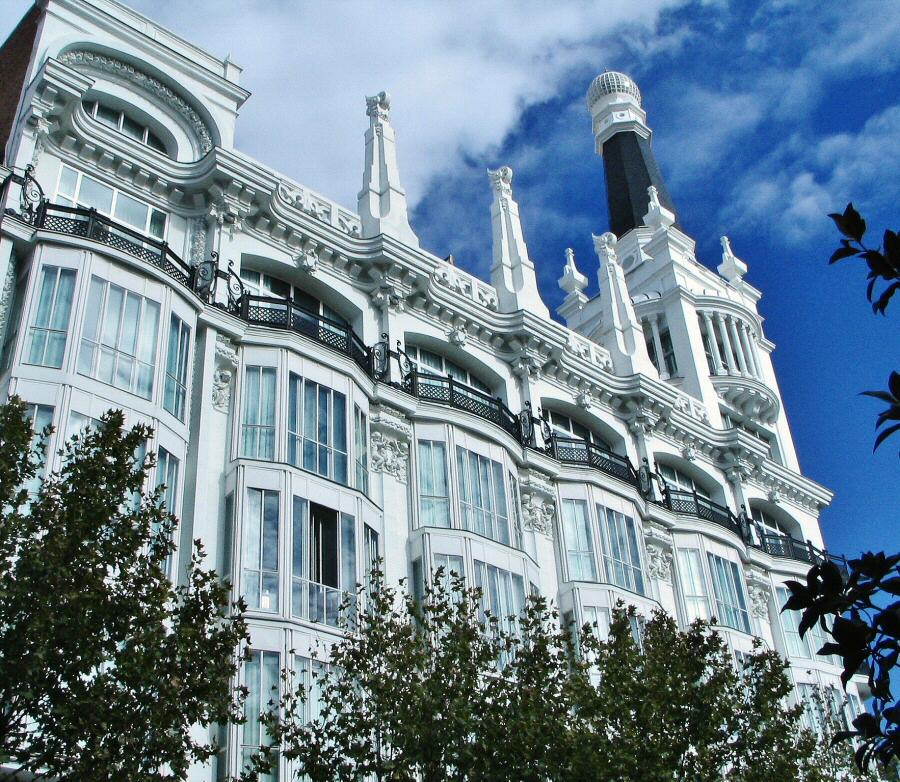
From an architectural point of view, the current building will also catch your attention. ME Madrid Reina Victoria hotelwhich is currently closed for a major renovation, after which it will reopen as part of the Accor chain.
This building has one of the most notable terraces From the center of the city, The Roof, which usually hosts events.
It is a building constructed in 1923, which was occupied by the Queen Victoria Grand Hotel, who achieved fame and became known as the Bullfighters Hotel.
ORGANIZE your TRIP
- Don't forget your TRAVEL INSURANCE with a 10% discount
- Book the HOTEL for your trip
- eSIM card to have INTERNET at a discount
- The best TOURS and EXCURSIONS in Spanish
- TOURS and ACTIVITIES in English and other languages
- NO-LINE TICKETS for museums and monuments
- RENT a CAR for your trip
- Has your flight been cancelled? How to claim compensation
- Book your TRANSFER from the airport
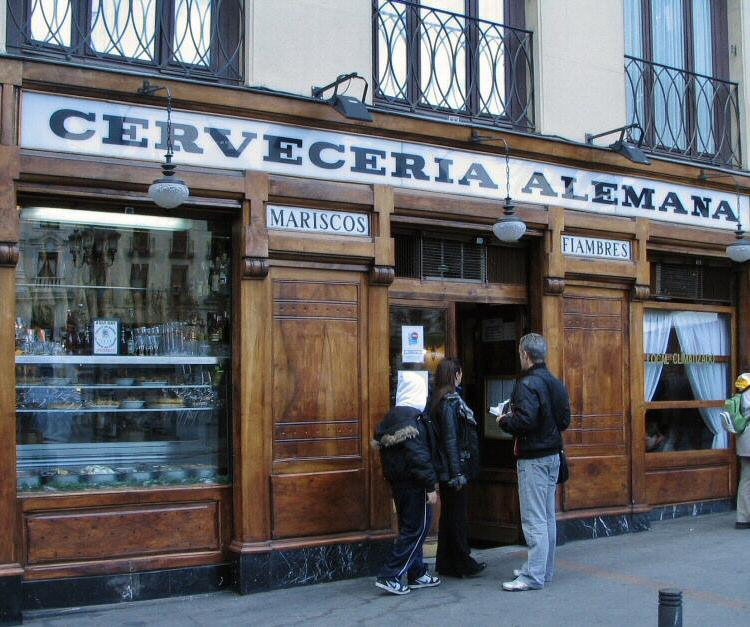
And from the point of view of leisure, apart from the terraces that are always very lively at dusk or on holidays, I want to highlight the German Brewery, a classic among the numerous hospitality establishments in the square.
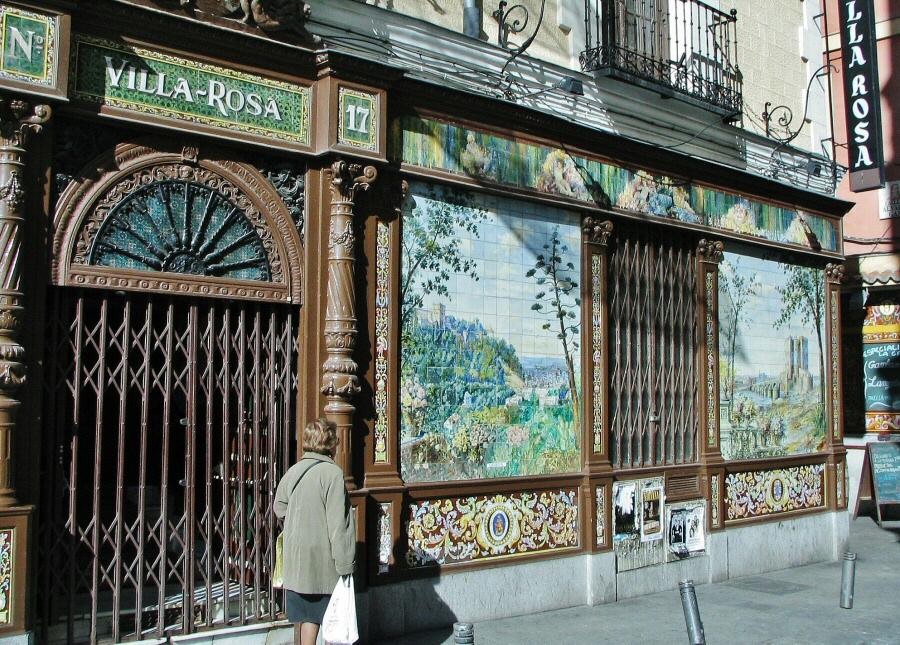
Also worth highlighting is the striking façade of the traditional flamenco tablao Villa Rosa, with its decorated ceramics.
House Museum of Lope de Vega
There are few examples of a medieval house that you can find during your trip to MadridBut during your walk through the so-called Neighborhood of the letters You have the opportunity to visit the House Museum of Lope de Vega.
Indeed, in the 11 Cervantes Street is one of the few examples of house from medieval times in Madrid, the one he once bought and lived in Lope de Vega, now converted into a house museum.
Who was Lope de Vega, curiosities about his biography
Butwho was Lope de Vega?
Named the Phoenix of Wits for his contemporary Miguel de Cervantes, Lope de Vega was born in Madrid in 1562, coinciding with the designation of the city as capital of the Kingdom by Felipe II .
The most significant thing about his biography, and why you probably know him, is that he was one of the most important authors of the so-called Spanish Golden Age.
Lope de Vega I study in the Jesus company and in the University of Alcala de Henares, and he was a prolific author of the time, writing poems, some novels and, above all, countless plays.
In addition to being highly valued by Cervantes, was a friend of Quevedo and was at enmity with Gongora.
After living in several cities, Lope de Vega He returned to Madrid in 1610, and at the age of 48 he bought the house in which he lived until his death in August 1635.
Lope de Vega He paid 9.000 reais for this three-story house, an amount currently equivalent to 14 euros. It was about one medieval house of affluent level.
In the house he lived with several daughters and sons, the result of his turbulent love life, as he had two wives and several lovers.

Furthermore, his last wife died in 1618, after which Lope de Vega He converted to the priesthood.
But it was also a guesthouse, complying with the standard of the Room Royalties, imposed at the time by Felipe II.
On your trip to the capital, you may be interested in taking a tour accompanied by a specialized guide, such as a Guided tour of the Royal Palace or by the Museo del Prado, and if you have time, it is well worth doing one excursion to Toledo. In addition, here you can choose and book the Best guided tours and excursions in Madrid
History of the Lope de Vega House Museum
It was in 1929 when the Lope de Vega House Museum project, after several centuries in which the house was the home of various families.
The owner at that time, Antonia Garcia, widow of Cabrejo, proposed the creation of a foundation to convert the house into a museum, a proposal that was supported by the Spanish Academy, who undertook the restoration.

Finally, in 1935 the house was declared Historic Artistic Monument and it was opened to the public as a museum, to subsequently undergo various restorations, the last completed in 1992.
Since December 2007 the House Museum of Lope de Vega is managed by the Region of Madrid, and is one of the main tourist attractions in the Neighborhood of the letters.
This is what a visit to the Lope de Vega House Museum is like (our experience)
To visit the Lope de Vega House Museum, can only be done in previously established groups, and with a maximum limit of 15 people.
Book your hotel, 15% discount, free cancellation
When planning your trip, we advise you to, well in advance, Book your hotel now on booking.com where you can find discounts from 15% and you will have a possible cancellation for free
La guided tour of the Lope de Vega House Museum will allow you not only to get closer to the illustrious character of the Spanish Golden Age, but also to know the lifestyle in the houses of Madrid during the 17th century.
After the experience of our visit, I can tell you that the first thing that will surprise you when you visit is that you can find a unique interior garden right in the historic center of Madrid.
The house maintains some of its rooms with the original layout, and others have been remodeled later in order to recreate the atmosphere of its time.
La tour It begins by going up to the first floor, where you can see the so-called Chapel of San Isidro, which was used by Lope de Vega to pray every day.
You have to remember that Lope de Vega, during the time he lived in this house, had converted to the priesthood, and that Mark, one of his daughters, was one of the nuns who lived in the nearby Convent of the Trinitarians.
The next room you are going to see is the THE STUDIO, the largest in the house, which has two rooms, the study table by Lope de Vega, and a small room with a library.
The latter shows incunabula books from the time donated by the Language Academy and for the National Library.
The next room is the Floor, next to the study, which was used for meetings by the women of the house; It is decorated with a dais with cushions and a mirror that gives it more space.
The rest of the rooms in the Lope de Vega House Museum in Madrid are recreated.
Thus, you can see the room of the daughters of Lope de Vega and the Dining room, which has been decorated with Talavera ceramics based on documentation of the time.
Reserve your RENTAL CAR now for your trip
Looking ahead to your trip, book your rental car now on this website that offers you the best price guaranteed and allows you a possible free cancellation in most cases. Here you have more information with tips for renting a car
If you prefer, to visit the historic center from the capital, you can sign up for a Free Tour of Madrid lasting two hours, in which you visit some of the most emblematic points of the Medieval Madrid and the Madrid of the Austrias, and here are others alternatives for Free Tours in Madrid
La Kitchen It is also on the first floor, although it was originally located on the ground floor, and is decorated with a fireplace, a cupboard and jars.
On the second floor you can visit a recreation of the servants' room, more austere, with a bed without a canopy, without a mirror and without a chest of drawers.
You will also see the guest room, in compliance with the aforementioned Royalties of Rooms, where he was housed for nine months. Captain Alonso de Contreras.
And finally, you will see the room of the male children of Lope de Vega and that of his last companion, Marta de Nevares, with whom he had three children.
In short, a very interesting visit that will allow you recreate the atmosphere of medieval Madrid.
Hours of the Lope de Vega House Museum
El Visiting hours of the Lope de Vega House Museum It is from Tuesday to Sunday, from 10 a.m. to 18 p.m., with last access at 17 p.m.

La Admission is free and as I have mentioned, it can only be done by signing up for the guided tours Group.
Visits start every half hour, lasting about 35 minutes.
Therefore, it is essential to book in advance the time of your visit, which you can do by calling 91 429 92 16 or by email casamuseolopedevega@madrid.org.
Cervantes' Houses in the Literary Quarter
El Neighborhood of the letters de Madrid It has this name because several of the writers of the Spanish Golden Age.
So when you stroll through this historic neighborhood of Madrid you can imagine, during the XNUMXth and XNUMXth centuries, to writers such as Miguel de Cervantes, Lope de Vega and Góngora, walking through these streets and living an ordinary life.

And you will also be able to see reminders of the places where these writers lived during that time, the most significant of which is undoubtedly the aforementioned House of Lope de Vega, which maintains its original structure.
But in the case of Miguel de CervantesThe houses where he lived disappeared, like the vast majority of the medieval houses in the neighborhood, being replaced by new buildings constructed in the late 19th and early 20th centuries.
However, in your Visit to the Literary Quarter You can see souvenirs from Cervantes' stay there.
So, in the Lope de Vega StreetIn the building on the corner of León Street, you can see the large commemorative plaque of the stay of Miguel de Cervantes in the house that stood there at that time. And it was in that same house that he died in 1616.
And, on the other hand, in the Huertas Street 18, in the building whose ground floor houses the Casa Alberto TavernYou will see a metal plaque that reminds you that Miguel de Cervantes He also lived in a rented place there for a time.

Medieval houses in the Literary Quarter
In the Literary Quarter you can see some examples of what the traditional houses in medieval MadridSpecifically, along the streets that extend east of the Plaza de Santa Ana.
And that's despite the fact that the vast majority of medieval houses, like the ones mentioned houses where Cervantes livedThey were replaced by new buildings at the end of the 19th century.
In this area, which in medieval times was outside the limits of the old 12th-century wall of Madrid, numerous medieval houses emerged, which have a facade of exposed brick and granite in the lower part of it.
An example of these medieval houses You can find it at 18 Lope de Vega Street, next to the Convent of the Trinitarians, which was built in 1606.
It is also an example of a house of malice, which is what the houses that were built after the arrival of the Court in Madrid in 1561 were called, when it became the capital of the Kingdom.

These houses of malice They were trying to avoid the room regalia, a rule that forced the inhabitants of the city where the Court was located to cede part of their housing to accommodate the royal retinues, officials, and military personnel.
In order to avoid this “tax”, houses were built that only showed one upper floor, and they tried to hide the availability of additional spaces, such as an attic.
As a consequence of the room regalia, those houses of medieval Madrid Buildings with more than one upper floor were required to cede the additional space to house the officials of the Kingdom.
Since the Court never moved from Madrid, the city's inhabitants had to live with this "tax" until the 19th century, when it finally disappeared.
That said, the best example of medieval house in Madrid You have it just a few meters away, at number 11 on the nearby street Cervantes Street, where the aforementioned is located House Museum of Lope de Vega.
During the time that Lope de Vega lived in this house, the aforementioned [destination] came to pass. room regalia.
And as a curiosity, it had as a guest for nine months... Captain Alonso de Contreras, who inspired the writer Perez Reverte for his famous character from the novels of Captain Alatristewhose room you can see recreated during the tour.


Comment